Japan–U.S. NAND Alliance Steps Up Investment as Kioxia–SanDisk Capex Reportedly Rises 40% YoY
  As South Korea’s memory giants shift focus toward 1c DRAM capacity expansion amid surging demand, Global Economic, citing German tech outlet ComputerBase, reports that the Kioxia–SanDisk alliance is moving fast to reassert its position in the NAND market, capitalizing on an investment gap as Samsung Electronics and SK hynix divert resources toward HBM.  According to the reports, the U.S.–Japan NAND consortium is expected to execute total capital expenditure of $4.5 billion (about KRW 6.75 trillion) in the current fiscal year, marking a 41% year-on-year increase.  Notably, a key focus of the alliance would likely be the 10th-generation NAND. Nikkei previously reported that Kioxia plans to begin mass production at its Kitakami site in Iwate Prefecture in 2026. However, given the jump to a 332-layer architecture—up from 218 layers in its 8th-generation devices—the company is expected to repurpose its newly operational Kitakami K2 facility, which began production in September, to support output, according to Nikkei.  ComputerBase, cited by Global Economic, attributes the strong NAND demand supporting Kioxia–SanDisk’s investment to a structural shift in AI workloads: As AI moves from the training-heavy infrastructure build-out phase to large-scale inference deployment, demand is rising for high-performance, ultra-high-capacity storage.  At the same time, storage is accounting for a growing share of hyperscaler data center capex, while SSD capacity per GPU is more than doubling year over year, the report notes. As a result, next-gen AI servers are increasingly being designed with tens of terabytes of storage per GPU, driving a sustained surge in NAND demand, the report adds.  Fewer Layers, Comparable Density  ZDNet also reports that in its recent earnings briefing, Kioxia identified the launch of 10th-generation BiCS NAND as a key priority for fiscal 2026 (April 2026–March 2027). The report adds that the company applies its proprietary BiCS (Bit Cost Scalable) architecture to its scaling roadmap, with the 10th-generation device delivering 59% higher storage density per unit area and a 33% improvement in data transfer speed compared with the 218-layer generation.  According to ComputerBase, Kioxia’s stacking approach enables comparable density with fewer layers, translating into meaningful cost advantages. A lower stack height also simplifies vertical etching, reduces high-cost equipment runtime, and helps mitigate wafer warpage defects.  Based on 3D NAND density estimates cited by Global Economic from ComputerBase, Kioxia / SanDisk BiCS10 is projected to reach 37.6Gb per square millimeter in QLC configuration, which would surpass Samsung Electronics’ upcoming 430-layer V10 TLC architecture at around 28.0Gb.  Samsung, SK hynix Hold Back  However, TrendForce indicates that major NAND Flash suppliers will add virtually no new production capacity in 2026, and it seems that South Korean memory players are taking a different approach with Kioxia and SanDisk.  As highlighted by Global Economic, Samsung Electronics and SK hynix have both adjusted their 10th-generation NAND ramp-up schedules: Samsung has reportedly pushed back its V10 production timeline from the second half of 2025 to 2026, while SK hynix is targeting early 2027 for full-scale production.  ZDNet also reports that Samsung Electronics had initially planned to begin mass production of its 430-layer 10th-generation NAND this year, but the timeline has been delayed to at least 2027, citing technical complexity and softer demand conditions. The report adds that Samsung is still reviewing investment timing, with no concrete equipment orders confirmed, and that SK hynix faces a similar situation.  Global Economic notes that if the U.S.–Japan NAND alliance succeeds in lowering cost per terabyte and accelerating QLC enterprise SSD adoption, demand could shift more rapidly toward AI data center storage. Even so, Samsung and SK hynix remain competitive, supported by stable 9th-generation yields and strong enterprise SSD customer bases, the report adds.
Key word:
Release time:2026-06-01 10:45 reading:201 Continue reading>>
TSMC Hints at Potential Further U.S. Expansion; Industry Sources Reportedly See Up to US$250B Investment
  As TSMC continues expanding its U.S. footprint, comments from Cliff Hou, TSMC Senior Vice President and Deputy Co-COO, have caught industry attention. According to Commercial Times, Hou said at the 2026 SelectUSA Investment Summit that the company “is prepared for growth from any new business opportunities,” remarks the market has interpreted as signaling potential further expansion of TSMC’s U.S. investments. TSMC’s total U.S. investment currently stands at US$165 billion.  Commercial Times notes that supply chain developments show chip equipment suppliers have also begun establishing U.S. subsidiaries to support TSMC. Industry sources added that TSMC’s total U.S. investment could reach as much as US$250 billion, with the company expected to replicate the Hsinchu Science Park cluster model in Phoenix.  Meanwhile, Economic Daily News reported that TSMC’s first Arizona fab entered mass production in 4Q24, while its second fab has already been completed and is expected to begin 3nm mass production in the second half of 2027. TSMC previously said construction of its third Arizona fab is already underway, while permits are being sought for a fourth fab and its first advanced packaging facility in the state. The report also noted that TSMC has acquired a second large parcel of land near its existing Arizona site to support future expansion plans.  Although TSMC’s U.S. fabs are more costly, capacity remains in strong demand, with previous reports indicating that customers had already reserved capacity at all four Arizona fabs, as noted by Economic Daily News. Institutional investors said that, for process technologies below 2nm, TSMC’s related capacity ratio between Taiwan and the U.S. is expected to reach roughly 7:3 by 2030.  TSMC Reshapes Board Amid Global Expansion  In addition, TSMC has also recently adjusted its board structure. According to Commercial Times, the company plans to revise its corporate charter by increasing the number of board seats from the current seven to ten directors to nine to twelve, with the proposal set to be discussed at the shareholders’ meeting on June 4.  The move reflects TSMC’s response to the rapidly changing global business environment and is intended to provide greater flexibility in recruiting directors from diverse professional backgrounds, the report said. It also noted that, as TSMC rapidly expands overseas and continues increasing its U.S. investments, the board will need more members with expertise in international supply chains, geopolitics, and U.S. policy.
Key word:
Release time:2026-05-07 13:22 reading:473 Continue reading>>
MicroLED Gains Focus as Seoul Semiconductor Plans $180M AR Investment, Aledia Reports Breakthrough
  Amid mounting margin pressure and slowing growth in the LED industry, players are moving beyond traditional segments in search of new momentum, with MicroLED emerging as a key focus. According to MicroLED-info, Seoul Semiconductor plans to invest KRW 250 billion (around $180 million) over the next five years, primarily in the R&D and production of microLED microdisplay modules for AR applications.  The report suggests that the company has embarked on a government-approved restructuring plan as its core LED package business faces mounting pressure from falling prices and weakening profitability. Under the initiative, the new displays will be built on Seoul Semiconductor’s proprietary WICOP (Wafer Integrated Chip on PCB) technology, the report adds.  As noted by Maeil Ilbo, founded in 1992, Seoul Semiconductor supplies LED packages across lighting, automotive, and IT, and holds about a 4.8% global share in the optoelectronics market. Despite its proprietary wire-free WICOP technology, the company has come under pressure from persistent price declines and softer demand, weighing on margins, the report explains.  French MicroLED Startup Achieves Key Milestone  On the other hand, French startup Aledia, according to MicroLED-info, has successfully demonstrated a fully functional monolithic RGB epitaxial wafer, marking a key milestone for the technology. The achievement validates the company’s end-to-end monolithic RGB process, enabling red, green, and blue emission from a single epi wafer fabricated in a single run, the report notes.  According to the company, its proprietary nanowire-based architecture can grow nanowires in a single processing step, with diameters ranging from 100 nm to 400 nm depending on the target wavelength, enabling full RGB capability within one unified structure.  On device performance, the company demonstrated a 2.5 μm sub-pixel pitch—equivalent to a 5.0 μm × 5.0 μm pixel size—and outlined a roadmap to further shrink this to 2.0 μm for both monochrome and monolithic RGB displays, MicroLED-info suggests.  In parallel, Aledia has validated its 9V microLED devices on 200 mm silicon wafers, including 15×30 μm blue emitters on the same platform. The company also confirmed the commercial availability of its 3D-Nano microLED technology built on 200 mm silicon in February, the report adds.
Release time:2026-04-27 10:39 reading:600 Continue reading>>
ROHM Group Company SiCrystal and <span style='color:red'>STM</span>icroelectronics Expand Silicon Carbide Wafer Supply Agreement
  Kyoto, Japan and Geneva, Switzerland, April 22, 2024 – ROHM (TSE: 6963) and STMicroelectronics (NYSE: STM), a global semiconductor leader serving customers across the spectrum of electronics applications, announced today the expansion of the existing multi-year, long-term 150mm silicon carbide (SiC) substrate wafers supply agreement with SiCrystal, a ROHM group company. The new multi-year agreement governs the supply of larger volumes of SiC substrate wafers manufactured in Nuremberg, Germany, for a minimum expected value of $230 million.  Geoff West, EVP and Chief Procurement Officer, STMicroelectronics, commented “This expanded agreement with SiCrystal will bring additional volumes of 150mm SiC substrate wafers to support our devices manufacturing capacity ramp-up for automotive and industrial customers worldwide. It helps strengthen our supply chain resilience for future growth, with a balanced mix of in-house and commercial supply across regions”.  “SiCrystal is a group company of ROHM, a leading company of SiC, and has been manufacturing SiC substrate wafers for many years. We are very pleased to extend this supply agreement with our longstanding customer ST. We will continue to support our partner to expand SiC business by ramping up 150mm SiC substrate wafer quantities continuously and by always providing reliable quality”. said Dr. Robert Eckstein, President and CEO of SiCrystal, a ROHM group company.  Energy-efficient SiC power semiconductors enable electrification in the automotive and industrial sectors in a more sustainable way. By facilitating more efficient energy generation, distribution and storage, SiC supports the transition to cleaner mobility solutions, lower emissions industrial processes and a greener energy future, as well as more reliable power supplies for resource-intensive infrastructure like data centers dedicated to AI applications.  About STMicroelectronics  At ST, we are over 50,000 creators and makers of semiconductor technologies mastering the semiconductor supply chain with state-of-the-art manufacturing facilities. An integrated device manufacturer, we work with more than 200,000 customers and thousands of partners to design and build products, solutions, and ecosystems that address their challenges and opportunities, and the need to support a more sustainable world. Our technologies enable smarter mobility, more efficient power and energy management, and the wide-scale deployment of cloud-connected autonomous things. We are committed to achieving our goal to become carbon neutral on scope 1 and 2 and partially scope 3 by 2027.  Further information can be found at www.st.com .  About ROHM  Founded in 1958, ROHM provides ICs and discrete semiconductor devices characterized by outstanding quality and reliability for a broad range of markets, including automotive, industrial equipment and consumer market via its global development and sales network.  In the analog power field, ROHM proposes the suitable solution for each application with power devices such as SiC and driver ICs to maximize their performance, and peripheral components such as transistors, diodes, and resistors.  Further information on ROHM can be found at www.rohm.com .  About SiCrystal  SiCrystal, a ROHM group company, is one of the global market leaders for monocrystalline silicon carbide wafers. SiCrystal’s advanced semiconductor substrates provide the basis for the highly efficient use of electrical energy in electric vehicles, fast charging stations, renewable energies and in various fields of industrial applications.  Further information on SiCrystal can be found at www.sicrystal.de .
Key word:
Release time:2024-04-24 11:10 reading:1837 Continue reading>>
Murata’s Latest Partnership Aids IoT Development, Enabling M.2 Wireless Module Integration for <span style='color:red'>STM</span>32 Nucleo Boards
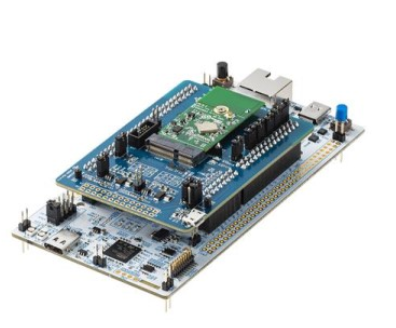
  Murata, a leading electronics manufacturer, in collaboration with Infineon are pleased to announce a new IoT development solution. This comprehensive innovation allows Murata’s Infineon-based Wi-Fi® and Bluetooth® modules to seamlessly integrate with a wide range of STM32 Nucleo-144 boards, helping to reduce the time-to-market for many wireless-enabled applications.  The joint project is built on the collaboration with Infineon and Murata. / By combining each company’s extensive expertise, the collaboration has engineered a complete hardware and software solution that addresses a number of IoT development requirements. At its core, the platform solution allows STM32 microcontroller to connect Murata M.2 wireless modules featuring Infineon chipsets. Providing the hardware connection is Murata’s new Nucleo-144 to M.2 adapted board, while software integration is enabled through Infineon AIROC™ STM32 Expansion Pack. Whether you are evaluating low-power implementations, such as wearables and battery-powered devices, or high-performance deployments, such as industrial equipment and smart homes, this exciting solution creates a more efficient evaluation process.  Murata Nucleo-144 to M.2 Adapter board  Providing physical M.2 support for STMicroelectronics STM32 Nucleo board for microcontrollers, including the popular STM32U5 and STM32H5 series, is the Murata Nucleo-144 to M.2 adapter board. This innovative PCB-based adapter effortlessly mounts to the STM32 and features a convenient top-mounted M.2 socket. The M.2 dock grants effortless physical integration and swapping of Embedded Artists Murata M.2 modules which use Infineon chipsets. This allows the STM32 to accept a wide range of Wi-FiWi-Fi® and Bluetooth® combination units, including Wi-Fi 4, Wi-Fi 5 and industrial grade modules.  AIROC™ STM32 Expansion Pack  Produced by Infineon, a leading global semiconductor manufacturer, Infineon AIROC™ STM32 Expansion Pack provides the framework required to facilitate the Murata hardware. Using the Common Microcontroller Software Interface Standard (CMSIS), the AIROC™ STM32 Expansion Pack enables the integration of Infineon based Wi-Fi® and Bluetooth® module with STM32 STM32Cube ecosystem, including STM32CubeMX tool. Within the semiconductor industry, CMSIS establishes a consistent approach for software components, hardware parameters and code, helping to increase development productivity. Documentation, libraries and example projects are also available on Infineon’s dedicated Expansion Pack GitHub page,helping to support the quick deployment of your hardware environment.  Innovation Through Collaboration  Through the Infineon AIROC™ STM32 Expansion Pack, engineers can leverage an effective design environment to evaluate a range of Murata M.2 wireless modules (featuring Infineon chipsets) with STM32 Nucleo boards. With full support from dependable hardware, extensive documentation and example libraries, this comprehensive solution is the perfect tool for accelerating IoT development across an extensive variety of applications.  Comment from Infineon  Neil Chen, Director, Wi-Fi Product Line Marketing, IoT Compute and Wireless Business Unit at Infineon said “To reduce the barrier to entry for first-time IoT developers, semiconductor and module companies must come together to offer simple, easy-to-use and ease-to-productize solutions to market. Our collaboration with Murata does just that by leveraging our industry-leading AIROC™ Wi-Fi and Bluetooth portfolio to simplify the development of next-generation IoT products for a variety of applications.”  Comment from Murata  Masatomo Hashimoto, Director, Connectivity Module Division, Communication and Sensor Business Division, Murata Manufacturing Co. Ltd., said “We are excited to collaborate with Infineon, a global leader in semiconductors in the IoT and power systems to deliver this innovation. Customers face many barriers when bringing connectivity products to market, but this partnership provides a solution for a variety of development challenges and reduces time-to-market for a wide range of applications.”
Key word:
Release time:2024-03-08 14:47 reading:1393 Continue reading>>
<span style='color:red'>STM</span>icroelectronics to Invest EUR 5 Billion in New SiC Wafer Fab
  STMicroelectronics, following its EUR 7.5 billion wafer fab project with GlobalFoundries in Crolles, France. is set to invest EUR 5 billion in building a new SiC super semiconductor wafer fab in Catania, Sicily, Italy. The fab in Italy will specialize in producing SiC chips, a pivotal technology for electric vehicles with substantial growth potential, according to French media L’Usine Nouvelle on November 26th,  STMicroelectronics competitively plans to transition to 8-inch wafers starting from 2024. The company will integrate Soitec’s SmartSiC technology to enhance efficiency and reduce carbon emissions. Simultaneously, STMicroelectronics aims to increase capacity, achieve internal manufacturing, and collaborate with Chinese firm Sanan Optoelectronics to raise SiC chip-related revenue from the expected USD 1.2 billion in 2023 to USD 5 billion by 2030.  On June 7th earlier this year, STMicroelectronics and Sanan Optoelectronics announced a joint venture to establish a new 8-inch SiC device fab in Chongqing, China, with an anticipated total investment of USD 3.2 billion.  To ensure the successful implementation of this extensive investment plan, Sanan Optoelectronics said to utilize its self-developed SiC substrate process to construct and operate a new 8-inch SiC substrate fab independently.  TrendForce: over 90% SiC market share by major global players  According to TrendForce, the SiC industry is currently dominated by 6-inch substrates, holding up to 80% market share, while 8-inch substrates only account for 1%. Transitioning to larger 8-inch substrates is a key strategy for further reducing SiC device costs.  8-inch SiC substrates offer significant cost advantages than 6-inch substrates. The industry’s major players in China, including SEMISiC, Jingsheng Mechanical & Electrical Co., Ltd. (JSG), Summit Crystal, Synlight Semiconductor, KY Semiconductor, and IV-SemiteC, are advancing the development of 8-inch SiC substrates. This shift from the approximately 45% of total production costs associated with substrates is expected to facilitate the broader adoption of SiC devices and create a positive cycle for major companies.  Not only Chinese companies but also international semiconductor giants like Infineon Technologies and Onsemi are actively vying for a share of the market. Infineon has already prepared the first batch of 8-inch wafer samples in its fab and plans to convert them into electronic samples soon, with mass production applications scheduled before 2030. International device companies like Onsemi and ROHM have also outlined development plans for 8-inch SiC wafers.  Currently, major companies hold over 90% of the market share, intensifying competition. A slowdown in progress could provide opportunities for followers. According to TrendForce, the market share of the top 5 SiC power semiconductor players in 2022 was dominated by STMicroelectronics (36.5%), Infineon (17.9%), Wolfspeed (16.3%), Onsemi (11.6%), and ROHM (8.1%), leaving the remaining companies with only 9.6%.
Release time:2023-11-30 10:53 reading:4063 Continue reading>>
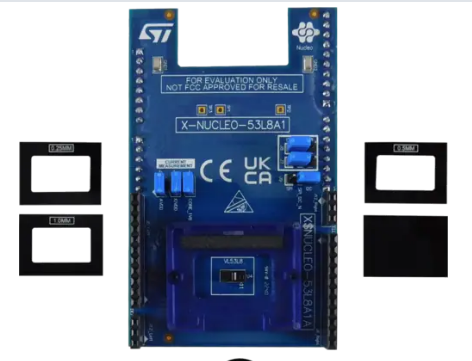
AMEYA360:<span style='color:red'>STM</span>icroelectronics X-NUCLEO-53L8A1 Sensor Expansion Board
Key word:
Release time:2023-04-12 10:58 reading:2601 Continue reading>>
<span style='color:red'>STM</span>icroelectronics ALED7709 Automotive LED Drivers
  STMicroelectronics ALED7709 Automotive LED Drivers are AEC-Q100 Grade1 qualified and combine a boost/SEPIC controller and four low-side constant-current sinkers. The STMicroelectronics ALED7709 is designed to drive strings of high-brightness LEDs. The switching converter section provides the supply rail for the LED strings, whose value is constantly optimized for maximum efficiency. The boost/SEPIC controller supports the external synchronization and spread spectrum.  FEATURES  AEC-Q100 Grade1 qualified  Operating temperature range -40°C < TJ < 150°C  4.5V to 42V operating input voltage range  Up to 60V tolerant for load dump @ 24V battery  Supports battery cranking events down to 4V supply  Simultaneous or exclusive control by PWMI and I2C interface  Switching controller section  Low shutdown current ISHDN < 15?A  Fixed frequency peak current-mode controller  Cycle-by-cycle power switch OCP  Adjustable (250kHz to 2.2MHz) switching frequency with optional spread spectrum  Synchronized boost and SEPIC topologies support  Line switch control for standby power saving and inrush current protection  Input overvoltage and output short-circuit protection  LED strings control section  4 x 40V rated constant current outputs  Adjustable up to 200mA per channel  ±2% typ. output current accuracy  Mixed PWM and Analog dimming  100Hz to 12.8kHz dimming frequency  Dimming ratio 10000:1 at 100Hz  LED temperature sensor (NTC) management  Selectable channels phase-shifting and adjustable Rise/Fall time for reducing EMI  Open channel, LED short-circuit detection  Two versions are available ALED7709A and ALED7709B  APPLICATIONS  Automotive lighting and backlighting  Cluster/infotainment display  Head-Up Display (HUD)  Instrument lighting system  Ambient light
Key word:
Release time:2023-04-07 11:39 reading:2573 Continue reading>>
AMEYA360;<span style='color:red'>STM</span>icroelectronics M95P16 Ultra Low Power 16-Mbit SPI Page EEPROM
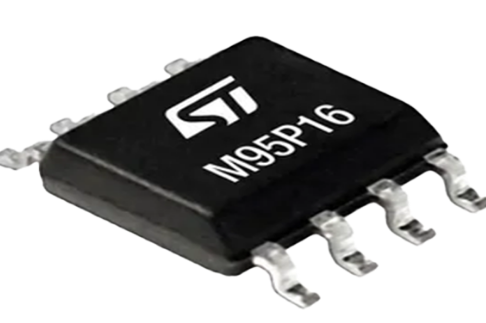
  STMicroelectronics M95P16 Ultra Low Power 16-Mbit SPI Page EEPROM is based on Non-Volatile Memory (NVMe) technology. This M95P16 comes with byte flexibility, page alterability, high page cycling performance, and ultra-low power consumption, equivalent to EEPROM technology.       The M95P16 EEPROM is organized as 4096 programmable pages of 512 bytes each, accessed through an SPI bus, with high-performance dual-and quad-SPI outputs. This M95P16 EEPROM features ultra-low power consumption, ECC for high memory reliability (DEC, TED), Schmitt trigger inputs for noise filtering, and electronic identification. The M95P16 EEPROM supports up to 80MHz clock frequency, 1.6V to 3.6V supply voltage range, and is ECOPACK2 (RoHS compliant) and halogen-free.  The M95P16 EEPROM offers two additional (identification) 512-byte pages. The first contains identification data and, upon request, the UID. The second can store sensitive application parameters, which later can be permanently locked in read-only mode. This M95P16 EEPROM accepts page/block/sector/chip erase commands to set the memory to an erased state.  FEATURES  ECC for high memory reliability (DEC and TED)  Schmitt trigger inputs for noise filtering  Output buffer programmable strength  Operating status flags for ISO26262  Software reset  Write protection by block, with top/bottom option  Unique ID upon request  Electronic identification  Supports SFDP (serial flash discoverable parameters) mode  JEDEC standard manufacturer identification  Package:  ECOPACK2 (RoHS compliant) and halogen-free packages:  DFN8 2mm x 3mm  SO8N  WLCSP8  SPECIFICATIONS  Interface:  Supports Serial Peripheral Interface (SPI) and dual/quad outputs  1.6V to 3.6V VCC wide voltage range  Temperature range:  -40°C to 85°C (industrial)  -40°C to 105°C (extended)  Fast read:  50MHz read single output  80MHz fast read single/dual/quad output with one dummy byte  Memory:  16 Mbit of page EEPROM  32-Kbyte blocks and 4-Kbyte sectors  512 bytes page size  Two identification pages  500k cycles on full temperature range write endurance  Data retention:  100 years  10 years after 500k cycles  Ultra-low power consumption:  0.6μA (typical) in deep power-down mode  16μA (typical) in standby mode  800μA (typical) for read single at 10MHz  1.5mA (typical) for page write  Current peak control <3mA  High write/erase performance:  Fast write/program/erase times:  2ms (typical) for byte and page write (includes auto-erase and program) for 512 bytes  1.2ms (typical) for page program (512 bytes)  1.1ms (typical) for page erase  1.3ms (typical) for sector erase  4.0ms (typical) for block erase  8ms (typical) for chip erase  Page program with buffer load
Key word:
Release time:2023-03-28 14:48 reading:2120 Continue reading>>
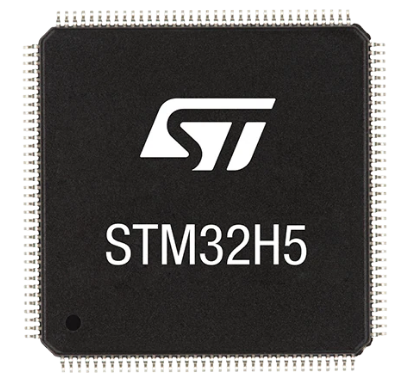
AMEYA360:<span style='color:red'>STM</span>icroelectronics <span style='color:red'>STM</span>32H5 Arm® Cortex®-M33 32-Bit MCU+FPU
Key word:
Release time:2023-03-13 13:26 reading:3623 Continue reading>>

Turn to

/ 4

  • Week of hot material
  • Material in short supply seckilling
model brand Quote
CDZVT2R20B ROHM Semiconductor
TL431ACLPR Texas Instruments
MC33074DR2G onsemi
BD71847AMWV-E2 ROHM Semiconductor
RB751G-40T2R ROHM Semiconductor
model brand To snap up
ESR03EZPJ151 ROHM Semiconductor
BU33JA2MNVX-CTL ROHM Semiconductor
STM32F429IGT6 STMicroelectronics
BP3621 ROHM Semiconductor
IPZ40N04S5L4R8ATMA1 Infineon Technologies
TPS63050YFFR Texas Instruments
Hot labels
ROHM
IC
Averlogic
Intel
Samsung
IoT
AI
Sensor
Chip

About us

Qr code of ameya360 official account

Identify TWO-DIMENSIONAL code, you can pay attention to

AMEYA360 mall (www.ameya360.com) was launched in 2011. Now there are more than 3,500 high-quality suppliers, including 6 million product model data, and more than 1 million component stocks for purchase. Products cover MCU+ memory + power chip +IGBT+MOS tube + op amp + RF Bluetooth + sensor + resistor capacitance inductor + connector and other fields. main business of platform covers spot sales of electronic components, BOM distribution and product supporting materials, providing one-stop purchasing and sales services for our customers.

Please enter the verification code in the image below:

verification code