NVIDIA Enters PC Market with RTX Spark Featuring MediaTek-Co-Designed N1X CPU on <span style='color:red'>TSMC</span> 3nm
  As traditional CPU leaders such as Intel push further into the AI accelerator market, NVIDIA is moving in the opposite direction—leveraging its dominance in AI computing to expand into the PC processor arena. At GTC Taipei on June 1, CEO Jensen Huang unveiled the NVIDIA RTX Spark, developed in partnership with Microsoft and powered by the new Arm-based N1X processor co-designed with MediaTek, according to NVIDIA and CNBC.  According to CNBC, the initial rollout will include more than 30 notebook models and 10 desktop systems. RTX Spark-powered devices from Microsoft, Dell, HP, ASUS, Lenovo, and MSI are expected to debut this fall, marking NVIDIA’s first large-scale push into the Windows PC CPU market.  CNBC adds that the platform combines NVIDIA’s Blackwell GPU architecture with the N1X CPU and 128GB of unified memory, bringing data center-class AI capabilities to personal computers. Notably, the new PC processor will be manufactured using TSMC’s 3nm process, which is currently produced exclusively in Taiwan, according to CNBC.  More Spec Details  Interestingly, as noted by The Verge, the flagship RTX Spark mirrors the DGX Spark almost exactly — 20 CPU cores, 6,144 GPU cores, 128GB of LPDDR5X memory — though NVIDIA plans to release leaner, more affordable variants, with some configurations dropping to just 16GB of RAM.  Meanwhile, NVIDIA has provided additional details on the platform’s performance. According to The Verge, with up to 128GB of unified memory—on par with AMD’s previous-generation Strix Halo—RTX Spark laptops and desktops are also capable of hosting AI agents with up to 120 billion parameters, a capability Microsoft appears eager to integrate into Windows.  Powered by RTX Spark, NVIDIA claims the system can render a 90GB 3D scene, edit 12K video, or run graphically intensive titles like Indiana Jones and the Great Circle at a smooth 100fps in 1440p—all within a 14mm-thin laptop operating without being plugged into power, the report adds.  CNBC, citing an NVIDIA spokesperson, reports that RTX Spark is described as being “roughly equivalent” to the company’s flagship RTX 5070 laptop GPU.  NVIDIA is certainly not the only player eyeing to expand its CPU footprint. As noted by CNBC, Apple now designs its own Arm-based processors for Mac computers, having rolled out a higher-end MacBook lineup powered by its latest M5 chips in March. In the same month, Arm unveiled its first in-house CPU, with Meta reportedly serving as the launch customer for the Arm AGI CPU, according to TechCrunch.
Key word:
Release time:2026-06-02 10:29 reading:191 Continue reading>>
Micron More Upbeat on Outlook, Reportedly Sets 2027 HBM4E Ramp with <span style='color:red'>TSMC</span> for Standard, Custom Logic Dies
  Two months after its March earnings call, Micron is turning more upbeat on its outlook, while providing additional details on its custom HBM development progress. At the J.P. Morgan 54th Annual Global Technology, Media and Communications Conference, Micron’s Global Operations EVP Manish Bhatia, via STOCK Analysis transcript, said the company’s first HBM4E will be a JEDEC-standard product, with ramp-up scheduled for 2027.  While Micron is still using 1-beta DRAM for HBM4, Bhatia said the company is expected to transition to 1-gamma DRAM in the HBM4E era. He also confirmed that the logic dies for both standard and custom HBM4E are expected to be manufactured by TSMC.  When asked about the margin profile of customized products, Bhatia, according to STOCK Analysis, highlighted that value creation stems from multiple proprietary layers: design innovation, robust core DRAM development, and advanced packaging.  He emphasized that customization represents the next evolution of this value expansion, and as the value increases, customers are expected to be willing to pay for the added customization.  Improving Outlook vs. Previous Earnings Call  According to Bhatia, Micron now expects tight conditions across HBM, DRAM, and NAND to persist well beyond 2026. Thus, he noted that the financial outlook has strengthened since the company’s last earnings call, and it is on track for another substantial record free cash flow in fiscal Q3.  Notably, Bhatia pointed out that while pricing has largely played out as expected, demand remains very strong. He added that the AI ecosystem is shifting from human interactions to agentic and even machine-to-machine workflows, with these agentic workloads increasingly driving inference demand. As inference takes up a larger share of workloads, memory is increasingly seen as a strategic asset for customers, he said.  Against this backdrop, Micron said in March that it had secured its first strategic customer agreement—a five-year deal with a large customer. Since then, the company has made meaningful progress on additional SCAs, with other customers also showing strong interest in establishing similar strategic relationships with Micron, including in NAND, Bhatia said.  India Capacity Reported Booked up  Amid tight demand, Bhatia also said Micron’s global expansion is accelerating. He noted that its Idaho 1 site is progressing well, with the company pulling forward its wafer output timeline from the second half of 2027 to mid-2027.  Surging memory demand is also driving ramp-up at Micron’s new semiconductor assembly and test facility in Sanand, Gujarat, which began operations in late February. In a separate report by Business Standard, Micron’s entire memory production capacity in India has been fully booked amid strong demand.  According to a previous Business Standard report, at full capacity, the facility could account for up to 10% of Micron’s global output, supplying both domestic and international markets.  Sumit Sadana, executive vice-president and chief business officer at Micron, reportedly told Indian media outlet The Economic Times that the global semiconductor memory shortage triggered by the AI boom is proving far more severe than many companies currently anticipate, with the crunch potentially extending well beyond 2028 despite aggressive capacity expansion across the industry.
Key word:
Release time:2026-05-25 10:44 reading:416 Continue reading>>
Apple Reportedly Keeps 2nm 5G Modem Orders with <span style='color:red'>TSMC</span> Amid Intel Cooperation Signals
  While recent market chatter has focused on a potential shift by Apple between longtime foundry partner TSMC and Intel, the Economic Daily News, citing industry sources, reports that the Cupertino-based company remains heavily dependent on the Taiwanese foundry giant, as it plans to place its entire in-house 5G modem orders with TSMC, leveraging its 2nm process technology.  The report suggests that Apple’s self-developed 5G modem chips are expected to power future iPhone, iPad, and Apple Watch devices, replacing modems from Qualcomm. The volume used across its product lineup is projected to reach hundreds of millions of units, the report adds.  Notably, Apple’s iPhone 17 lineup is expected to be the last to ship with Qualcomm Incorporated’s 5G modems, as the company moves toward a full transition to its in-house C2 baseband chip across all iPhone 18 models, according to Wccftech.  The C2 development builds on Apple’s earlier in-house modem effort. Apple’s C1, first introduced in early 2025 with the iPhone 16e, marked its most complex chip system to date, integrating a 4nm baseband modem and a 7nm transceiver, according to earlier reporting from Reuters. The Economic Daily News further reports that Apple Inc.’s in-house C2 5G modem is expected to add full mmWave support—addressing the Sub-6 GHz limitation of its predecessor—while also incorporating satellite connectivity.  Supply chain sources cited in the Economic Daily News report say TSMC has already secured foundry orders for Apple’s modem chips. Its back-end testing partner is also reportedly preparing for higher demand, with around 600 test systems being procured, as capacity is set to ramp from 2027.  Apple’s Chip Tug-of-War: TSMC vs Intel  Though claims of an Apple order shift to Intel remain unconfirmed, and any such move would not signal a departure from TSMC, cooperation between Apple and Intel appears to be warming. According to The Wall Street Journal, the two companies have reportedly reached a preliminary agreement for Intel to manufacture some of the chips powering Apple devices.  The two sides have been engaged in intensive talks for more than a year, with a formal deal said to have been hammered out in recent months, the report adds.  In parallel, Commercial Times reported earlier that Apple is evaluating Intel’s 18A-P process for its M-series chips. Looking further ahead, The New 7 reports that the first Intel-manufactured low-end M-series chips could emerge as early as mid-2027 under contract production, likely targeting entry-level Macs or iPads.  As highlighted by The Wall Street Journal, Apple’s reported outreach to Intel may reflect growing supply chain pressures, as the Cupertino firm—long TSMC’s top customer—faces tightening access to advanced manufacturing capacity amid surging demand from NVIDIA and other AI chip designers.  Intel previously played a central role in powering Apple’s Mac lineup, before Apple transitioned in 2020 to its own Arm-based custom chips, the report points out.
Key word:
Release time:2026-05-11 11:12 reading:574 Continue reading>>
<span style='color:red'>TSMC</span>, Sony to Form JV for Image Sensors, Including New Production Lines for AI and Automotive Use
  As TSMC has decided to upgrade its 2nd Kumamoto fab to 3nm, the foundry giant is also exploring to secure more opportunities for its mature nodes in Japan. According to its press release on May 8, Sony and TSMC announced the signing of a non-binding memorandum of understanding (MOU) to establish a strategic partnership focused on the development and manufacturing of next-generation image sensors.  Notably, under the proposed framework, the two companies plan to form a joint venture (JV), with Sony serving as the majority and controlling shareholder. The JV is expected to build development and production lines at Sony’s newly constructed fab in Koshi City, Kumamoto Prefecture.  TSMC said that beyond manufacturing expansion, the partnership is also aimed at exploring emerging opportunities in physical AI applications, including automotive and robotics.  Through this collaboration, Sony will contribute its deep expertise in image sensor design, while TSMC will bring its advanced process technology and large-scale manufacturing capabilities. Both sides aim to combine their respective strengths to further enhance the performance and competitiveness of future image sensor technologies.  The move aligns with an April Reuters report, which noted that Japan’s Ministry of Economy, Trade and Industry (METI) has confirmed that the Japanese government will provide subsidies of up to ¥60 billion (approximately US$380 million) to Sony Semiconductor Solutions Corporation for the construction of an image sensor facility in Kumamoto Prefecture, western Japan.  Sony is a long-time customer of TSMC. As previously reported by Commercial Times, TSMC’s first Kumamoto fab—entering mass production in late 2024—supplies logic chips to Sony and DENSO, using 22/28nm and 12/16nm process technologies.  Separately, Sony has recently begun restructuring efforts, including a spin-off of its television business. Its CIS (image sensor) unit is also facing rising competitive pressure, as Samsung Electronics continues to expand its share in supplying image sensors for Apple, prompting Sony to seek new growth momentum in the segment, Commercial Times added.
Key word:
Release time:2026-05-09 10:16 reading:837 Continue reading>>
<span style='color:red'>TSMC</span> Hints at Potential Further U.S. Expansion; Industry Sources Reportedly See Up to US$250B Investment
  As TSMC continues expanding its U.S. footprint, comments from Cliff Hou, TSMC Senior Vice President and Deputy Co-COO, have caught industry attention. According to Commercial Times, Hou said at the 2026 SelectUSA Investment Summit that the company “is prepared for growth from any new business opportunities,” remarks the market has interpreted as signaling potential further expansion of TSMC’s U.S. investments. TSMC’s total U.S. investment currently stands at US$165 billion.  Commercial Times notes that supply chain developments show chip equipment suppliers have also begun establishing U.S. subsidiaries to support TSMC. Industry sources added that TSMC’s total U.S. investment could reach as much as US$250 billion, with the company expected to replicate the Hsinchu Science Park cluster model in Phoenix.  Meanwhile, Economic Daily News reported that TSMC’s first Arizona fab entered mass production in 4Q24, while its second fab has already been completed and is expected to begin 3nm mass production in the second half of 2027. TSMC previously said construction of its third Arizona fab is already underway, while permits are being sought for a fourth fab and its first advanced packaging facility in the state. The report also noted that TSMC has acquired a second large parcel of land near its existing Arizona site to support future expansion plans.  Although TSMC’s U.S. fabs are more costly, capacity remains in strong demand, with previous reports indicating that customers had already reserved capacity at all four Arizona fabs, as noted by Economic Daily News. Institutional investors said that, for process technologies below 2nm, TSMC’s related capacity ratio between Taiwan and the U.S. is expected to reach roughly 7:3 by 2030.  TSMC Reshapes Board Amid Global Expansion  In addition, TSMC has also recently adjusted its board structure. According to Commercial Times, the company plans to revise its corporate charter by increasing the number of board seats from the current seven to ten directors to nine to twelve, with the proposal set to be discussed at the shareholders’ meeting on June 4.  The move reflects TSMC’s response to the rapidly changing global business environment and is intended to provide greater flexibility in recruiting directors from diverse professional backgrounds, the report said. It also noted that, as TSMC rapidly expands overseas and continues increasing its U.S. investments, the board will need more members with expertise in international supply chains, geopolitics, and U.S. policy.
Key word:
Release time:2026-05-07 13:22 reading:473 Continue reading>>
Apple Reportedly Eyes Samsung, Intel U.S. Foundry for Core Chips Amid <span style='color:red'>TSMC</span> Constraints, Supply Diversification
  Apple is reportedly weighing the possibility of having some of its core device chips manufactured by Samsung and Intel. According to Bloomberg, citing sources, the company has held preliminary discussions on using the two as alternative production partners for its main processors—potentially providing a second sourcing option alongside its longstanding supplier, TSMC.  Sources say the company has held early-stage discussions with Intel about leveraging its foundry services, while Apple executives have also visited a Samsung facility under construction in Texas that is expected to produce advanced chips.  That said, the report notes that neither effort has led to any orders so far. Engagements with both suppliers remain at a preliminary stage, as Apple continues to have reservations about adopting non-TSMC manufacturing technologies.  One of the key drivers behind Apple’s potential shift is supply constraints at TSMC, according to Bloomberg. As the report notes, Apple executives addressed the issue during the company’s quarterly earnings call last week, indicating that limited chip availability for iPhone and Mac devices is currently weighing on growth.  In early 2026, Tim Cook identified access to advanced-node manufacturing as the main bottleneck for Apple’s iPhone output, according to CNBC. He noted that production is constrained by limited capacity for the company’s A-series and M-series system-on-chip (SoC) chips, which are fabricated on TSMC’s 3nm process.  In addition, it also aims to maintain at least two suppliers for key components, allowing Apple to strengthen its negotiating leverage on pricing while reducing the risk of supply disruptions, Bloomberg adds.  Apple’s Reported Supplier Talks May Open Door for Intel Comeback, Samsung Gains  Apple’s talks with both companies reportedly began before the most recent supply constraints emerged. As Bloomberg notes, collaborating with Intel could offer an added advantage, potentially strengthening Apple’s ties with the Donald Trump administration. As for Samsung, the report indicates that it has already been working on supplying more peripheral components for Apple’s devices, including power management parts.  In an August 2025 press release, Apple also announced a partnership with Samsung to co-develop a new chip manufacturing technology at Samsung’s Austin fab. Citing industry sources, Business Korea adds that the chip Samsung is expected to produce will likely be used as an image sensor in future iPhones and other Apple products.  Separately, industry momentum appears to be building around Intel’s foundry push. According to Commercial Times, major tech firms including Google and Apple are weighing a shift to Intel’s foundry. The report adds that Apple’s M-series chips are evaluating Intel’s 18A-P node.  Apple’s potential shift could provide a boost to both Samsung and Intel. As the report notes, securing external customers for its foundry business is central to Intel’s turnaround strategy under CEO Lip-Bu Tan. Winning Apple as a client would mark a major milestone for Tan and could help draw in additional business. Samsung, meanwhile, would also stand to gain significantly from an endorsement by Apple.
Key word:
Release time:2026-05-06 14:44 reading:462 Continue reading>>
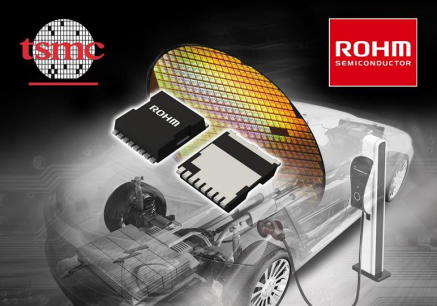
ROHM and <span style='color:red'>TSMC</span> Launch Strategic Gallium Nitride Technology Collaboration for Automotive Industry
  ROHM Co., Ltd. (ROHM) announced today that ROHM and TSMC have entered a strategic partnership on development and volume production of gallium nitride (GaN) power devices for electric vehicle applications.  The partnership will integrate ROHM's device development technology with TSMC's industry-leading GaN-on-silicon process technology to meet the growing demand for superior high-voltage and high-frequency properties over silicon for power devices.  GaN power devices are currently used in consumer and industrial applications such as AC adapters and server power supplies. TSMC, a leader in sustainability and green manufacturing, supports GaN technology for its potential environmental benefits in automotive applications, such as on-board chargers and inverters for electric vehicles (EVs).  The partnership builds on ROHM and TSMC’s history of collaboration in GaN power devices. In 2023, ROHM adopted TSMC’s 650V GaN high-electron mobility transistors (HEMT), whose process is increasingly being used in consumer and industrial devices as part of ROHM's EcoGaN™ series, including the 45W AC adapter (fast charger) "C4 Duo" produced by Innergie, a brand of Delta Electronics, Inc.  "GaN devices, capable of high-frequency operation, are highly anticipated for their contribution to miniaturization and energy savings, which can help achieve a decarbonized society. Reliable partners are crucial for implementing these innovations in society, and we are pleased to collaborate with TSMC, which possesses world-leading advanced manufacturing technology" said Katsumi Azuma, Member of the Board and Senior Managing Executive Officer at ROHM. “In addition to this partnership, by providing user-friendly GaN solutions that include control ICs to maximize GaN performance, we aim to promote the adoption of GaN in the automotive industry."  “As we move forward with the next generations of our GaN process technology, TSMC and ROHM are extending our partnership to the development and production of GaN power devices for automotive applications,” said Chien-Hsin Lee, Senior Director of Specialty Technology Business Development at TSMC. “By combining TSMC's expertise in semiconductor manufacturing with ROHM's proficiency in power device design, we strive to push the boundaries of GaN technology and its implementation for EVs.”  About TSMC  TSMC pioneered the pure-play foundry business model when it was founded in 1987, and has been the world’s leading dedicated semiconductor foundry ever since. The Company supports a thriving ecosystem of global customers and partners with the industry’s leading process technologies and portfolio of design enablement solutions to unleash innovation for the global semiconductor industry. With global operations spanning Asia, Europe, and North America, TSMC serves as a committed corporate citizen around the world.          TSMC deployed 288 distinct process technologies, and manufactured 11,895 products for 528 customers in 2023 by providing broadest range of advanced, specialty and advanced packaging technology services. The Company is headquartered in Hsinchu, Taiwan.  EcoGaN™ is a trademark or registered trademark of ROHM Co., Ltd.
Key word:
Release time:2025-04-02 15:36 reading:964 Continue reading>>
IC Design Companies Seek Advanced Process Second Source, Overview of Competition Between <span style='color:red'>TSMC</span> and Samsung
  According to TechNews’ report, Apple, NVIDIA, AMD, Qualcomm, and MediaTek all utilize TSMC’s semiconductor processes for manufacturing their latest chips, with some potentially employing Samsung’s foundry, though typically not for flagship products.  With Samsung’s improved yield rates in recent months, the company is eager to secure a portion of the orders, particularly for the 3-nanometer GAA (Gate-All-Around) process.  Earlier market reports suggested that Qualcomm’s Snapdragon 8 Gen 4 might adopt a dual-foundry strategy, simultaneously utilizing TSMC’s N3E process technology and Samsung’s SF3E process technology.  However, both Qualcomm and MediaTek currently plan to employ TSMC’s second-generation 3-nanometer process technology (N3E) for manufacturing chips like the Snapdragon 8 Gen 4 and Dimensity 4, without pursuing a dual-foundry strategy at this time.  As of the end of June 2022, Samsung announced the commencement of production for 3-nanometer process chips at its Hwaseong Industrial Complex in South Korea. These chips incorporate a new GAA transistor architecture technology, rumored to be more energy-efficient compared to TSMC’s 3-nanometer FinFET technology. Despite this, in the realm of 3nm, Samsung has yet to secure substantial orders from major clients.  Interestingly, the company has seen more success in the 4nm domain. It is reported that Samsung has gradually addressed yield and various issues in the 4-nanometer process technology domain. The third generation of 4-nanometer process technology has seen improvements in performance, reduced power consumption, increased density, and achieved yields close to TSMC’s level. Market sources indicate that Samsung has gained recognition from companies like AMD and Tesla, securing new orders.  Currently, TSMC’s 3-nanometer process technology production capacity is ramping up, with an expected monthly capacity of 100,000 wafers by the end of 2024. The revenue contribution is projected to increase from the current 5% to 10%.  Meanwhile, Samsung plans to introduce the second generation of its 3-nanometer process technology, named SF3 (3GAP), in 2024. Building upon the existing SF3E, it aims for further optimization, and Samsung’s in-house Exynos 2500 is expected to be one of the first high-performance chips to adopt this new process technology.
Key word:
Release time:2023-11-27 13:51 reading:2680 Continue reading>>
Intel’s Next Gen CPU to Produce at <span style='color:red'>TSMC</span> with 3nm in First Half of Next Year
  Intel’s upcoming Lunar Lake platform has entrusted TSMC with the 3nm process of its CPU. This marks TSMC’s debut as the exclusive producer for Intel’s mainstream laptop CPU, including the previously negotiated Lunar Lake GPU and high-speed I/O (PCH) chip collaborations. This move positions TSMC to handle all major chip orders for Intel’s crucial platform next year, reported by UDN News.  Regarding this news, TSMC refrained from commenting on single customer business or market speculations on November 21st. Intel has not issued any statements either.  Recent leaks of Lunar Lake platform internal design details from Intel have generated discussions on various foreign tech websites and among tech experts on X (formerly known as Twitter). According to the leaked information, TSMC will be responsible for producing three key chips for Intel’s Lunar Lake—CPU, GPU, and NPU—all manufactured using the 3nm process. Orders for high-speed I/O chips are expected to leverage TSMC’s 5nm production, with mass production set to kick off in the first half of next year, aligning with the anticipated resurgence of the PC market in the latter half of the year.  While TSMC previously manufactured CPUs for Intel’s Atom platform over a decade ago, it’s crucial to note that the Atom platform was categorized as a series of ultra-low-voltage processors, not Intel’s mainstream laptop platform. In recent years, Intel has gradually outsourced internal chips, beyond CPUs, for mainstream platforms to TSMC, including the GPU and high-speed I/O chips in the earlier Meteor Lake platform—all manufactured using TSMC’s 5nm node.  Breaking from its tradition of in-house production of mainstream platform CPUs, Intel’s decision to outsource to TSMC hints at potential future collaborations. This move opens doors to new opportunities for TSMC to handle the production of Intel’s mainstream laptop platforms.  It’s worth noting that the Intel Lunar Lake platform is scheduled for mass production at TSMC in the first half of next year, with a launch planned for the latter half of the year, targeting mainstream laptop platforms. Unlike the previous two generations of Intel laptop platforms, Lunar Lake integrates CPU, GPU, and NPU into a system-on-chip (SoC). This SoC is then combined with a high-speed I/O chip, utilizing Intel’s Foveros advanced packaging. Finally, the DRAM LPDDR5x is integrated with the two advanced packaged chips on the same IC substrate.
Key word:
Release time:2023-11-22 11:18 reading:2718 Continue reading>>
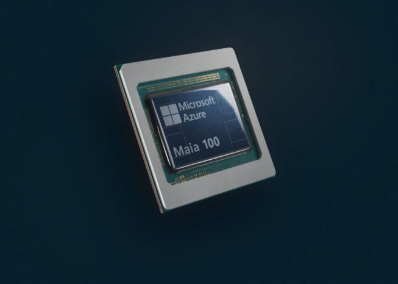
Microsoft First In-House AI Chip “Maia” Produced by <span style='color:red'>TSMC</span>’s 5nm
  On the 15th, Microsoft introducing its first in-house AI chip, “Maia.” This move signifies the entry of the world’s second-largest cloud service provider (CSP) into the domain of self-developed AI chips. Concurrently, Microsoft introduced the cloud computing processor “Cobalt,” set to be deployed alongside Maia in selected Microsoft data centers early next year. Both cutting-edge chips are produced using TSMC’s advanced 5nm process, as reported by UDN News.  Amidst the global AI fervor, the trend of CSPs developing their own AI chips has gained momentum. Key players like Amazon, Google, and Meta have already ventured into this territory. Microsoft, positioned as the second-largest CSP globally, joined the league on the 15th, unveiling its inaugural self-developed AI chip, Maia, at the annual Ignite developer conference.  These AI chips developed by CSPs are not intended for external sale; rather, they are exclusively reserved for in-house use. However, given the commanding presence of the top four CSPs in the global market, a significant business opportunity unfolds. Market analysts anticipate that, with the exception of Google—aligned with Samsung for chip production—other major CSPs will likely turn to TSMC for the production of their AI self-developed chips.  TSMC maintains its consistent policy of not commenting on specific customer products and order details.  TSMC’s recent earnings call disclosed that 5nm process shipments constituted 37% of Q3 shipments this year, making the most substantial contribution. Having first 5nm plant mass production in 2020, TSMC has introduced various technologies such as N4, N4P, N4X, and N5A in recent years, continually reinforcing its 5nm family capabilities.  Maia is tailored for processing extensive language models. According to Microsoft, it initially serves the company’s services such as $30 per month AI assistant, “Copilot,” which offers Azure cloud customers a customizable alternative to Nvidia chips.  Borkar, Corporate VP, Azure Hardware Systems & Infrastructure at Microsoft, revealed that Microsoft has been testing the Maia chip in Bing search engine and Office AI products. Notably, Microsoft has been relying on Nvidia chips for training GPT models in collaboration with OpenAI, and Maia is currently undergoing testing.  Gulia, Executive VP of Microsoft Cloud and AI Group, emphasized that starting next year, Microsoft customers using Bing, Microsoft 365, and Azure OpenAI services will witness the performance capabilities of Maia.  While actively advancing its in-house AI chip development, Microsoft underscores its commitment to offering cloud services to Azure customers utilizing the latest flagship chips from Nvidia and AMD, sustaining existing collaborations.  Regarding the cloud computing processor Cobalt, adopting the Arm architecture with 128 core chip, it boasts capabilities comparable to Intel and AMD. Developed with chip designs from devices like smartphones for enhanced energy efficiency, Cobalt aims to challenge major cloud competitors, including Amazon.
Key word:
Release time:2023-11-17 16:00 reading:2894 Continue reading>>

Turn to

/ 6

  • Week of hot material
  • Material in short supply seckilling
model brand Quote
RB751G-40T2R ROHM Semiconductor
TL431ACLPR Texas Instruments
BD71847AMWV-E2 ROHM Semiconductor
CDZVT2R20B ROHM Semiconductor
MC33074DR2G onsemi
model brand To snap up
STM32F429IGT6 STMicroelectronics
TPS63050YFFR Texas Instruments
BU33JA2MNVX-CTL ROHM Semiconductor
ESR03EZPJ151 ROHM Semiconductor
IPZ40N04S5L4R8ATMA1 Infineon Technologies
BP3621 ROHM Semiconductor
Hot labels
ROHM
IC
Averlogic
Intel
Samsung
IoT
AI
Sensor
Chip

About us

Qr code of ameya360 official account

Identify TWO-DIMENSIONAL code, you can pay attention to

AMEYA360 mall (www.ameya360.com) was launched in 2011. Now there are more than 3,500 high-quality suppliers, including 6 million product model data, and more than 1 million component stocks for purchase. Products cover MCU+ memory + power chip +IGBT+MOS tube + op amp + RF Bluetooth + sensor + resistor capacitance inductor + connector and other fields. main business of platform covers spot sales of electronic components, BOM distribution and product supporting materials, providing one-stop purchasing and sales services for our customers.

Please enter the verification code in the image below:

verification code