
ROHM and Infineon collaborate on silicon carbide power electronics packages to enhance flexibility for customers
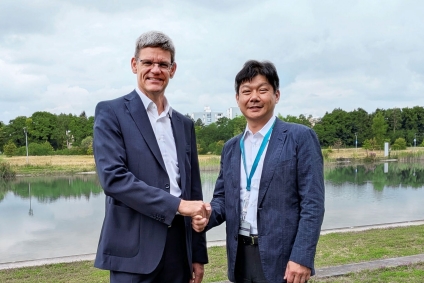
  ROHM and Infineon Technologies AG have signed a Memorandum of Understanding to collaborate on packages for silicon carbide (SiC) power semiconductors used in applications such as on-board chargers, photovoltaics, energy storage systems, and AI data centers. Specifically, the partners aim to enable each other as second sources of selected packages for SiC power devices, a move which will increase design and procurement flexibility for their customers. In the future, customers will be able to source devices with compatible housings from both ROHM and Infineon. The collaboration will ensure seamless compatibility and interchangeability to match specific customer needs.  "We are excited about working with ROHM to further accelerate the establishment of SiC power devices," said Dr. Peter Wawer, Division President Green Industrial Power at Infineon. "Our collaboration will provide customers with a wider range of options and greater flexibility in their design and procurement processes, enabling them to develop more energy-efficient applications that will further drive decarbonization."  "ROHM is committed to providing customers with the best possible solutions. Our collaboration with Infineon constitutes a significant step towards the realization of this goal, since it broadens the portfolio of solutions," said Dr. Kazuhide Ino, Member of the Board, Managing Executive Officer, in charge of Power Devices Business at ROHM. "By working together, we can drive innovation, reduce complexity, and increase customer satisfaction, ultimately shaping the future of the power electronics industry."Dr. Peter Wawer, Division President Green Industrial Power at Infineon (left)and Dr. Kazuhide Ino, Member of the Board and Managing Executive Officer at ROHM  As part of the agreement, ROHM will adopt Infineon’s innovative top-side cooling platform for SiC, including TOLT, D-DPAK, Q-DPAK, Q-DPAK dual, and H-DPAK packages. Infineon's top-side cooling platform offers several benefits, including a standardized height of 2.3 mm for all packages. This facilitates designs and reduces system costs for cooling, while also enabling better board space utilization and up to two times more power density.  At the same time, Infineon will take on ROHM’s DOT-247 package with SiC half-bridge configuration to develop a compatible package. That will expand Infineon’s recently announced Double TO-247 IGBT portfolio to include SiC half-bridge solutions. ROHM's advanced DOT-247 delivers higher power density and reduces assembly effort compared to standard discrete packages. Featuring a unique structure that integrates two TO-247 packages, it enables to reduce thermal resistance by approximately 15 percent and inductance by 50 percent compared to the TO-247. The advantages bring 2.3 times higher power density than the TO-247.  ROHM and Infineon plan to expand their collaboration in the future to include other packages with both silicon and wide-bandgap power technologies such as SiC and gallium nitride (GaN). This will further strengthen the relationship between the two companies and provide customers with an even broader range of solutions and sourcing options.  Semiconductors based on SiC have improved the performance of high-power applications by switching electricity even more efficiently, enabling high reliability and robustness under extreme conditions, while allowing for even smaller designs. Using ROHM’s and Infineon’s SiC products, customers can develop energy-efficient solutions and increase power density for applications such as electric vehicle charging, renewable energy systems and AI data centers.  About ROHM  ROHM, a leading semiconductor and electronic component manufacturer, was established in 1958. From the automotive and industrial equipment markets to the consumer and communication sectors, ROHM supplies ICs, discretes, and electronic components featuring superior quality and reliability through a global sales and development network. Our strengths in the analog and power markets allow us to propose optimized solutions for entire systems that combine peripheral components (i.e., transistors, diodes, resistors) with the latest SiC power devices as well as drive ICs that maximize their performance.  Further information is available at https://www.rohm.com  About Infineon  Infineon Technologies AG is a global semiconductor leader in power systems and IoT. Infineon drives decarbonization and digitalization with its products and solutions. The company has around 58,060 employees worldwide and generated revenue of about €15 billion in the 2024 fiscal year (ending 30 September). Infineon is listed on the Frankfurt Stock Exchange (ticker symbol: IFX) and in the USA on the OTCQX International over-the-counter market (ticker symbol: IFNNY).
Key word:
Release time:2025-09-29 14:53 reading:585 Continue reading>>
ROHM Group Company SiCrystal and STMicroelectronics Expand Silicon Carbide Wafer Supply Agreement
  Kyoto, Japan and Geneva, Switzerland, April 22, 2024 – ROHM (TSE: 6963) and STMicroelectronics (NYSE: STM), a global semiconductor leader serving customers across the spectrum of electronics applications, announced today the expansion of the existing multi-year, long-term 150mm silicon carbide (SiC) substrate wafers supply agreement with SiCrystal, a ROHM group company. The new multi-year agreement governs the supply of larger volumes of SiC substrate wafers manufactured in Nuremberg, Germany, for a minimum expected value of $230 million.  Geoff West, EVP and Chief Procurement Officer, STMicroelectronics, commented “This expanded agreement with SiCrystal will bring additional volumes of 150mm SiC substrate wafers to support our devices manufacturing capacity ramp-up for automotive and industrial customers worldwide. It helps strengthen our supply chain resilience for future growth, with a balanced mix of in-house and commercial supply across regions”.  “SiCrystal is a group company of ROHM, a leading company of SiC, and has been manufacturing SiC substrate wafers for many years. We are very pleased to extend this supply agreement with our longstanding customer ST. We will continue to support our partner to expand SiC business by ramping up 150mm SiC substrate wafer quantities continuously and by always providing reliable quality”. said Dr. Robert Eckstein, President and CEO of SiCrystal, a ROHM group company.  Energy-efficient SiC power semiconductors enable electrification in the automotive and industrial sectors in a more sustainable way. By facilitating more efficient energy generation, distribution and storage, SiC supports the transition to cleaner mobility solutions, lower emissions industrial processes and a greener energy future, as well as more reliable power supplies for resource-intensive infrastructure like data centers dedicated to AI applications.  About STMicroelectronics  At ST, we are over 50,000 creators and makers of semiconductor technologies mastering the semiconductor supply chain with state-of-the-art manufacturing facilities. An integrated device manufacturer, we work with more than 200,000 customers and thousands of partners to design and build products, solutions, and ecosystems that address their challenges and opportunities, and the need to support a more sustainable world. Our technologies enable smarter mobility, more efficient power and energy management, and the wide-scale deployment of cloud-connected autonomous things. We are committed to achieving our goal to become carbon neutral on scope 1 and 2 and partially scope 3 by 2027.  Further information can be found at www.st.com .  About ROHM  Founded in 1958, ROHM provides ICs and discrete semiconductor devices characterized by outstanding quality and reliability for a broad range of markets, including automotive, industrial equipment and consumer market via its global development and sales network.  In the analog power field, ROHM proposes the suitable solution for each application with power devices such as SiC and driver ICs to maximize their performance, and peripheral components such as transistors, diodes, and resistors.  Further information on ROHM can be found at www.rohm.com .  About SiCrystal  SiCrystal, a ROHM group company, is one of the global market leaders for monocrystalline silicon carbide wafers. SiCrystal’s advanced semiconductor substrates provide the basis for the highly efficient use of electrical energy in electric vehicles, fast charging stations, renewable energies and in various fields of industrial applications.  Further information on SiCrystal can be found at www.sicrystal.de .
Key word:
Release time:2024-04-24 11:10 reading:1432 Continue reading>>
Panasonic Invests in Ubiden, an EV Charging Service Startup, through Panasonic Kurashi Visionary Fund
  Panasonic Corporation (Head office: Minato-ku, Tokyo; President & CEO: Masahiro Shinada; hereinafter referred to as Panasonic) today announced that it has decided to invest in Ubiden, Inc. (Head office: Minato-ku, Tokyo; Representative: Norio Yamaguchi; hereinafter referred to as Ubiden), a company that provides charging services for electric vehicles, through a corporate venture capital fund, commonly known as the Panasonic Kurashi Visionary Fund, jointly managed by Panasonic and SBI Investment Co., Ltd.  The number of standard chargers* installed in Japan is expected to increase to 77,000 by 2035, about three times the total installed in 2021. However, the lack of EV charging facilities is still cited as one of the reasons for the slower adoption of EVs in Japan than in other countries.  Ubiden operates an electric vehicle charging service called WeCharge, which allows customers to use a smartphone app to pay for electricity used at dedicated EV charging outlets based on the amount of electricity used, rather than the time spent charging. It also provides a user-friendly UX (user experience) that enables easy payment between EV users and charger owners, giving the company an advantage in charging service operation at residential complexes, commercial facilities and other locations where multiple EV owners use the service.  Panasonic provides ELSEEV electric vehicle (EV and PHEV) charging equipment and outdoor EV charging outlets, which are already in use by Ubiden. Through this investment, Panasonic, in conjunction with Ubiden's outstanding software (for system control, platform operation, and other purposes), will explore the potential for installation of EV charging facilities to be expanded to condominiums and other residential complexes, which has up to now been difficult to achieve for both physical and operational reasons. The company aims to develop an optimal charging infrastructure that will support the uptake of EVs in Japan.  With a mission to contribute to the wellbeing of people, society and the planet, Panasonic aims to be the best partner of people's life with human centric technology and innovation. The company will continue to strengthen its open innovation initiatives based on strong partnerships by investing in promising startups both in Japan and overseas that are competitive in areas that are closely related to people's lives, such as energy, food infrastructure, spatial infrastructure, and lifestyle.
Key word:
Release time:2023-04-27 11:48 reading:3542 Continue reading>>
AMEYA360:Onsemi NTH4L028N170M1 Silicon Carbide (SiC) MOSFET
Ameya360:Onsemi NVH4L015N065SC1 Silicon Carbide (SiC) MOSFETs
Cree and STMicroelectronics Announce Multi-Year Silicon Carbide Wafer Supply Agreement
Release time:2019-01-09 00:00 reading:4201 Continue reading>>
AI Gets $100M <span style='color:red'>Bid</span> from Qualcomm
Qualcomm launched a $100 million venture fund at an event here where the level of enthusiasm for machine learning ran high. China’s SenseTime alone talked about taking in $3 billion for its platform, and others gave examples of AI quadrupling productivity and saving lives.The combination of 5G and AI is central to Qualcomm’s corporate strategy in the wake of its failed merger with NXP and slowing smartphone growth. The combination of the two technologies will expand the company’s addressable market to a smart internet of things, said chief executive Steve Mollenkopf.“The funnel of companies we talk to has widened” to include industrial, automotive, and health-care companies, among others, he said.“Today, the premier device that collects and controls data is the smartphone where Qualcomm is the leader, but in time, that will change to IoT,” said Keith Kressin, senior vice president of product management, adding that the company will unveil a Snapdragon next week with expanded DSP, GPU, and custom blocks for AI.The $100 million fund represents a small slice of more than $1 billion that Qualcomm Ventures has invested to date in more than 150 companies, including China handset maker Xiaomi. Qualcomm was also an early investor in Brain Corp., a developer of autonomous navigation systems.The first investment of the new fund went to AnyVision. The software startup’s tools extend traditional image recognition to analyze behaviors to determine, for example, if two people are in conversation.SK Telecom shares Qualcomm’s 5G + AI strategy. It aims to launch 5G services in South Korea on Dec. 1 in Seoul and six other cities, focusing in part on services such as computer vision for business customers such as Myunghwa Industry Co. Ltd., an auto parts company.“High-resolution, multi-angle photos of products on conveyor belts will be sent to the cloud server via 5G mobile routers, and the server’s high-performance AI will instantly scan the photos to check for defective products,” said the carrier in a press statement.AI could ask for no more enthusiastic proponent than Stanford professor and serial entrepreneur Sebastian Thrun, who spoke at the Qualcomm event.Machine learning will help and augment people, not threaten them, he argued, giving an example from his startup Cresta, whose software quadrupled productivity of salespeople in field trials.One student of Thrun created a database of images of skin cancers. Using machine learning, it was able to speed up diagnosis of malignant cancers, he said. He also shared experiences using AI for self-driving cars and his latest startup, KittyHawk, devoted to self-flying taxis and personal planes.“AI is a wide-open field,” he told a crowd of about 100 venture capitalists and entrepreneurs. “For example, we still don’t have good hardware and software to train on a phone or across many phones. There are opportunities to transform just about every business.“I don’t think AI is overhyped; if I’m not mistaken, it’s going to be the next book,” he added, comparing the discovery of deep learning to the printing press.In China, SenseTime raised $3 billion to date to fund its company’s AI software platform and three private data centers that run it. The centers in Beijing, Shanghai, and Shenzhen have a combined processing power of about 150 petaflops, nearly as much as the world’s largest supercomputer, said George Huang, the startup’s head of international business.SenseTime claims that it competes with the world’s largest data center operators in performance on deep learning. (Image: SenseTime)Like Qualcomm and Thrun, the China startup is pursuing a waterfront of 18 vertical markets including smart cities, manufacturing, financial services, and the smart home. It lays claim to having 700 partner and client relationships forged in its four years to date.SenseTime helps companies develop their own applications and algorithms that run in its systems, often using its data sets geared for image and face recognition, natural-language processing, and other automated services.Today, the company has a database of 2 billion images of 400 million people. “Next year, with our new algorithm, we target being able to accurately recognize one person in 100 million people,” said Huang. “That’s the population of Japan.”
Key word:
Release time:2018-12-03 00:00 reading:1370 Continue reading>>
STMicro Sees Strong Demand for Silicon Carbide
As STMicroelectronics reported its first quarterly results since President and CEO Jean-Marc Chery took the helm, the company was bullish about its automotive market pipeline, and especially for its silicon carbide (SiC) products from which it expects revenues of $100 million in 2018.“We have more than 25 automotive projects in discussion, and 85% of these are in SiC," Chery said. "We are preparing our capital expenditure next quarter to support this, as SiC will be an important game changer for the industry.”Asked by analysts about his confidence level in growth in the automotive and industrial sector for ST, he said, “We don’t see any weak signals, we are really confident as demand is really strong.”Chery said that the second quarter saw design wins for its third generation SiC MOSFETS and SiC diodes for car electrification in Asia and Europe, plus a custom galvanic isolation gate driver for an electric vehicle, a chipset for braking applications in Europe, ICs for engine management for Japanese and Korean customers, and an SP58 32-bit microcontroller win for a body control module for a European tier one supplying a U.S. car maker.He also said that in the personal electronics sector, while sales to its lead customer for smartphones (Apple) will see growth as it launches its new models in September, a key highlight was a design win for its STM32F7 in a high-end 4K TV at a key Japanese OEM. “This was previously a difficult market for us to penetrate,” Chery said.Second quarter net revenues and gross margin were above the mid-point of the company’s outlook. ST reported second quarter net revenues of $2.27 billion, gross margin of 40.2%, operating margin of 12.7%, and net income of $261 million or $0.29 diluted earnings per share.Asked about the potential impact of the trade war between the U.S. and China, Chery said, “At this moment, the direct impact is negligible. But we are monitoring the situation. If the trade war escalates, we are more concerned about the macro level impact on the industry, but we have nothing more to add at this stage.”Responding to questions about ST’s M&A strategy, he said that the company is continuing it strategy of organic growth for 2018, supported my small acquisitions to support areas like its STM32 products, such as its recent acquisition of Draupner Graphics. He added that the company would update the market on its M&A strategy towards the end of the year, though it may potentially make small IP company acquisitions to improve its portfolio.
Key word:
Release time:2018-07-27 00:00 reading:1328 Continue reading>>
Broadcom Earnings In Focus After Qualcomm <span style='color:red'>Bid</span> Withdrawal
Key word:
Release time:2018-03-15 00:00 reading:4023 Continue reading>>
White House blocks Broadcom bid for Qualcomm
  US President, Donald Trump, has announced that the US is blocking the Singaporean chip maker Broadcom's bid for the chip manufacturer Qualcomm, citing national security concerns. The move ends what would have been the largest ever tech deal.  In what was seen as an unusual move Trump said that "there is credible evidence," that the proposed bid could lead to "action that threatens to impair the national security of the United States."  The move by the President follows a review by the Committee on Foreign Investment in the United States (Cfius) which had concluded that it was minded to refer the deal to the administration for rejection.  While Broadcom strongly disagreed with the committee's findings which suggested there were "potential national security concerns" there were also concerns, again highlighted by the committee, that investment in research at Qualcomm would be cut back should the takeover go through.  While Broadcom promised to maintain levels of research and development and not to sell off any "critical national security assets" it appears that was not enough for the US authorities.  It comes at a time of growing protectionism in the US and it was thought that allowing the purchase of a leading semiconductor company by a foreign company would weaken the position of the US, to the benefit of China.  The administration is said to have been concerned about the US losing its leading position in 5G technology which is seen as being critical to the next generation of wireless devices and technologies.
Key word:
Release time:2018-03-14 00:00 reading:1321 Continue reading>>

Turn to

/ 2

  • Week of hot material
  • Material in short supply seckilling
model brand Quote
RB751G-40T2R ROHM Semiconductor
BD71847AMWV-E2 ROHM Semiconductor
TL431ACLPR Texas Instruments
MC33074DR2G onsemi
CDZVT2R20B ROHM Semiconductor
model brand To snap up
STM32F429IGT6 STMicroelectronics
BP3621 ROHM Semiconductor
IPZ40N04S5L4R8ATMA1 Infineon Technologies
BU33JA2MNVX-CTL ROHM Semiconductor
ESR03EZPJ151 ROHM Semiconductor
TPS63050YFFR Texas Instruments
Hot labels
ROHM
IC
Averlogic
Intel
Samsung
IoT
AI
Sensor
Chip

About us

Qr code of ameya360 official account

Identify TWO-DIMENSIONAL code, you can pay attention to

AMEYA360 mall (www.ameya360.com) was launched in 2011. Now there are more than 3,500 high-quality suppliers, including 6 million product model data, and more than 1 million component stocks for purchase. Products cover MCU+ memory + power chip +IGBT+MOS tube + op amp + RF Bluetooth + sensor + resistor capacitance inductor + connector and other fields. main business of platform covers spot sales of electronic components, BOM distribution and product supporting materials, providing one-stop purchasing and sales services for our customers.

Please enter the verification code in the image below:

verification code