Renesas Develops SoC Technologies for Automotive Multi-Domain <span style='color:red'>ECU</span>s Essential for the SDV Era
  Renesas Electronics Corporation (TSE:6723), a premier supplier of advanced semiconductor solutions, has developed three System-on-Chip (SoC) technologies for automotive multi-domain electronic control units (ECUs). They feature advanced AI processing capabilities and chiplet functions, serving as the core technology platform for next-generation automotive electrical/electronic (E/E) architectures. Renesas presented the results at the International Solid-State Circuits Conference 2026 (ISSCC 2026), held February 15–19 in San Francisco, USA.  In the age of software-defined vehicles (SDVs), automotive SoCs require advanced performance to run multiple applications simultaneously and must offer scalability through chiplets. They must also meet the functional safety requirements of automotive SoCs. As multi-domain SoCs powering central computing are growing larger and more complex, maintaining automotive-grade quality is becoming more difficult. With increased performance in advanced SoCs, power consumption also rises, making improvements in power efficiency and safety vital. To meet these needs, Renesas has developed the following new technologies.  1. Chiplet architecture that supports functional safety  To meet the functional safety requirements of automotive SoCs, Renesas has developed a new, proprietary architecture that supports ASIL D even in a chiplet configuration. By combining the standard die-to-die UCIe interface with a proprietary RegionID mechanism, the architecture prevents interference with hardware resources, even when numerous applications run simultaneously, thereby achieving Freedom from Interference (FFI).  Conventional UCIe interfaces lack functionality to transmit RegionIDs between dies. Renesas developed a method for mapping RegionIDs into physical address space, encoding them into the UCIe region, and transmitting them. This enables safe access control through the memory management unit (MMU) and real-time cores, and meets functional safety requirements across chiplets. Additionally, by maintaining bandwidth from processors to the memory bus, the UCIe interface was confirmed through testing to achieve a high transmission speed of 51.2 GB/s, approaching the upper limit of intra-SoC transfer speeds. This technology provides both scalability and safety for high-performance automotive SoCs.  2. Advanced AI processing capabilities and automotive-grade quality  Automotive-grade quality is vital for SDV systems. Renesas has created a 3 nm SoC design that improves the performance of neural processing units (NPUs) for AI processing, while maintaining automotive-grade quality. In recent years, NPUs have been growing larger, with their area expanding 1.5-fold compared to previous generations. This has led to increased clock latency between shared clock sources and individual circuits. To address this problem, Renesas has redesigned the clock architecture by splitting up clock pulse generators (CPGs), which in past designs were module-level units, and placing mini-CPGs (mCPGs) at the sub-module level. This greatly reduces clock latency and meets timing requirements.  However, multi-layer mCPGs complicate test clock synchronization, which is critical for achieving zero defects in automotive applications. Renesas has integrated test circuits into the hierarchical CPG architecture and unified the signal path for user clocks and test clocks. The new design also synchronizes upper- and lower-level mCPGs under a single clock source in test mode. This makes unified phase adjustment possible. As a result, Renesas has been able to achieve quality aligned with zero-defect expectations, even for large-scale SoCs, providing the high reliability required for next-generation SDV automotive SoCs.  3. Advanced power control and monitoring for improved power efficiency and safety  To achieve the high level of performance required for automotive SoCs with improved power efficiency and safety, Renesas has developed advanced power gating technology that uses over 90 power domains. It enables precise power control, from several milliwatts to several tens of watts, depending on operating conditions. Furthermore, Renesas has split power switches (PSWs) into ring PSWs and row PSWs to reduce IR drops (voltage drops) associated with increasing current density from smaller process geometries. When power is turned on, the ring PSW suppresses rush currents. Then the row PSW equalizes impedance within the domain. Together, these reduce IR drops by roughly 13% compared with conventional designs.  To meet ASIL D functional safety standards, the dual core lock step (DCLS) configuration controls the master and checker cores with independent power switches and controllers. With this design, even if one side fails, the failure can be detected through lockstep operation. Furthermore, loopback monitoring is performed for each PSW's gate signal, so OFF states are detected when a failure occurs. A digital voltage meter (DVMON), which is highly resistant to temperature drift, is used for voltage monitoring. This improves aging tolerance by 1.4 mV. These technologies enable high-performance automotive SoCs that offer both power efficiency and safety.  These new technologies are being used in Renesas' R-Car X5H SoC for automotive multi-domain ECUs. With R-Car X5H, users can accelerate the evolution of SDVs while ensuring safety and enabling autonomous driving, digital cockpit and more.  About Renesas Electronics Corporation  Renesas Electronics Corporation (TSE: 6723) empowers a safer, smarter and more sustainable future where technology helps make our lives easier. A leading global provider of microcontrollers, Renesas combines our expertise in embedded processing, analog, power and connectivity to deliver complete semiconductor solutions. These Winning Combinations accelerate time to market for automotive, industrial, infrastructure and IoT applications, enabling billions of connected, intelligent devices that enhance the way people work and live. Learn more at renesas.com. Follow us on LinkedIn, Facebook, X, YouTube, and Instagram.  (Remarks) All names of products or services mentioned in this press release are trademarks or registered trademarks of their respective owners.
Key word:
Release time:2026-02-28 15:45 reading:244 Continue reading>>
GigaDevice Achieves ISO/SAE 21434 Certification and ASPICE CL2 Assessment, Strengthening Automotive Cybersecurity Together with TÜV Rheinland
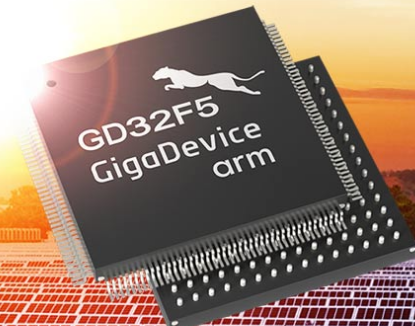
  GigaDevice, a leading semiconductor company specializing in Flash memory, 32-bit microcontrollers (MCUs), sensors, and analog products, has been awarded the ISO/SAE 21434 Road Vehicles Cybersecurity Engineering certification by TÜV Rheinland. In parallel, the MCAL (Microcontroller Abstraction Layer) software of GD32A7 automotive-grade MCUs successfully passed the ASPICE Capability Level 2 (CL2) assessment. These milestones demonstrate GigaDevice’s alignment with internationally recognized practices in automotive cybersecurity and software project management, reinforcing its competitiveness in the global automotive electronics market.  ISO/SAE 21434, jointly issued by ISO and SAE, defines a comprehensive cybersecurity risk-management framework that spans the entire vehicle lifecycle. As vehicles become increasingly connected and intelligent, cybersecurity has emerged as a foundational requirement for protecting user privacy and ensuring a secure, reliable mobility experience. Achieving this certification confirms that GigaDevice has established an end-to-end cybersecurity governance framework across the design, development, and mass-production phases of its automotive product portfolio—helping customers streamline compliance, accelerate program approvals, and enhance market competitiveness.  The ASPICE assessment model, governed by the German Association of the Automotive Industry (VDA), is one of the industry's most important standards for evaluating software development capability. ASPICE CL2 requires companies to adopt structured processes for project planning, monitoring, and traceability. Developed in full compliance with AUTOSAR, the GD32A7 MCAL software supports major compilers and debugging toolchains while meeting both functional-safety and cybersecurity requirements. Passing ASPICE CL2 affirms the maturity of GigaDevice’s software-development lifecycle and underscores its commitment to high-reliability automotive solutions.  Driven by new infrastructure such as 5G, AI, and the IoT, vehicles are evolving into interactive intelligent terminals. Automotive-grade chips play a central role in this transition, enabling continuous advancements in vehicle intelligence. Designed for next-generation automotive platforms, the GD32A7 series leverages the Arm® Cortex®-M7 core and offers multiple configurations, including single-core, multi-core, and lockstep architectures. With a maximum frequency of 320MHz and up to 1300 DMIPS of compute performance, the devices support 2.97V–5.5V operation and deliver stable performance across a –40°C to +125°C temperature range. The series are well suited for applications such as body electronics, intelligent cockpit systems, chassis control, and powertrain subsystems.  The GD32A71x/GD32A72x families comply with ISO 26262 ASIL B, while the GD32A74x series supports ASIL D requirements. All product lines integrate a Hardware Security Module (HSM) with TRNG, AES, HASH, ECC/RSA, and Chinese SM2/SM3/SM4 cryptographic engines, meeting the Evita Full information-security architecture and providing robust data protection for in-vehicle systems.  Wenxiong Li, Vice President of GigaDevice and General Manager of the Automotive BU, stated: “Achieving ISO/SAE 21434 certification and ASPICE CL2 capability assessment marks an important milestone in elevating our automotive-grade MCU development to higher standards of security and process maturity. GigaDevice will continue to expand the GD32 MCU automotive portfolio and deepen our collaboration with TÜV Rheinland to deliver higher-performance, higher-security products and a more complete ecosystem for our customers.”  Bin Zhao, General Manager of Industrial Services and Cybersecurity at TÜV Rheinland Greater China commented: “GigaDevice has demonstrated exceptional execution and technical competence in establishing automotive cybersecurity systems and software development processes. Obtaining ISO/SAE 21434 certification and ASPICE CL2 capability assessment provides strong validation for its entry into global automotive supply chains. We look forward to further collaboration to advance innovation and deployment in automotive electronics safety.”  GigaDevice and TÜV Rheinland also announced the establishment of a strategic partnership focused on functional safety, cybersecurity, personnel training, and certification services. The collaboration aims to integrate both parties' strengths to enhance competitiveness across automotive, industrial, and emerging markets—delivering safer and more reliable products and solutions to customers worldwide.
Key word:
Release time:2025-12-26 16:25 reading:1106 Continue reading>>
ROHM selected for CDP’s A List for Climate Change and Water Security
  ROHM Co., Ltd. has been recognized for leadership in corporate sustainability by CDP (Carbon Disclosure Project), an international environmental non-profit organization, securing a place on its prestigious ‘2024 A List’ for tackling both climate change and water security.  This is the first time to be included in the Climate Change A list, the highest rating, for ROHM, as well as the fourth consecutive year to secure a position on the Water Security A list.  CDP is an international environmental non-profit organization that operates a global environmental disclosure system for companies and municipalities. It conducts environmental information surveys and publishes data regarding Climate Change and Water Security. The survey is fully aligned with the TCFD, and its scores are widely used for decision-making regarding investments and purchasing in a sustainable and resilient net-zero economy. In 2024, more than 700 signatory financial institutions requested disclosure of data on environmental impacts, risks, and opportunities through the CDP platform, with a record number of nearly 24,800 companies responding. The survey employs an eight-tier evaluation scale with levels ranging from Leadership level (A, A-) to Management level (B, B-), Recognition level (C, C-), and Disclosure level (D, D-), based on criteria such as comprehensiveness of disclosure, identification and management of environmental risks, and ambitious target setting.        Environmental Management at ROHM  In the Environmental Vision 2050, ROHM has committed to achieving virtually zero greenhouse gas emissions and maximizing resource recycling to eliminate waste from all its business activities.  ・Water Resource Management  ROHM has set a target to increase the proportion of water recovery and reuse by at least 5.5% by FY2030 (compared to FY2019), and is making efforts to reuse water resources and reduce factory wastewater by globally managing water withdrawal, wastewater, and water usage. In addition to addressing risks such as flooding, ROHM has implemented a business continuity management system, which predicts potential risks, and made production continuity plans for each site. ROHM is also taking ongoing measures, such as constructing new production buildings based on flood countermeasures.  In 2024, ROHM received an independent verification of its water withdrawal and wastewater volume data in order to disclose information to society with higher transparency and reliability.  ・Climate Change Measures  ROHM has set a target to reduce greenhouse gas emissions (Scope 1 and 2) by at least 50.5% byFY2030 (compared to FY2018), and is working globally to introduce environmentally-friendly equipment and reduce usage through energy conversion. In 2024, ROHM has expanded independent verification to achieve a 100% verification rate for its internally calculated greenhouse gas emissions (Scope 1 and 2). Additionally, ROHM has introduced an Internal Carbon Pricing (ICP) system to promote decarbonized management.  Furthermore, ROHM has announced a plan to source 100% of the electricity used in all domestic and international business activities from renewable energy by FY2050. Several sites, including major overseas production plants, are already operating with 100% renewable energy. As of FY2023, ROHM has achieved a 43% adoption rate and plans to increase this to 65% by FY2030.  Encouraged by the evaluation results, ROHM will continue promoting CSR activities and addressing social issues to achieve a sustainable society and become a company that meets the expectations of its stakeholders.
Key word:
Release time:2025-03-21 13:52 reading:670 Continue reading>>
ROHM included in S&P Global's Sustainability Yearbook 2025 as Sustainability Yearbook Member for the second consecutive year
SIMCom Achieves ISO/SAE 21434 Certification for Automotive Cybersecurity Management
  SIMCom, a global leader in IoT communication, has proudly received the ISO/SAE 21434 certification for Automotive Cybersecurity Management from TÜV NORD, an international independent third-party testing, inspection, and certification organization. This certification marks a significant milestone in SIMCom’s commitment to advancing automotive cybersecurity and delivering top-tier solutions to the automotive industry.  Importance of ISO/SAE 21434  Achieving the ISO/SAE 21434 certification underscores SIMCom's ability to meet stringent cybersecurity risk management requirements across the entire product lifecycle—from conceptual design, development, and production to operation and maintenance. This critical achievement validates SIMCom's dedication to adhering to the highest standards of automotive cybersecurity. In an era of increasing vehicle connectivity, robust cybersecurity measures are paramount. The certification confirms that SIMCom’s products are designed to safeguard against evolving cyber threats, ensuring the safety and security of in-vehicle systems and communications.  Comprehensive Automotive Solutions  In alignment with automotive industry trends, SIMCom continues to expand its automotive product lineup, offering enhanced IoT solutions to car manufacturers and Tier 1 suppliers. This strategic expansion not only strengthens SIMCom's position in the connected vehicle industry but also underscores its commitment to providing secure and reliable products.  SIMCom offers a complete range of automotive-grade cellular communication modules, including SIM7800X, SIM7805X, and SIM8800X and so on. Additionally, SIMCom provides smart modules, GNSS positioning modules, 5G modules and Wi-Fi & Bluetooth modules, delivering one-stop services to global car manufacturers and Tier 1 suppliers. These products are designed to meet diverse application scenarios, including in-vehicle communication, vehicle positioning, smart cockpits, and digital keys. The integration of various cybersecurity functions, such as encryption, authentication, and data integrity checks, ensures the security of in-vehicle systems and communications, preventing unauthorized access and data tampering.  Future Outlook  SIMCom will continue to align with market demands and industry standards, focusing on vehicle network and information security. By collaborating with industry partners, SIMCom aims to continually enrich its automotive product portfolio, offering compliant, reliable, and professional products and services. This commitment will drive the intelligent and secure development of the automotive industry chain.
Key word:
Release time:2024-08-23 13:13 reading:1172 Continue reading>>
GigaDevice Launches Advanced PC Fingerprint Solution, Promising Enhanced Security and User Experience
  a leading provider of flash memory, 32-bit microcontrollers, sensors, and analog technology, introduces all-new PC fingerprint solutions, including GSL6186 MoC(Match-on-Chip) and GSL6150H0 MoH(Match-on-Host). Based on advanced biometric technology, the solutions allow users to effortlessly and securely access their Windows PC devices with a simple touch of fingerprint. The GSL6186 MoC solution has already received certification from Windows Hello Enhanced Sign-in Security (ESS) and Microsoft Windows Hardware Lab Kit (HLK), added to Microsoft Approved Vendor List (AVL).  GigaDevice GSL6186 MoC fingerprint recognition solution utilizes System-in-package (SiP) technology, integrating fingerprint algorithm acceleration modules and storage modules within the chip. It combines excellent capacitive fingerprint hardware detection with proprietary algorithms, achieving an impressive high performance. The SiP system-level packaging ensures secure storage, minimizing privacy risks. Supporting POA and low latency, it enhances user experience and offers compatibility with USB, SPI interfaces, and various host platforms. Customizable in size and shape, it caters to diverse design preferences. Ideal for unlocking, system/APP software login, online payments, and various other scenarios, it delivers a convenient user experience.  GigaDevice GSL6150H0 MoH fingerprint recognition solution also comes equipped with high-performance capacitive fingerprint sensors and proprietary biometric algorithms. Utilizing on-host fingerprint matching, it provides a cost-saving advantage.  "We are committed to innovating in the next generation of intelligent terminal biometric sensing technology, delving into the research and development of human-machine interaction sensor chips and solutions", says Jun Zhi, Vice President and General Manager of Sensor BU in GigaDevice, "Our fingerprint products have become a popular selection in the smartphone market. The introduction of GSL6186 MoC and GSL6150H0 MoH signifies our further expansion into the PC domain. Regarding quality control, we are committed to delivering high-quality products and solutions to our customers, prioritizing comprehensive product lifecycle management and proactive risk control, alongside continuous process optimization. We have also established a stable and flexible supply chain system, which enables a quicker response to customer needs, enhancing the accuracy and timeliness of delivery.      Furthermore, we offer integrated services and technical support, providing a convenient 'one-stop' solution to expedite customers' product launch process. We will accelerate product upgrades and continue to expand our presence in fields such as PC, smartphones, wearables, mobile health, IoT, etc., offering customers a broader array of innovative solutions."
Key word:
Release time:2024-05-27 16:17 reading:2061 Continue reading>>
Nidec Executes Naming Rights Contract on Kyoto Tower to Rename It Nidec Kyoto Tower
Key word:
Release time:2024-03-20 11:32 reading:2547 Continue reading>>
BIWIN Secures Fastest Growing Flash Storage & Manufacturer Brand Title at DT Awards 2023
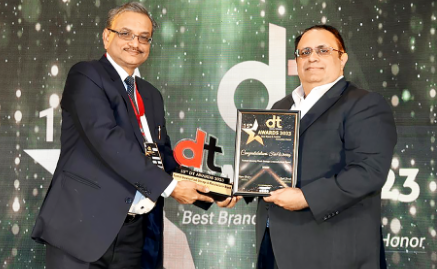
  BIWIN, a distinguished player in the flash storage industry, clinches the prestigious "Fastest Growing Flash Storage & Manufacturer Brand" award at the 15th Digital Terminal (DT) Awards 2023. The ceremony, held at Hotel The Suryaa in New Delhi, underscores BIWIN's pivotal role in the fiercely competitive Indian ICT sector.  Accepting the award on behalf of BIWIN, Rajesh Khurana, Country Manager for Consumer Business in India, emphasized BIWIN's commitment to innovation, excellence, and utmost customer satisfaction.  The DT Awards, recognized as India's premier tech honor, gathered over 250 industry leaders and celebrated achievements across more than 110 categories. BIWIN's triumph in this category is a testament to BIWIN's unwavering dedication to delivering cutting-edge and relevant flash storage solutions to the Indian market. This success is fueled by BIWIN's distinctive design and an unwavering commitment to quality.  The award not only acknowledges BIWIN's current standing as a key player in the flash storage industry but also propels BIWIN forward as an innovator committed to shaping the digital landscape. BIWIN continues to push boundaries in the flash storage sector, fueled by the recognition bestowed upon them at the 15th DT Awards.  BIWIN's vision extends beyond this award, focusing on advancing technology solutions to shape the digital future. As a recipient of this esteemed accolade, BIWIN remains dedicated to spearheading innovation and excellence in the dynamic realm of flash storage.  The Digital Terminal Awards, recognized as a premier accolade in the Indian ICT industry, annually celebrates the contributions of tech brands to the digital landscape. It stands as a testament to BIWIN's commitment to driving innovation and excellence in the ever-evolving tech sector.
Key word:
Release time:2024-01-26 13:50 reading:2700 Continue reading>>
[News] Samsung Fails to Secure Qualcomm’s 3nm Orders for the Coming Year, Dual Foundry Strategy Postponed
  According to TechNews’ report, TSMC and Samsung fiercely compete in the semiconductor foundry sector. Earlier market reports suggested that Qualcomm’s Snapdragon 8 Gen 4 mobile processor might adopt a dual-foundry strategy with TSMC and Samsung manufacturing simultaneously.  However, according to the latest industry information, due to Samsung’s conservative expansion plan for next year’s 3nm production capacity and unstable yields, Qualcomm has officially canceled the plan to utilize Samsung for next year’s processors. The dual-sourcing model is now postponed until 2025.  Samsung began mass production of its first-generation 3nm GAA (SF3E) process at the end of June last year, marking Samsung’s initial use of the innovative GAA architecture for transistor technology. The second-generation 3nm process, 3GAP (SF3), will utilize the second-generation MBCFET architecture, optimizing it based on the foundation of the first-generation 3nm SF3E. It is expected to enter mass production in 2024.  The dual-foundry strategy for Qualcomm was initially leaked by the reputable source Revegnus via the X platform (formerly Twitter). It was mentioned that the Snapdragon 8 Gen 4 processor would adopt TSMC’s 3nm (N3E) process, while Samsung’s 3GAP process would be used for the Snapdragon 8 Gen 4 supplying Samsung’s Galaxy series smartphones. Other sources suggested that due to limited capacity at TSMC’s 3nm production, Qualcomm had to seek Samsung as an alternative chip foundry.  As a result, Qualcomm originally anticipated dual-foundry production with both TSMC and Samsung in 2024, with hopes of being the first customer for the 3GAP process. However, considering Samsung’s conservative 3nm production capacity plan for next year and the instability in yields, Qualcomm decided to scrap the plan and exclusively rely on TSMC, pushing the dual-foundry strategy to 2025.  Currently, TSMC’s 3nm process technology capacity is on the rise, with expectations that by the end of 2024, monthly production capacity will reach 100,000 wafers, and the revenue contribution will increase from the current 5% to 10%.
Key word:
Release time:2023-12-01 14:48 reading:3374 Continue reading>>
Nidec Instruments Launches High-security Card Reader that Meets International Standard PCI PTS*1
  Nidec Instruments Corporation (“Nidec Instruments”), a wholly owned subsidiary of Nidec Corporation, today announced the launch of a card reader that meets the latest Ver. 6 of the PCI PTS POI (Payment Card Industry PIN Transaction Security Point Of Interaction) mandated by the PCI SSC (PCI Security Standards Council), the organization jointly established by five globally recognized credit card companies.  Nidec Instruments’ PCI Ver. 6-certified Security Card Reader  The global credit card payment market was US$521.8 billion in size as of 2022, and it is expected to continue to grow sustainably. On the other hand, however, the amount of damage caused by credit card misuse is increasing yearly, making safety measures a critical task for credit card companies. Nidec Instruments’ latest card reader, developed to read magnetic strip-attached credit cards and contact-type IC cards, is anticipated to be installed in POS systems at gas stations and kiosk terminals at airports, among many other locations.  Credit card readers installed outdoors are required to meet the PCI PTS, a security standard for credit cards and their security code readers, and the aforementioned product not only meets the latest Version 6 of the standard, but is equipped with a durable magnetic head and a contact-type IC chip interface as well.  As a member of the world’s leading comprehensive motor manufacturer, Nidec Instruments stays committed to offering revolutionary solutions that contribute to creating a comfortable society.  *1. PCI PTS: A security standard required of “venders” that develop mPOS payment terminals, and also a security requirement for PIN-entering payment terminals to meet.
Key word:
Release time:2023-11-29 14:26 reading:2442 Continue reading>>

Turn to

/ 7

  • Week of hot material
  • Material in short supply seckilling
model brand Quote
MC33074DR2G onsemi
TL431ACLPR Texas Instruments
BD71847AMWV-E2 ROHM Semiconductor
CDZVT2R20B ROHM Semiconductor
RB751G-40T2R ROHM Semiconductor
model brand To snap up
ESR03EZPJ151 ROHM Semiconductor
IPZ40N04S5L4R8ATMA1 Infineon Technologies
BU33JA2MNVX-CTL ROHM Semiconductor
BP3621 ROHM Semiconductor
STM32F429IGT6 STMicroelectronics
TPS63050YFFR Texas Instruments
Hot labels
ROHM
IC
Averlogic
Intel
Samsung
IoT
AI
Sensor
Chip

About us

Qr code of ameya360 official account

Identify TWO-DIMENSIONAL code, you can pay attention to

AMEYA360 mall (www.ameya360.com) was launched in 2011. Now there are more than 3,500 high-quality suppliers, including 6 million product model data, and more than 1 million component stocks for purchase. Products cover MCU+ memory + power chip +IGBT+MOS tube + op amp + RF Bluetooth + sensor + resistor capacitance inductor + connector and other fields. main business of platform covers spot sales of electronic components, BOM distribution and product supporting materials, providing one-stop purchasing and sales services for our customers.

Please enter the verification code in the image below:

verification code