NVIDIA Enters PC Market with RTX Spark Featuring MediaTek-Co-Designed N1X <span style='color:red'>CPU</span> on TSMC 3nm
  As traditional CPU leaders such as Intel push further into the AI accelerator market, NVIDIA is moving in the opposite direction—leveraging its dominance in AI computing to expand into the PC processor arena. At GTC Taipei on June 1, CEO Jensen Huang unveiled the NVIDIA RTX Spark, developed in partnership with Microsoft and powered by the new Arm-based N1X processor co-designed with MediaTek, according to NVIDIA and CNBC.  According to CNBC, the initial rollout will include more than 30 notebook models and 10 desktop systems. RTX Spark-powered devices from Microsoft, Dell, HP, ASUS, Lenovo, and MSI are expected to debut this fall, marking NVIDIA’s first large-scale push into the Windows PC CPU market.  CNBC adds that the platform combines NVIDIA’s Blackwell GPU architecture with the N1X CPU and 128GB of unified memory, bringing data center-class AI capabilities to personal computers. Notably, the new PC processor will be manufactured using TSMC’s 3nm process, which is currently produced exclusively in Taiwan, according to CNBC.  More Spec Details  Interestingly, as noted by The Verge, the flagship RTX Spark mirrors the DGX Spark almost exactly — 20 CPU cores, 6,144 GPU cores, 128GB of LPDDR5X memory — though NVIDIA plans to release leaner, more affordable variants, with some configurations dropping to just 16GB of RAM.  Meanwhile, NVIDIA has provided additional details on the platform’s performance. According to The Verge, with up to 128GB of unified memory—on par with AMD’s previous-generation Strix Halo—RTX Spark laptops and desktops are also capable of hosting AI agents with up to 120 billion parameters, a capability Microsoft appears eager to integrate into Windows.  Powered by RTX Spark, NVIDIA claims the system can render a 90GB 3D scene, edit 12K video, or run graphically intensive titles like Indiana Jones and the Great Circle at a smooth 100fps in 1440p—all within a 14mm-thin laptop operating without being plugged into power, the report adds.  CNBC, citing an NVIDIA spokesperson, reports that RTX Spark is described as being “roughly equivalent” to the company’s flagship RTX 5070 laptop GPU.  NVIDIA is certainly not the only player eyeing to expand its CPU footprint. As noted by CNBC, Apple now designs its own Arm-based processors for Mac computers, having rolled out a higher-end MacBook lineup powered by its latest M5 chips in March. In the same month, Arm unveiled its first in-house CPU, with Meta reportedly serving as the launch customer for the Arm AGI CPU, according to TechCrunch.
Key word:
Release time:2026-06-02 10:29 reading:192 Continue reading>>
Intel 18A Yields Up 7%–8% Monthly as 2H26 Customers Expected; Said to Push 18A <span style='color:red'>CPU</span>s Amid Shortages
  Intel’s turnaround appears to be gaining momentum. According to CNBC, Intel CEO Lip-Bu Tan said the company’s foundry business is making progress, with 18A process yields now improving by 7% to 8% per month, signaling advancement from earlier challenges.  More significantly, Tan said the improvements are beginning to attract customer interest, with Intel expecting commitments from multiple foundry customers in the second half of 2026, the report highlights. The remarks align with earlier comments from CFO David Zinsner, who said signals from external foundry customers would become “more concrete” in the second half of the year and into early 2027.  Intel Reportedly Pushes 18A CPUs Amid Supply Tightness  Recent CPU shortages have also brought renewed attention to Intel, which is reportedly promoting processors built on its 18A technology. According to Nikkei, sources say Intel is encouraging key PC partners across the U.S., China, and Taiwan to increase adoption of CPUs produced using the process, which only became available late last year.  Sources add that the company has prioritized supply of chips based on its older Intel 7 process for server and industrial applications. Intel’s push to promote its most advanced chips comes as it seeks to capitalize on the AI race and regain leadership in advanced chipmaking, the report adds.  14A Seen as Intel’s Next Push Against TSMC  Beyond 18A, according to CNBC, Tan said Intel’s next-generation 14A process could eventually compete with TSMC, adding that it is expected to arrive around the same time as TSMC’s comparable technology — a development he described as a “major, major breakthrough.” As noted by Wccftech, Tan said Intel expects risk production for its 14A technology in 2028, followed by volume production in 2029, placing its timeline alongside TSMC’s. He added that multiple customers are already engaging with Intel as the company has made its 0.5 PDK available.  EMIB Shows Early Customer Commitment as Substrate Prepayments Emerge  Another major technology highlighted by Lip-Bu Tan is EMIB, which he described as one of the most advanced chip packaging technologies. According to Wccftech, Tan said customer commitment has become evident, with some customers even prepaying for substrates to secure supply amid ongoing shortages.  Wccftech notes that EMIB was recently said to have reached 90% yields. By contrast, Commercial Times notes that TSMC’s CoWoS currently mass-produced 5.5-reticle-size version — the world’s largest today — has already achieved yields of 98%.
Key word:
Release time:2026-05-20 11:32 reading:557 Continue reading>>
ARM CEO Says Agentic AI May Drive <span style='color:red'>CPU</span> Core Counts to 512 as GPU-<span style='color:red'>CPU</span> Ratios Become Less Relevant
  The rise of agentic AI is fueling fresh debate over the future GPU-to-CPU balance in AI systems, with Arm CEO Rene Haas now weighing in on the discussion. According to a transcript published by Investing.com, Haas said that while CPUs may not outnumber GPUs on a chip basis, they could from a core-count perspective.  Haas noted that overall CPU demand is likely to increase significantly as agentic AI scales, with data centers potentially requiring more than four times today’s CPU capacity. He said this could create a data center CPU market opportunity exceeding US$100 billion by 2030.  At the same time, Haas emphasized that the industry is seeing not only an explosion in overall CPU demand, but also rapid growth in the number of cores per CPU. According to Haas, many agentic AI workloads involve independent jobs, flows, or batches running on dedicated CPU cores, increasing the need for higher-core-count processors.  Haas used Blackwell, Rubin, and other large AI accelerators as examples, noting that these chips are already approaching reticle limits, meaning their size is constrained by the maximum area a lithography mask can print. In contrast, he said CPU core counts could still double or even quadruple over the coming years.  Haas noted that the Arm AGI CPU already features 136 cores, significantly higher than many competing offerings. Looking ahead, he said the industry is likely to move toward 256-core and even 512-core CPU designs. He added that such high-core-count architectures play to Arm’s strengths, as efficiency per core becomes increasingly critical at larger scales.  Mydrivers notes that AMD and Intel are moving in a similar direction. AMD’s 2nm Zen 6-based EPYC processors are already expected to reach up to 256 cores with SMT multithreading support, while Intel’s all-E-core Xeon processors have reached 288 cores, with the next generation expected to scale to as many as 512 cores.  Regarding the Arm AGI CPU launched at the company’s Arm Everywhere event last quarter, Haas said customer response has been “very strong.” He added that customer demand across fiscal 2027 and fiscal 2028 has already exceeded US$2 billion, more than double the level projected at launch.
Key word:
Release time:2026-05-11 13:48 reading:564 Continue reading>>
Renesas Unveils the First Generation of Own 32-bit RISC-V <span style='color:red'>CPU</span> Core Ahead of Competition
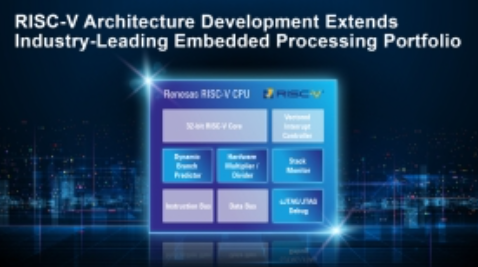
  TOKYO, Japan ― Renesas Electronics Corporation (TSE:6723), a premier supplier of advanced semiconductor solutions, announced today that it has designed and tested a 32-bit CPU core based on the open-standard RISC-V instruction set architecture (ISA). Renesas is among the first in the industry to independently develop a CPU core for the 32-bit general-purpose RISC-V market, providing an open and flexible platform for IoT, consumer electronics, healthcare and industrial systems. The new RISC-V CPU core will complement Renesas’ existing IP portfolio of 32-bit microcontrollers (MCUs), including the proprietary RX Family and the RA Family based on the Arm® Cortex®-M architecture.  RISC-V is an open ISA which is quickly gaining popularity in the semiconductor industry, due to its flexibility, scalability, power efficiency and open ecosystem. While many MCU providers have recently created joint investment alliances to accelerate their development of RISC-V products, Renesas has already developed a new RISC-V core on its own. This versatile CPU can serve as a main application controller, a complementary secondary core in SoCs, on-chip subsystems, or even in deeply embedded ASSPs. This positions Renesas as a leader in the emerging RISC-V market, following previous introductions of its 32-bit voice-control and motor-control ASSP devices, as well as the RZ/Five 64-bit general purpose microprocessors (MPUs), which were built on CPU cores developed by Andes Technology Corp.  “Renesas takes pride in offering embedded processing solutions for the broadest range of customers and applications,” said Daryl Khoo, Vice President of the IoT Platform Division at Renesas. “This new core extends our leadership in the RISC-V market and uniquely positions us to deliver more solutions that accommodate a diverse range of requirements.”  “We congratulate Renesas on achieving its recent milestone in 32-bit RISC-V MCU architecture development,” said Calista Redmond, CEO at RISC-V International. “This achievement exemplifies how RISC-V ecosystem partners, such as Renesas, are rapidly advancing RISC-V innovation. Our RISC-V community now spans 70 countries with more than 4,000 members, and we eagerly anticipate further innovations emerging from this dynamic, expanding market.”  The Renesas RISC-V CPU achieves an impressive 3.27 CoreMark/MHz performance, outperforming similar architectures on the market. It includes extensions to improve performance, while reducing code size.  Renesas is sampling devices based on the new core to select customers, with plans to launch its first RISC-V-based MCU and associated development tools in Q1 2024. Details of the new MCU will be published at that time. More information about RISC-V solutions is available at: renesas.com/risc-v. A blog article about the new RISC-V CPU is available here.  Renesas MCU Leadership  The world leader in MCUs, Renesas ships more than 3.5 billion units per year, with approximately 50% of shipments serving the automotive industry, and the remainder supporting industrial and Internet of Things applications as well as data center and communications infrastructure. Renesas has the broadest portfolio of 8-, 16- and 32-bit devices, delivering unmatched quality and efficiency with exceptional performance. As a trusted supplier, Renesas has decades of experience designing smart, secure MCUs, backed by a dual-source production model, the industry’s most advanced MCU process technology and a vast network of more than 200 ecosystem partners.  About Renesas Electronics Corporation  Renesas Electronics Corporation (TSE: 6723) empowers a safer, smarter and more sustainable future where technology helps make our lives easier. The leading global provider of microcontrollers, Renesas combines our expertise in embedded processing, analog, power and connectivity to deliver complete semiconductor solutions. These Winning Combinations accelerate time to market for automotive, industrial, infrastructure and IoT applications, enabling billions of connected, intelligent devices that enhance the way people work and live.  Follow us on LinkedIn, Facebook, X, YouTube, and Instagram.  (Remarks) Arm, Arm Cortex are trademarks or registered trademarks of Arm Limited in the EU and other countries. All names of products or services mentioned in this press release are trademarks or registered trademarks of their respective owners.
Key word:
Release time:2023-12-08 17:06 reading:2973 Continue reading>>
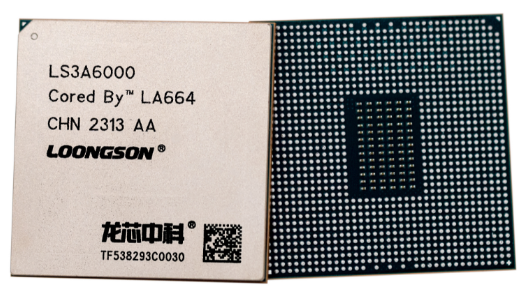
Loongson Unveils 3A6000 <span style='color:red'>CPU</span>, Aims to Match Intel’s Advanced Process in Next Phase
  Loongson Technology Corp Ltd, unveiled its latest domestic CPU, Loongson 3A6000, on November 28th in Beijing, China. Notably, this CPU is entirely based on Chinese in-house design, free from reliance on any foreign licensed technology. During the product launch, Weiwu Hu, the chairman of Loongson, announced that next phase will utilize mature processes to achieve performance comparable to Intel’s advanced process, reported by CTEE.  Loongson 3A6000 adopts a China domestic instruction set architecture(ISA), showcasing China’s capability to self-develop a new generation CPU, as reported by CCTV News. This CPU can run various cross-platform applications, catering to the needs of diverse large and complex desktop scenarios.  The release of the Loongson 3A6000 signifies a pivotal milestone, highlighting China’s achievement in self sufficiency and product performance, bringing it on par with international mainstream products.  According to Mydrivers.com, test results indicate that the overall performance of the Loongson 3A6000 processor is comparable to Intel’s 10th Gen Core quad-core processor launched in 2020. Notably, the Loongson 3A6000 is built on the self-developed ISA “LoongArch,” showcasing complete independence from foreign licensing, from top-level structure to ISA and application binary interface (ABI) standards.  In terms of core performance, the Loongson 3A6000 boasts a main frequency of 2.5GHz, supports 128-bit vector extension (Loongson SIMD eXtension, LSX), and 256-bit advanced vector extension (Loongson Advanced SIMD eXtension, LASX). It also supports simultaneous multi-threading technology (SMT2), featuring a total of 8 logical cores on the entire chip.  Hu highlighted that the 3A6000 has charted a path based on mature processes, optimizing performance through design. This achievement marks comparable performance with Intel and AMD under relatively weaker process conditions. The next step involves continuing to use mature processes to achieve performance levels on par with Intel’s advanced technology.  Regarding the upcoming Loongson 3B6000, Hu mentioned during the third-quarter earnings briefing that Loongson is strategically focused on enhancing efficiency, aiming to reach or approach the performance level of Apple’s CPU for each GHz.
Key word:
Release time:2023-11-29 14:09 reading:2044 Continue reading>>
Intel’s Next Gen <span style='color:red'>CPU</span> to Produce at TSMC with 3nm in First Half of Next Year
  Intel’s upcoming Lunar Lake platform has entrusted TSMC with the 3nm process of its CPU. This marks TSMC’s debut as the exclusive producer for Intel’s mainstream laptop CPU, including the previously negotiated Lunar Lake GPU and high-speed I/O (PCH) chip collaborations. This move positions TSMC to handle all major chip orders for Intel’s crucial platform next year, reported by UDN News.  Regarding this news, TSMC refrained from commenting on single customer business or market speculations on November 21st. Intel has not issued any statements either.  Recent leaks of Lunar Lake platform internal design details from Intel have generated discussions on various foreign tech websites and among tech experts on X (formerly known as Twitter). According to the leaked information, TSMC will be responsible for producing three key chips for Intel’s Lunar Lake—CPU, GPU, and NPU—all manufactured using the 3nm process. Orders for high-speed I/O chips are expected to leverage TSMC’s 5nm production, with mass production set to kick off in the first half of next year, aligning with the anticipated resurgence of the PC market in the latter half of the year.  While TSMC previously manufactured CPUs for Intel’s Atom platform over a decade ago, it’s crucial to note that the Atom platform was categorized as a series of ultra-low-voltage processors, not Intel’s mainstream laptop platform. In recent years, Intel has gradually outsourced internal chips, beyond CPUs, for mainstream platforms to TSMC, including the GPU and high-speed I/O chips in the earlier Meteor Lake platform—all manufactured using TSMC’s 5nm node.  Breaking from its tradition of in-house production of mainstream platform CPUs, Intel’s decision to outsource to TSMC hints at potential future collaborations. This move opens doors to new opportunities for TSMC to handle the production of Intel’s mainstream laptop platforms.  It’s worth noting that the Intel Lunar Lake platform is scheduled for mass production at TSMC in the first half of next year, with a launch planned for the latter half of the year, targeting mainstream laptop platforms. Unlike the previous two generations of Intel laptop platforms, Lunar Lake integrates CPU, GPU, and NPU into a system-on-chip (SoC). This SoC is then combined with a high-speed I/O chip, utilizing Intel’s Foveros advanced packaging. Finally, the DRAM LPDDR5x is integrated with the two advanced packaged chips on the same IC substrate.
Key word:
Release time:2023-11-22 11:18 reading:2718 Continue reading>>
Qualcomm and Other Major Players Unveil New Arm-Based Processors, Targeting a Slice of the PC <span style='color:red'>CPU</span> Market
  During the Snapdragon Summit 2023 in October, Qualcomm made a big announcement by introducing the Snapdragon X Elite chip, built on TSMC’s cutting-edge 4nm process. Qualcomm’s claim is bold; they assert that the chip will deliver superior performance compared to Intel’s x86 architecture and Apple’s M2 chip. Simultaneously, towards the end of October, Apple revealed its own Arm-based M3 chip. Notably, semiconductor giants AMD and NVIDIA are rumored to be exploring the development of new PC processors on the Arm architecture. The future outlook suggests that Arm-based processors may gradually cut in the market share traditionally held by x86 architecture processors.  TrendForce’s Insights:  Qualcomm’s New PC Processor Poised to Expand the Arm-Based PC Processor Market  Following Intel’s September 2023 Meteor Lake processor release, Qualcomm introduced the Snapdragon X Elite, its latest Arm-based PC processor in October. This chip leverages TSMC’s advanced 4nm technology. Qualcomm is forging partnerships with Taiwanese heavyweights such as Quanta, Compal, Wistron, Acer, Asus, Realtek, Nuvoton and others, aiming to secure a foothold in the CPU market within the PC supply chain. This collaborative effort is expected to yield new PC products hitting the market in 2024.  As of 2023, Arm commands approximately 11% of the market share. Apple, a pioneer in PC chips built on the Arm architecture, has seen success with the release of three generations of processors since the 2020 debut of M1 chip.  With Qualcomm entering the Arm architecture group, AMD also intends to step into Arm architecture with the upcoming Phoenix processor, set for launch in 2025. There are also whispers of NVIDIA partnering with MediaTek to develop a chip processor featuring SoC+GPU capabilities on the Arm architecture, with an initial focus on ChromeBook market, where MediaTek boasts years of experience.  In the PC market, significant factors include processor development timelines, product performance, power efficiency, extended battery life, and compatibility with software and hardware. High-end CPUs and GPUs have become indispensable components for high-end computers. Currently, Intel leads the CPU market, with AMD following closely in the x86 landscape. As more companies delve into the development of Arm-based processors, there is potential for them to carve a share from the x86 market in the future.  Arm Architecture Processors Gain Momentum, Intel Focusing on AI Software Application Processor Development  Apple’s M-series chips demonstrate their efficiency and extended battery life. Microsoft recognizes the advantages of the Arm architecture and is dedicated to fostering a strategic collaboration for Windows on Arm. This collaboration involves integrating operating systems with processors to attract leading manufacturers to engage in Arm-based processor development, aligning with the growing demands for AI PCs.  In the realm of x86 architecture, Intel enjoys a dominant position in the CPU market. To tap into the opportunities arising from AI PCs, Intel has integrated AI acceleration engine features into its processors, introducing a new generation of AI application processors that combine CPU, GPU, and NPU (Neural Processing Unit) functionalities. This caters to the growing demand for generative AI applications in enterprise mobile PCs. Furthermore, Intel has joined forces with major laptop brands to launch new AI PCs, aiming to seize a substantial share of the market.  As momentum grows in Arm-based processor development, Intel maintains confidence that their immediate effect on the demand for x86 architecture processors will be restrained. It is unlikely to hinder Intel’s continuous advancement in developing new processors. Unlike competitors concentrating on Arm architecture processor development, Intel places a stronger focus on AI software applications and the market opportunities arising from its partnership with the Microsoft platform.
Key word:
Release time:2023-11-07 14:45 reading:3808 Continue reading>>
Top 10 Processors <span style='color:red'>CPU</span> and GPU Chip Companies in China
  China is home to some of the leading processor chip manufacturers in the world. These companies are responsible for producing some of the most advanced and innovative CPU, GPU, FPGA, and ASIC chips available on the market. In this article, we will be discussing the top 10 processor chip companies in China. Let’s get started!  1、Unigroup Guoxin Microelectronics Co., Ltd.  Unigroup Guoxin Microelectronics Co., Ltd. focuses on the design and development of integrated circuits chips. It is a leading provider of integrated circuit chip products and solutions. Its products and applications are all over the world. Its core business areas such as chips, safe independent FPGA, power semiconductor devices, and ultra-stable crystal frequency devices have formed a leading competitive situation and market position.  2、Hygon information Technology Co., Ltd.  Hygon information Technology Co., Ltd. was established in 2014. It is mainly engaged in the research and development of computing chip products and systems such as high-end processors and accelerators. It aims to become a world-class chip company and provide core computing engines for Digital China.  3、Amlogic(Shanghai) Co., Ltd.  Amlogic is a world leading fabless semiconductor company that specializes in the design, development and application of high-performance, multimedia system-on-chip (SoC). As a result of its cutting-edge technologies and best-in-class solutions, it has actively expanded into new areas including smart vision, wireless connectivity and automotive electronics, ushering in a new era of smart life.  By providing complete turnkey solutions in combination with industry-leading software and hardware technologies, including UHD multimedia processing, content security protection, advanced CPU and GPU, customers can rapidly optimize and develop market-leading products with state-of-the-art performance and power consumption.  4、Hunan Goke Microelectronics Co., Ltd.  Established in 2008, Goke Microelectronics Co., Ltd. has its headquarters in Changsha and subsidiary offices in Chengdu, Shanghai, Shenzhen, Beijing and Changzhou.GOKE spends more than 20% of its annual revenue on research and development.  GOKE is committed to developing mass-volume integrated circuit solutions for storage,smart set-top boxes and IOT. It has introduced a series of products with in-house IP. These include ASICs and SOCs that incorporate the NDS advanced security decoder, the H.265 high-definition codec, high-performance acoustic processor, enterprise solid-state drive controller.  5、Shanghai Fullhan Microelectronics Co., Ltd.  Fullhan Microelectronics was established in April 2004 and focus on video semiconductor design.The mission of Fullhan is providing the most competitive chips and solutions for video products.  Fullhan provides H.264 codec SoC,image signal processor IC and various solutions of video products.  Fullhan works closely with solution providers and equipment manufacturers from domestic and worldwide to provide high performance, cost-effective products and services, increase market shares and achieve substantial business success.  6、Shanghai Anlogic Infotech Co., Ltd.  Shanghai Anlogic Infotech Co., Ltd. founded in November 2011, is a leading integrated circuit design company in China.  The company has the independent research and development capabilities of FPGA chip hardware and FPGA compilation software, focusing on the development of general programmable logic chip technology and system solutions. The SALPHOENIX® high-performance product series, SALEAGLE® high-efficiency product series, SALELF® low-power product series and SALSWIFT® system chip series FPSoC® produced by the company have been successfully used in industrial control, consumer electronics, medical equipment, and networks with excellent quality. communications and other fields.  7、Rockchip Electronic Co., Ltd.  Rockchip Electronics Co., Ltd., established in 2001, is headquartered in Fuzhou, with branches and subsidiaries in Shenzhen, Shanghai, Beijing, Hangzhou, and Hong Kong. Rockchip is a leading fabless IC design company that focuses on Intelligent IoT.  Rockchip specializes in SoC design, analog circuit chip design, and algorithm research. It has extensive experience in processor and analog-digital mixed chip design, multimedia processing, image algorithm. Rockchip has expertise in system software development. In addition to processor chips, it also provides full solutions including PMICs, analog-digital mixed chips, optoelectronic products, and development boards.  8、Allwinner Technology Co., Ltd.  Allwinner Technology, founded in 2007, is an outstanding designer dedicated to intelligent application SoC, high performance analog component and wireless connectivity IC. It is headquartered in Zhuhai China, with other R&D centers and offices in Shenzhen, Xi’an,Shanghai,Chengdu,Hengqin,Guangzhou,Beijing and HongKong,.  Motivated by customer-oriented strategy, Allwinner aligns remarkable R&D teams with long-term core-technology investment in UHD video processing, high-performance multi-core CPU/GPU integration with AI and advanced manufacturing process in terms of high integration , ultra-low power consumption and full-stack integration platform, providing competitive turnkey solutions with considerate services. The products powered by Allwinner spread across from industry control, smart home, smart hardware, tablet, automotive electronics, robot, virtual reality, OTT box, wireless communication to analog products.  9、Changsha Jingjia Microelectronics Co., Ltd.  Changsha Jingjia Microelectronics Co., Ltd. was established in April 2006. It is committed to technology and comprehensive applications in the field of information detection, processing and transmission, and provides customers with highly reliable and high-quality solutions, products and supporting services.  The company’s products cover integrated circuit design, graphics and image processing, computing and storage products, small radar systems, wireless communication systems, electromagnetic spectrum application systems, etc., and are widely used in professional fields such as aviation, aerospace, navigation, and vehicles that require high reliability.  10、Loongson Technology Corparation  In response to the demands for information development, Loongson Technology always stays abreast of international IT trends and focuses on industry development and system construction based on independent innovation. Until now, it has mastered core computing technologies on CPU instruction set architecture (ISA) design (LoongArch®), processor IP core, and operating system.  On this basis, Loongson Technology strives to create an independent and open software and hardware ecosystem and information industry system so as to provide self-developed, safe, and reliable processors to meet national strategic needs as well as high-performance, low-cost processors and basic software and hardware solutions to boost the innovative development of the information industry.
Key word:
Release time:2023-10-19 14:23 reading:2488 Continue reading>>
RISC-V Summit 2022: All Your <span style='color:red'>CPU</span>s Belong to Us
  In a recent guest editorial here on EE Times, legendary professor David Patterson wrote about busting the five myths around the RISC-V instruction set architecture (ISA). At the recent RISC-V Summit organized by RISC-V International, the consortium that manages and promotes the RISC-V Instruction Set Architecture (ISA), its president, Calista Redmond, had a far more blunt message: RISC-V is inevitable.  In fact, she said, RISC-V will eventually have the best CPUs, the best software running on them and the best ecosystem of any microprocessor core family. These are mighty strong words for a nascent ISA that is only about 10 years old and that competes with the far more established Arm and x86 ISAs. It almost sounded like the Borg from Star Trek when they say, “Resistance is futile.”  RISC-V International CEO Calista Redmond (Source: RISC-V International)  Redmond’s reason for saying that RISC-V is inevitable is that its growth and success are built upon shared investments of many companies, universities and contributors. RISC-V International has more than 3180 members. Billions of dollars have been invested in the architecture, including national programs from countries and regions such as India and the E.U. This enables the development of the “best” processor in multiple price and performance categories with the contributions of so many ideas and collective knowledge. Because RISC-V is scalable, customizable and modular, it can easily be optimized for different workloads and applications.  The software ecosystem is growing, and efforts are underway to make software development more efficient with profiles and standards like a single hypervisor standard.  RISC-V origins  RISC-V is an open specification like Ethernet. It was developed at University of California, Berkeley (UC Berkeley) with a clean-slate approach to RISC (reduced instruction set computer) designs. There had been many RISC ISAs in the past: 29K, Alpha, Arm, i960, MIPS, PowerPC and SPARC to name some. All those other RISC architectures have been tied to a corporate owner, and most have become outdated.  The researchers at UC Berkley felt it was time for a clean slate with no corporate owners, initially for educational use, but they soon recognized it was useful for more than instructional purposes.  With this approach, multiple companies can build CPUs using the open standard. This means that there are many different options to get RISC-V CPUs, and there are more every year. You can download the specifications and design your own CPU. You can download open-source versions of RISC-V CPUs. You can buy a CPU core from multiple IP vendors. You can get a customized CPU core from other vendors. You can buy chiplets with RISC-V cores. You can buy a chip with an RISC-V processor. Or you can buy a full AI chip running with RISC-V cores.
Key word:
Release time:2023-01-04 13:06 reading:2505 Continue reading>>
x86 Server <span style='color:red'>CPU</span>s Remain Market Mainstream, 7nm Platform May Help AMD to Increase Market Share
DRAMeXchange, a division of TrendForce, notes that x86 continues to be the mainstream architecture for server CPUs this year, with Intel and AMD being the market leaders. Particularly, Intel dominantly represents around 98% of the total server CPU shipments worldwide in 2018. For the next year, the market share of AMD x86 server CPUs is expected to go up to 5%, after the company’s introduction of 7nm CPUs to the market.“Generally speaking, Intel will remain the leader in server CPU market”, says Mark Liu, senior analyst from DRAMeXchange. However, competitions will come from AMD, who is on pace to migrate to more advanced processes and to offer solutions with better performances and lower power consumption. AMD’s solutions have been adopted by a small scale of cloud service providers like Baidu, Ali Cloud and AWS. AMD may have a chance to scale up in volumes after 7nm products are launched in the future.Purley Gen 2 remains in 14nm process, AMD 7nm solutions may be released in 2H19The latest survey of mainstream server CPU platforms finds that the market penetration rate of product lines based on Intel Purley Gen 1 (Sky Lake) has already reached 60% and is estimated to reach 65% at the end of 2018. Current consumers of Sky Lake products are mainly cloud service providers and alike, which require high-performance computing server products.In terms of product plan for the next year, Purley Gen 2 Cascade Lake will be still produced on 14nm process, the same as Gen 1. The new solution will not become the market mainstream until 2H19. For customized premium products, Intel will release Cascade Lake Xeon-AP (Advance Performance) in 2019. Currently, this product line still remains in the stage of verifying, so its small-scale market release will be delayed to the end of 2019.Around 70% of AMD's product lines have been transferred to new EPYC systems this year, while the company’s Naples solutions have migrated from 28/32nm to 14nm process, with computing performance improved significantly. However, AMD takes only about 2% in the current server CPU market. This is because AMD provides mainly 1-socket solutions, and the limited offerings have constrained the company’s market expansion compared with Intel.AMD's new solution, Rome, will migrate to the 7nm process. The company will also switch from GlobalFoundries to TSMC for future collaboration of product development on 7nm process. Previous problems of high power consumption will also be corrected. The Rome platform server processors are expected to enter production in 1Q19 and have a chance to come onto the market in the second half of next year.DRAMeXchange notes that the penetration of new platforms may drive the average content per box in servers. In 2019, the average density of DRAM in a server will see an annual growth of 25% YoY, significantly lower than almost 40% growth in 2018.
Key word:
Release time:2018-11-29 00:00 reading:1494 Continue reading>>

Turn to

/ 2

  • Week of hot material
  • Material in short supply seckilling
model brand Quote
BD71847AMWV-E2 ROHM Semiconductor
MC33074DR2G onsemi
TL431ACLPR Texas Instruments
RB751G-40T2R ROHM Semiconductor
CDZVT2R20B ROHM Semiconductor
model brand To snap up
BU33JA2MNVX-CTL ROHM Semiconductor
ESR03EZPJ151 ROHM Semiconductor
BP3621 ROHM Semiconductor
TPS63050YFFR Texas Instruments
STM32F429IGT6 STMicroelectronics
IPZ40N04S5L4R8ATMA1 Infineon Technologies
Hot labels
ROHM
IC
Averlogic
Intel
Samsung
IoT
AI
Sensor
Chip

About us

Qr code of ameya360 official account

Identify TWO-DIMENSIONAL code, you can pay attention to

AMEYA360 mall (www.ameya360.com) was launched in 2011. Now there are more than 3,500 high-quality suppliers, including 6 million product model data, and more than 1 million component stocks for purchase. Products cover MCU+ memory + power chip +IGBT+MOS tube + op amp + RF Bluetooth + sensor + resistor capacitance inductor + connector and other fields. main business of platform covers spot sales of electronic components, BOM distribution and product supporting materials, providing one-stop purchasing and sales services for our customers.

Please enter the verification code in the image below:

verification code