Renesas丨Silicon to Software: RoX AI Studio Advances Software-Defined Vehicle Design
  Software-defined vehicles (SDV) are upending traditional automotive design. While vehicle development is still highly iterative, the industry is in the throes of a historic transformation where manufacturers are compressing once-sequential hardware-to-software design cycles into more efficient software-first design flows.  This so-called shift-left approach is exemplified by Renesas' adoption of digital tools and AI models as part of a broader digitalization and software strategy aimed at accelerating design and innovation, while simultaneously optimizing R&D efficiency. In the automotive sector, the evolution is driven by practical considerations given that a typical vehicle now embeds more than 100 million lines of code. Heavier software dependence requires continuous updating and deployment, multi-supplier integration, design validation at scale, and reflects an ecosystem where OEMs insource more software and chipmakers ship platforms, not parts. Renesas anticipated these changes with the scalable R-Car hardware and software development platform. R-Car supports the transition of E/E designs to more central processing architectures, including advanced driver assistance systems (ADAS) and autonomous vehicle design. Last year, we added R-Car Open Access (RoX), an extended platform for SDVs that provides a pre-integrated, out-of-the-box environment with hardware, operating systems, software stacks, and tools to accelerate next-generation vehicle development.  R-Car leverages a heterogeneous architecture that features Arm® CPUs with multiple hardware accelerators. RoX includes a common set of toolchains that allows software reuse across electronic control units (ECUs) for ADAS, in-vehicle information (IVI) systems, and centralized data gateways. By enabling cloud-native development and customized design simulation, the RoX platform expands SDV lifecycle support through continuous updates that align with a modern value chain where OEMs and service providers increasingly co-own software.  Introducing RoX AI Studio: Cloud-Native MLOps on R-Car  Many of our automotive customers have embraced R-Car and the Renesas RoX platform as a means to accelerate SDV development and manage the complexity of in-vehicle embedded processing systems. In doing so, we found a persistent "lab-to-road" gap between how designers employ AI training in the cloud and how they deploy new features in automotive SoCs.  RoX AI Studio, a new extension of the original RoX platform, closes that gap. The machine learning operations (MLOps) tool lets teams remotely evaluate AI models using a managed cloud control plane that connects engineers with hardware-in-the-loop (HIL) device farms so they can profile real-world performance without waiting for scarce lab boards. Continuous integration and deployment (CI/CD) keeps the full toolchain current, so improvements arrive automatically with no local installs required. The result is faster iteration, fewer surprises, and a direct line from model training to road-ready, HIL model validation.  What Is MLOps – and How Does RoX AI Studio Enable It for SDVs?  To define MLOps, it's important to understand what preceded it. MLOps builds on a concept called DevOps – short for development operations – in which tools and best practices are combined to shorten software design lifecycles. This is achieved by breaking down silos between development and IT operations teams to help them collaborate more effectively.  DevOps governs deterministic integrate/test/deploy processes for conventional software code and services. MLOps adds AI data and models, where development lifecycles are iterative, experiments branch, and choices must be tracked, compared, and promoted. By anchoring model validation on R-Car silicon, RoX AI Studio becomes the bridge between model-in-training and model-in-production, turning the art and science of AI model development into repeatable and scalable engineering operations with targeted KPIs.  RoX AI Studio operationalizes automotive MLOps for SDVs in several ways:  Model Intake and Registry: Renesas provides a curated model zoo that includes many popular AI models. Users can also use a bring your own model (BYOM) approach to ingest their own custom or proprietary models and receive a quick performance evaluation on R-Car silicon.  Automated Updates: Orchestration workflows in our MLOps tool simplify the user experience by abstracting model processing for silicon deployment, while CI/CD toolchains automate the release and deployment of the latest version of the AI toolchain for R-Car SoCs.  HIL Evaluation: MLOps in the cloud connects to a physical lab hosting an array of R-Car silicon devices that run inference experiments on demand. This allows remote validation of AI models without requiring physical co-location with the hardware.  Results and Artifacts: Collects metrics and logs from inference experiments and aggregates them as metric comparison tables and plots.  Scaled Experimentation: Runs multiple models/variants in parallel to compare accuracy vs. latency under real-world operating constraints.  Flexible Deployment: Will allow designers to begin on the Renesas cloud for speed and then mirror the same stack later in a private cloud when silicon is more widely available for individual projects.  RoX AI Studio Is Advancing Automotive's "Shift Left" Strategy  Automotive timelines are compressing. Manufacturers are moving from three to four-year platform development cycles to one to two-year cycles augmented by ongoing over-the-air (OTA) updates to provide on-road product feature enhancements. That means design teams adopting the shift-left philosophy need to test hardware and software earlier using target (remote or virtual) devices.  That's a challenge for OEMs, many of which have invested heavily in AI model training and are striving to continuously improve their networks by deploying feature updates to their vehicles in the field. At the same time, shorter development cycles mean they must test many device options simultaneously – at scale and across multiple vectors – without over-investing in the wrong development path.  When OEMs and Tier 1 suppliers use RoX AI Studio, they can quickly validate their devices by testing at scale and within the context of their specific MLOps network strategy. RoX AI Studio makes this practical by creating a simplified developer experience for managing cloud-to-lab infrastructure and automated workflows for pre-trained model deployment and evaluation on R-Car SoC targets. It runs experiments in parallel, as opposed to serially, and provides access to device farms that allow global teams to start development before boards arrive and continue at scale.  For automotive OEMs, this means earlier starts and fewer late surprises, reusable software investments that move from cloud to vehicle, and a clean path to private-cloud deployment and virtual platforms that yield better results and shorten time to market.  Platform Thinking for the Software-Defined Era  Car makers designing SDVs are committed to developing hardware and software in parallel, and the market is converging on cloud-native machine learning tools – but with no universal MLOps winner yet.  Renesas RoX AI Studio provides a standardized SDV design foundation and operationalizes AI development on that foundation by moving beyond DevOps to support a "one-stop studio" model. Together, the RoX platform and RoX AI Studio are enabling a shift-left culture change: validate earlier, iterate faster, deploy confidently.  Renesas RoX AI Studio is currently available to select customers with a broad introduction planned in 2026.
Key word:
Release time:2025-12-31 17:27 reading:380 Continue reading>>
Murata expands lineup of high cutoff frequency chip common mode choke coils in 0504-inch size for automotive high-speed differential interfaces
Key word:
Release time:2025-11-10 17:12 reading:530 Continue reading>>
GigaDevice Deepens Commitment to Japan, Advancing Local Services and Global Collaboration
  GigaDevice, a leading semiconductor company specializing in Flash memory, 32-bit microcontrollers (MCUs), sensors, and analog products, has officially opened its new office in Minato City, Tokyo. This milestone reflects the company's deepening commitment to the Japanese market and marks a significant step in enhancing local customer support, strengthening regional collaboration, and advancing its global development efforts.  Japan has long served as a vital pillar of GigaDevice's global strategy. Over the years, the company has expanded its local team, refined operation to meet evolving customer needs, and established a responsive professional service system. This new office will further enhance GigaDevice's technical responsiveness and agility, foster closer collaboration with customers, and help accelerate product validation and commercialization in today's fast-changing market landscape.  Working closely with customers in Japan, GigaDevice has broadened the adoption of its solutions across key application sectors such as industrial, automotive, consumer electronics, and the Internet of Things. At the same time, the company continues to deepen cooperation with local partners in supply chain integration and ecosystem development, offering a comprehensive portfolio of Flash memory, MCU, sensor, and analog solutions that have earned broad market recognition.  "Japan has always been a vital component of our global strategy," said Jennifer Zhao, GigaDevice Global Business CEO. "We will continue to leverage our global synergy and strengthen local service capabilities to drive product innovation and industry advancement alongside our customers and partners."  "We greatly value the trust and long-term partnerships we have built with our customers in Japan," added Sam Li, GigaDevice Japan Regional GM, "In a market that's becoming increasingly complex, our goal is to consistently deliver exceptional service and competitive products that meet diverse business needs and create lasting value."  As one of GigaDevice's key customers, Nidec Corporation has been working closely with the company. Ryuji Omura, Head of Nidec Semiconductor Solutions Center, commented: "GigaDevice's rapid growth and technological innovation, along with its genuine commitment to customers, have built a solid foundation of trust between our companies and made it one of our most valued supplier partners. We look forward to seeing GigaDevice continue to lead the semiconductor industry and contribute to the advancement of society."  As a global leading fabless supplier, GigaDevice continues to combine global synergy with localized execution. Following the establishment of its global headquarters in Singapore, the company has strengthened its presence across Asia, Europe, and the Americas, building a responsive, demand-driven sales and service network. Looking ahead, GigaDevice will continue to invest in Japan, refining its product offerings, enhancing its service delivery, and expanding its collaborative mechanisms to drive a smarter, more efficient, and sustainable future together with its customers and partners.
Key word:
Release time:2025-10-21 16:49 reading:905 Continue reading>>
Driving Innovation Together: NOVOSENSE, UAES and Innoscience Join Forces to Reshape Power Electronics for New Energy Vehicles
  September 29, 2025 – NOVOSENSE Microelectronics, United Automotive Electronic Systems (UAES) and Innoscience have signed a strategic cooperation agreement to jointly advance power electronics for new energy vehicles (NEVs). The three parties will collaborate on the development of next-generation intelligent integrated Gallium Nitride (GaN) products. Building on their combined expertise, the new devices will deliver more reliable GaN driving and protection features, enabling higher power density and paving the way for commercial adoption across the automotive industry.Signing Ceremony  GaN as a Key Driver for NEV Innovation  With its superior material properties, GaN is emerging as a transformative technology in automotive power electronics. Compared to traditional silicon devices, GaN significantly improves system efficiency and power density, allowing for more compact and lighter designs—addressing the core requirements of vehicle electrification and lightweighting.  Complementary Strengths, Shared Goals  Through joint R&D and application validation, NOVOSENSE, UAES and Innoscience aim to tackle critical challenges such as efficiency, reliability and cost. Together, the three parties will deliver solutions that combine high performance with competitive economics. NOVOSENSE brings extensive expertise in high-performance analog and mixed-signal IC design. UAES contributes deep knowledge in system integration and automotive applications. Innoscience adds world-leading competence in GaN device technology. This cross-disciplinary collaboration establishes a platform for innovation across the entire value chain, accelerating GaN adoption in next-generation automotive systems.  Dr. Xiaolu Guo, Deputy General Manager of UAES, said:“UAES has been at the forefront of automotive electronics for decades, consistently responding to industry needs through innovation. GaN technology is a vital enabler for vehicle electrification. Partnering with NOVOSENSE and Innoscience allows us to integrate capabilities from device to system level, driving GaN industrialization and delivering efficient, reliable and cost-effective solutions for our customers.”  Mr. Shengyang Wang, Founder, Chairman and CEO of NOVOSENSE, commented:“Upgrading the NEV industry requires deep collaboration across the value chain. By combining UAES’s system integration expertise with Innoscience’s GaN leadership and NOVOSENSE’s IC design capabilities, we are creating a powerful synergy. This strategic partnership sets a benchmark for industry collaboration, ensuring both technological breakthroughs and market value creation.”  Dr. Jingang Wu, CEO of Innoscience, added:“The potential of GaN in automotive power electronics is only beginning to be realized. True impact will come from aligning device innovation with system requirements. We look forward to working closely with NOVOSENSE and UAES to extend the boundaries of GaN applications in automotive electrification and to translate technological advantages into tangible industry benefits.”  A Step Forward for the Industry  This strategic cooperation marks a pivotal milestone for all three companies. NOVOSENSE, a leading Chinese automotive semiconductor supplier with nearly one billion automotive ICs shipped, complements UAES’s strong system know-how and Innoscience’s GaN device leadership. Together, the three parties will strengthen the value chain, overcome application bottlenecks, and accelerate the transition of the NEV industry toward higher efficiency and sustainability.
Key word:
Release time:2025-10-09 13:53 reading:919 Continue reading>>
Proudly Made in India: Fibocom & Kaynes Technology Join Forces to Drive IoT Innovation, Policy Compliance, and Local Growth
  Fibocom,a leading global provider of wireless communication modules and AI solutions,today announced a strategic manufacturing partnership with Kaynes Technology, oneof India’s foremost electronics and semiconductor manufacturing pioneers. Thiscollaboration underscores Fibocom’s commitment to India’s national initiatives,including Make in India and Atmanirbhar Bharat,while addressing the growing demand for locally produced IoT components.  Equipped withhigh-speed SMT lines, automated testing systems, and precision assemblyequipment, the state-of-the-art facility in Karnataka, Hyderabad, and Gujaratstrengthens Fibocom’s integration into India’s dynamic manufacturing ecosystem.This initiative represents more than capacity expansion — it reflects Fibocom’svision to embrace India, grow with India, and empower the world through India.  Strategic PolicyAlignment and Market Commitment  Fibocom’sinvestment in local manufacturing is fully aligned with India’s industrial developmentagenda, supporting technological self-reliance, accelerating time-to-market forIndian OEMs, and delivering long-term value to both domestic and globalcustomers.  Partnering with India’s ManufacturingLeader  With decades ofexpertise in precision manufacturing, supply chain integration, and world-classquality systems, Kaynes Technology provides the foundation for this strategicpartnership. Together, Fibocom and Kaynes Technology are advancing India as aglobal force for next-generation connectivity solutions.  “Kaynes Technologyis proud to join forces with Fibocom to deliver critical IoT componentsmanufactured in India,” said Raghu Panicker, CEO, Kaynes Technology.“This collaboration enables local industries to innovate faster, scale smarter,and compete more effectively on the global stage.”  Trusted & Proudly Made in India  Fibocom’s locallyproduced modules are designed to global standards while proudly bearing the'Made in India' mark. This not only enhances trust among Indian OEMs andgovernment stakeholders but also reinforces India’s growing reputation as areliable center for IoT innovation and exports.  “Thispartnership is a statement of intent — Fibocom is here not just to sell, but tobuild, invest, and grow with India,” said Ragin Kallanmar Thodikai, Country SalesManager, India, Fibocom. “We are proud to contribute to afuture where intelligent connectivity is Madein India and trusted worldwide.“
Key word:
Release time:2025-09-02 15:36 reading:887 Continue reading>>
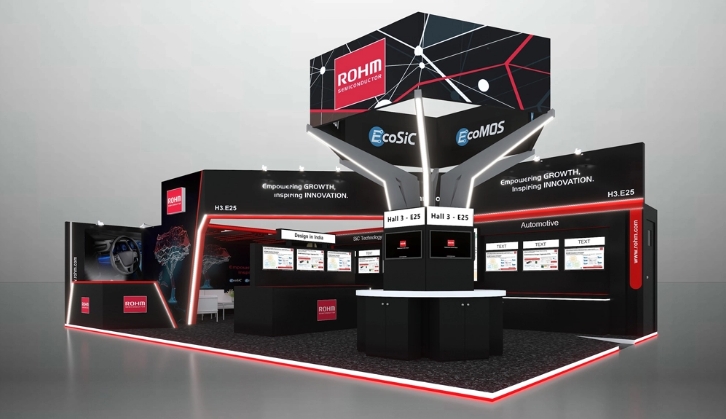
ROHM at electronica India 2025: Power and Analog Devices Contributing to the Evolution of Industrial and E-Mobility applications
  From September 17th to 19th, ROHM will exhibit at electronica India 2025, South Asia's leading trade fair for electronic components, systems, applications, and solutions, taking place at the Bangalore International Exhibition Centre (BIEC). At booth H3-E25, ROHM will showcase its latest SiC and GaN technologies, featuring reference designs and evaluation systems that address today’s power and thermal challenges in both industrial equipment and automotive drive systems. Additionally, we will also showcase analog solutions such as power ICs for industrial equipment and automotive LED drivers.  "electronica India 2025 will be the right place to explore real-world applications powered by ROHM’s advanced power semiconductors. With our local design expertise and close cooperation with key players in the Indian market, we are uniquely positioned to support the country’s shift toward more sustainable and efficient electronics," says Makoto Terada, Managing Director, ROHM Semiconductor India.  Highlights of ROHM’s presence at electronica India 2025 include:  For Industrial Applications  ・Locally co-developed reference designs, as part of ROHM’s 'Made in India' initiative, emphasizing faster prototyping and region-specific design optimization, which will be unveiled for the first time.  ・A full lineup of GaN reference designs ranging from 45W to 5.5kW, including compact AC adapters, Totem Pole PFC designs, and server power supplies.  ・ROHM’s 2kV SiC MOSFETs, adopted in SEMITRANS® 20 modules by Semikron Danfoss, powering SMA Solar Technology’s Sunny Central FLEX for utility-scale PV and battery systems.  * SEMITRANS® is a trademark or registered trademark of Semikron Danfoss Elektronik GmbH  For Automotive and E-Mobility  ・TRCDRIVE pack™, a molded SiC module designed for the traction inverter of EVs.  ・New 2-in-1, 4-in-1 and 6-in-1 molded SiC modules for compact and cost-optimized drive solutions.  ・TO-247 discrete SiC MOSFETs shown through practical 3-phase inverter boards for affordable traction systems.  More Information  For additional highlights of ROHM at electronica India 2025, please visit:  www.rohm.com/electronica-india  ROHM’s Power Eco Family: Reliable Solutions Across a Wide range of Applications  ROHM will also feature its Power Eco Family, a branding concept that unites its key power device lines: Each product line will be represented through live demonstrations, adoption cases, and hands-on evaluation tools available at the booth.
Key word:
Release time:2025-09-01 15:11 reading:710 Continue reading>>
Renesas Introduces Ultra-Low-Power RL78/L23 MCUs for Next-Generation Smart Home Appliances
  Renesas Electronics Corporation (TSE:6723), a premier supplier of advanced semiconductor solutions, today introduced the new 16-bit RL78/L23 microcontroller (MCU) group, expanding its low-power RL78 family. Running at 32MHz, the RL78/L23 MCUs combine industry-leading low-power performance with essential features such as dual-bank flash memory, segment LCD control, and capacitive touch functionality to support smart home appliances, consumer electronics, IoT and metering systems. These compact, cost-effective devices address the performance and power requirements of modern display-based human-machine interface (HMI) applications.  Ultra-Low Power Operation with Optimized LCD Performance  The RL78/L23 is optimized for ultra-low power consumption and ideal for battery-powered applications that spend the majority of time in standby. They offer an active current of just 109μA/MHz and a standby current as low as 0.365μA, along with a fast 1μs wake-up time to help minimize CPU activity. The LCD controller’s new reference mode, VL4, reduces LCD operating current by approximately 30 percent when compared to the existing RL78/L1X group. The MCUs come with SMS (SNOOZE Mode Sequencer), which enables dynamic LCD segment display without CPU intervention. By offloading tasks to the SMS, the devices minimize CPU wake-ups and contribute to system-level power savings. These innovations significantly extend battery life, simplify design and reduce replacement costs, while minimizing environmental impact.  The RL78/L23 offers a wide operating voltage range of 1.6V to 5.5V, which supports direct operation from 5V power supplies commonly used in home appliances and industrial systems. This capability reduces the need for external voltage regulators. The MCUs also integrate key components such as capacitive touch sensing, a temperature sensor, and internal oscillator, reducing BOM cost and PCB size.  Feature-Rich Peripherals for HMI Systems  Designed to meet the dynamic requirements of the HMI market, RL78/L23 integrates a suite of advanced features in a compact, cost-effective package. Its built-in segment LCD controller and capacitive touch realize sleek, responsive user interfaces for products such as induction cooktops and HVAC systems. The IH timer (Timer KB40) enables precise multi-channel heat control, which is essential in smart kitchen appliances such as rice cookers and IH cooktops. The devices include dual-bank flash memory for seamless firmware updates via FOTA (Firmware Over-the-Air), allowing continuous system operation in applications like metering, where downtime must be minimized. The dual-bank architecture allows one memory bank to run the user program, while the other receives updates. This approach keeps the system functional throughout the process for improved reliability.  “The Renesas RL78 Family of 16-bit microcontrollers has been one of the most successful products since its launch more than 10 years ago, particularly in home appliances,” said Daryl Khoo, Vice President of Embedded Processing at Renesas. “I’m pleased to announce the RL78/L23, a new generation of RL78 microcontrollers with rich features, ideally suited for smart home appliances and cost-sensitive IoT solutions. With these devices, we aim to provide a better user experience with our intuitive development environment so that customers can get to production faster with confidence, based on market-proven Renesas technologies.”  Key Features of the RL78/L23  16-bit RL78 microcontroller running at 32MHz  Built-in segment LCD controller and capacitive touch  Up to 512KB of dual-bank flash memory for seamless FOTA  Up to 32KB of SRAM and 8KB of data flash  SMS for ultra-low power operation  IH Timer (KB40) supporting up to 3-channel induction heating control  Wide operating voltage range from 1.6V to 5.5V  Operating temperature range of -40°C to +105°C  Multiple serial interfaces including UART, I2C, CSI  IEC60730-compliant self-test library  44-100-pin LFQFP, LQFP and HWQFN packages  Intuitive Development Environment for Faster Time-to-Market  The RL78/L23 comes with an easy-to-use development environment. Developers can leverage robust support tools such as Smart Configurator and QE for Capacitive Touch to streamline system design. Renesas offers the RL78/L23 Fast Prototyping Board which is compatible with Arduino IDE, and a capacitive touch evaluation system for in-depth testing and validation.  Winning Combinations  Renesas offers Induction Heating Rice Cooker Solution which combines the new RL78/L23 devices with numerous compatible devices from its portfolio to offer a wide array of Winning Combinations. Winning Combinations are technically vetted system architectures from mutually compatible devices that work together seamlessly to bring an optimized, low-risk design for faster time to market. Renesas offers more than 400 Winning Combinations with a wide range of products from the Renesas portfolio to enable customers to speed up the design process and bring their products to market more quickly. They can be found at renesas.com/win.  Availability  The RL78/L23 MCUs are available today, along with the Fast Prototyping Board (FPB-RL78L23) and the capacitive touch evaluation system (RSSK-RL78L23). 
Key word:
Release time:2025-08-27 15:18 reading:1081 Continue reading>>
Renesas Expands MCU/MPU Portfolio to Meet New Processing Needs of Edge AI
  Artificial intelligence at the IoT edge is redefining how connected devices capture, process, and analyze data to render actionable outcomes in a variety of consumer and industrial applications. Unlike AI cloud servers, where power, data latency, and security management are prime design considerations, AIoT moves intelligence closer to the data source to enable real-time, in-situ decision-making with enhanced privacy and lower energy use.  Despite its promise, AI at the IoT edge carries significant engineering challenges. Traditional AI models are computationally intensive. They require large amounts of memory and power, which resource-constrained IoT devices, often battery-operated with limited processing capacity, cannot easily support. Instead, designers need highly optimized, lightweight neural network models that run efficiently on microcontrollers, microprocessors, and other low-power hardware without sacrificing performance or accuracy.  Managing AIoT Processing with TinyML Models  Because it is inherently decentralized, AIoT reduces dependency on cloud servers while instantly acting upon real-time analytics and boosting security by keeping data local. This makes the process of outfitting factory equipment with predictive maintenance easier by embedding machine learning (ML) models within local sensors to detect anomalies or faults without waiting for cloud analysis. Smart home devices with AI-enhanced voice interfaces can perform instant keyword recognition and natural language understanding without sending sensitive audio data over the network.  Similar to a trend underway in AI data centers, AIoT at the edge is also evolving to handle the proliferation of inference modeling. If data is the fuel for intelligent, real-time decision making, then AI inference is the engine that processes pre-trained ML models directly on edge devices.  Data center AI inference modeling has a unique set of computational requirements best served by powerful parallel processors that can train large language models (LLMs) models that may have billions of parameters. On the other end of the spectrum, edge AIoT technologies like TinyML minimize memory requirements and computing overhead, making real-time analytics feasible for battery-powered IoT endpoints. Moreover, TinyML inference modeling enables multi-modal applications, combining voice, vision, and sensor data for advanced use cases like environmental monitoring and autonomous navigation.  Real-time data processing is another function complicated by the memory limitations, modest energy budgets, and thermal constraints of edge AIoT. Many consumer and industrial applications, such as smart home voice recognition and autonomous sensors, demand ultra-low latency responses. Cloud-based AI struggles to meet these requirements due to network delays, making on-device inference essential. Engineers must also ensure data security and privacy by embedding strong encryption and root-of-trust mechanisms directly at the endpoint.  Tools like TinyML are critical for overcoming these barriers and enabling compact machine learning models that operate efficiently on IoT hardware while extending battery life.  Renesas Optimizes New MCUs and MPUs for Edge AIoT  To better serve edge AIoT applications, Renesas recently expanded its processor portfolio, introducing new high-performance, low-power MCUs and MPUs with integrated neural processing units (NPUs) purpose-built for AI computing.  The 32-bit Renesas RA8P1 MCU is designed for voice and vision edge AI applications and features dual Arm® cores, the 1GHz Cortex®-M85 and 250MHz Cortex-M33, and an Arm Ethos™-U55 NPU that delivers up to 256GOPS of AI performance. For security, the new MCU supports the Arm TrustZone® secure execution environment, hardware root-of-trust, secure boot, and advanced cryptographic engines, ensuring safe deployment in critical edge applications.  Renesas also introduced the 64-bit RZ/G3E MPU for high-performance edge AIoT and human machine interfaces, combining a quad-core Arm Cortex-A55 CPU, Cortex-M33, and advanced graphics. The RZ/G3E embeds an Arm Ethos-U55 NPU to offload the main CPU by delivering up to 512GOPS of AI performance for image classification, voice recognition, and anomaly detection.  Arm NPUs Right-Size Power and Performance for AIoT Applications  The Arm Ethos-U55 NPU supports popular neural network models like ResNet, DS-CNN, and MobileNet with up to 35x faster inference compared to CPU-only processing. Unlike GPUs that burn tens to hundreds of watts on high-throughput, parallel computing, the Ethos-U55 delivers hardware-accelerated inference at milliwatt-level power, making it ideal for IoT edge devices.  The Arm NPU supports compressed and quantized neural networks, reducing memory and compute overhead to allow for real-time, localized AI processing. In contrast, GPUs excel at training large models but are impractical for edge deployments due to size, cost, and energy use.  Integrated RUHMI Framework and e² studio Streamline AI Edge Development  The new MCU and MPU are both supported by the Renesas e² studio integrated development environment and incorporate Renesas' RUHMI Framework to accelerate edge AIoT design. RUHMI (Robust Unified Heterogeneous Model Integration) is an end-to-end toolset and Renesas' first comprehensive MCU/MPU framework for simplifying AI workloads on resource-constrained devices. RUHMI supports leading ML formats like TensorFlow™ Lite, PyTorch®, and ONNX, enabling developers to import and optimize pre-trained models for high-performance, low-power edge AI deployments.  The RUHMI framework is enhanced by Renesas' e² studio, which provides intuitive tools, sample applications, and debugging features. When used together, they help developers more easily handle pre-processing of image and audio data, execute inference on the NPU, and post-process results within a unified environment.  Edge AIoT Relies on Processors with Low Power and High Compute Density  Grand View Research reports that the global edge AI market recorded sales of more than $20 billion in 2024, on its way to nearly $66.5 billion by 2030, driven by demand for real-time data processing and analysis at the network edge.  Increasingly, MCUs and MPUs are the preferred choice for edge AIoT vision and voice applications due to low power consumption, localized processing, and cost efficiency. Unlike GPUs, which require cloud connectivity and high power, MCUs and MPUs can process data directly at the endpoint, enabling real-time inference and decision-making without network delays. By keeping sensitive data on-device, these processors also enhance security and privacy, eliminating the need for constant cloud communication.  This combination of speed, energy efficiency, and data security makes MCUs and MPUs ideal for wearables, smart homes, and industrial edge AI systems.  Future Efforts Will Prioritize HD Vision, Security, and a Robust IoT Supply Chain  As we right-size support for our processor ecosystem using highly efficient TinyML models, Renesas is also developing MPUs for Vision Transformer (ViT) networks. This form of deep learning applies Transformer models originally designed for natural language processing to computer vision, but unlike power-hungry GPUs, ViTs process high-resolution images and videos without the need for cooling fans.  Renesas is also creating zero-touch security solutions such as post-quantum cryptography (PQC), which secures against attacks from both classic and quantum computers to better defend against a widening range of cyber threats.  As we foster AI-accelerated hardware, software, and tool chain development, Renesas remains committed to supporting legacy (non-AI) products and the open-source software environment that powers much of today's IoT systems. By collaborating with our partner ecosystem to keep abreast of the rapidly changing IoT landscape, we can better help our customers design sustainable, smart, secure, and connected systems safely and reliably.
Key word:
Release time:2025-08-25 14:59 reading:1250 Continue reading>>
New Renesas USB-C Power Solution with Innovative Three-Level Topology Improves Performance and Reduces System Size
  Renesas Electronics Corporation (TSE:6723), a premier supplier of advanced semiconductor solutions, today introduced the RAA489300/RAA489301 high-performance buck controller designed with a three-level buck topology used for battery charging and voltage regulation in USB-C systems such as multiple-port USB-PD chargers, portable power stations, PC docking station, robots, drones, and other applications that need a high efficiency DC/DC controller.  The three-level buck converter topology enabled by the new IC delivers exceptional efficiency and significantly reduces the required inductance for regulating the output voltage. Its innovative design minimizes power loss and reduces system size, making it ideal for compact, high-performance applications.  The three-level topology consists of two additional switches and a flying capacitor compared to a conventional two-level buck converter. The flying capacitor reduces voltage stress on the switches, allowing designers to use lower voltage FETs with better figures of merit. The result is reduced conduction and switching losses. This topology also enables the use of a smaller inductor with peak-to-peak ripple of only about 25 percent of that of a two-level converter, enabling reduced inductor core and direct current resistance losses.  Renesas is a worldwide leader in USB-PD solutions, offering a comprehensive range of products, including turnkey solutions for various applications. Renesas helps customers shorten their time-to-market with an extensive development environment and pre-certified USB-IF reference designs. Renesas USB-PD solutions offer superior quality and safety, along with high efficiency and power density.  “This three-level buck topology solution is a prime example of Renesas’ worldwide leadership in battery charging,” said Gaurang Shah, Vice President of the Power Division at Renesas. “The innovative technology includes patent-pending breakthroughs that offer our customers clear advantages over competing USB-C power offerings.”  The 3-Level DC-DC RAA489300/RAA489301 battery charger and voltage regulator offers superior thermal performance, which reduces cooling requirements and results in cost and space savings. This innovative approach addresses the growing demand for compact and efficient power management systems.  Key Features of the RAA489300/RAA489301 battery charger and voltage regulator  Wide range of input and output voltages for use in voltage battery packs and with various PD adapters  Integrated safety features with built-in protection mechanisms against overcharging, overheating, and voltage anomalies  Scalability for easily adapting to various power levels and application requirements  Optimized switching architecture divides the voltage across power switches, improving efficiency  Minimizes power consumption, contributing to greener, more sustainable designs  Lower thermal stress improves system reliability and extends product lifespan  Winning Combinations  Renesas offers the RTK-251-SinkCharger-240W and the 240W Dual-Port Daughter Card Winning Combinations that minimize the effort required for customers to design USB-C battery charging into their products. Winning Combinations are technically vetted system architectures from mutually compatible devices that work together seamlessly to bring an optimized, low-risk design for faster time to market. Renesas offers more than 400 Winning Combinations with a wide range of products from the Renesas portfolio to enable customers to speed up the design process and bring their products to market more quickly.   Device Availability  The RAA489300/RAA489301 is available today in a 4×4 mm 32-lead TQFN package. Comprehensive design support and tools, including the RTK-251-SinkCharger-240W Kit and the RTKA489300DE0000BU Evaluation Board, are also available.
Key word:
Release time:2025-08-20 11:46 reading:1199 Continue reading>>
PRI Certification, the #2 Certification Body in China, Launches IATF 16949 Services to Support Growing Automotive Industry
  PRI Certification Expands by Adding IATF 16949 Certification Services in China and Enhances Position as One of the Top Two Chinese CBs with 18% Market Share  PRI Certification proudly announces the official launch of IATF 16949 certification services in China. The expansion through PRI China’s Beijing office allows the organization to offer IATF 16949 services directly to the Chinese marketplace. In addition to this stronger presence in China, PRI Certification also holds the #2 market share in the United States. This dual-market leadership underscores PRI’s global credibility and trusted reputation across two of the world’s most significant manufacturing regions.  This strategic move solidifies PRI Certification’s commitment to delivering high-quality, industry-specific certification solutions throughout Asia. While the Beijing office will serve as the local hub for client engagement and auditing, all technical and certification decisions will continue to be supported through PRI’s team in Warrendale, Pennsylvania, USA—ensuring global consistency, technical rigor, and impartial oversight.  Over a Decade of Experience in Asia  PRI Certification has been delivering IATF 16949 certification in Japan for over 10 years, earning a strong reputation for excellence and reliability in the region. Expanding into China is a natural progression that aligns with growing demand in the Asian automotive market.  Expert Auditors with Deep Automotive Knowledge  PRI’s auditors bring unmatched technical expertise and practical insight to each audit. This ensures clients receive not just compliance evaluations but also process improvements that contribute to lasting business value.  Tailored Audits Across 30+ Industries  PRI Certification has successfully delivered certification services across more than 30 industries worldwide. The organization’s approach to auditing is tailored to the specific needs of the automotive sector, making PRI a trusted partner for companies pursuing or maintaining IATF 16949 Certification.  Continuing a Legacy of Quality in China  PRI has been providing certification services in China since 2010, helping organizations achieve international quality benchmarks across a wide range of sectors. The introduction of IATF 16949 services marks a significant milestone, strengthening PRI’s ongoing commitment to the region’s automotive manufacturing excellence.
Key word:
Release time:2025-08-05 14:46 reading:690 Continue reading>>

Turn to

/ 21

  • Week of hot material
  • Material in short supply seckilling
model brand Quote
BD71847AMWV-E2 ROHM Semiconductor
CDZVT2R20B ROHM Semiconductor
TL431ACLPR Texas Instruments
MC33074DR2G onsemi
RB751G-40T2R ROHM Semiconductor
model brand To snap up
IPZ40N04S5L4R8ATMA1 Infineon Technologies
TPS63050YFFR Texas Instruments
ESR03EZPJ151 ROHM Semiconductor
BU33JA2MNVX-CTL ROHM Semiconductor
BP3621 ROHM Semiconductor
STM32F429IGT6 STMicroelectronics
Hot labels
ROHM
IC
Averlogic
Intel
Samsung
IoT
AI
Sensor
Chip

About us

Qr code of ameya360 official account

Identify TWO-DIMENSIONAL code, you can pay attention to

AMEYA360 mall (www.ameya360.com) was launched in 2011. Now there are more than 3,500 high-quality suppliers, including 6 million product model data, and more than 1 million component stocks for purchase. Products cover MCU+ memory + power chip +IGBT+MOS tube + op amp + RF Bluetooth + sensor + resistor capacitance inductor + connector and other fields. main business of platform covers spot sales of electronic components, BOM distribution and product supporting materials, providing one-stop purchasing and sales services for our customers.

Please enter the verification code in the image below:

verification code