Panasonic Industry Commercializes Conductive Polymer Tantalum Solid Capacitors (POSCAP) with The Industry's Lowest Profile*1 to Support High-Output Power Delivery Required for USB Type-C <span style='color:red'>Connect</span>ions
  Panasonic Industry Co., Ltd., a Panasonic Group company, announced  that it will begin commercial production of its two models of Conductive Polymer Tantalum Solid Capacitors (POSCAP), 50TQT33M and 63TQT22M. These capacitors are incorporated into power circuits used for information and communication equipment, including laptops and tablets. They offer an ultra-high withstand voltage and high capacitance in a body with the industry’s lowest profile of 3 mm, supporting high-output power delivery through USB Type-C connectors. Mass production for these models is planned to start in December 2025.  These capacitors are ideal for voltage stabilization and noise reduction in power supplies compliant with USB Power Delivery (USB-PD)[1] 3.1. While previous USB-C connectors supplied up to 100 W (20 V/5 A), USB-PD 3.1 expands this to 240 W (48 V/5 A). This enables widespread use of USB-C connectors for high-speed data transfer and rapid charging, and is expected to further expand applications to larger equipment requiring high power output, such as displays.  On the other hand, information and communication equipment such as laptops are increasingly required to be thinner and more compact. Capacitors therefore must combine an ultra-high withstand voltage, high capacitance, and a low profile in order to fit into limited space. Panasonic Industry began mass production of Conductive Polymer Tantalum Solid Capacitors (POSCAP) in 1997 and, as an industry leader, has continuously delivered first-of-their-kind products. Leveraging proprietary powder molding technology and film formation technologies, the company has newly developed two models that achieve both an ultra-high withstand voltage and high capacitance in a package with the industry's lowest profile of 3 mm.  Through these unique device technologies, Panasonic Industry will continue to contribute to enhancing the functionality of electronic equipment, including laptops, while also reducing the environmental impact through smaller, lighter devices and lower material usage.  Key features:  1. Achieves both an ultra-high withstand voltage and high capacitance*2 to support high-output USB Type-C power delivery, in a 3 mm profile—the lowest in the industry*1—enabled by proprietary powder molding and film formation technologies  2. Lineup of USB-PD 3.1-compliant models rated at 50 V and 63 V  3. Contributes to reduced material usage lower environmental impact through low-profile design  *1 As of September 18, 2025, Conductive polymer tantalum solid capacitors with rated voltages of 50 V and 63 V and capacitance of 22 μF or higher (Panasonic Industry data)  *2 USB-Power Delivery 3.1 (180 W/240 W output) compliant high-capacitance conductive polymer tantalum solid capacitors with rated voltages of 50 V and 63 V, and a capacitance of 22 μF or higherDetailed features:  1. Achieves both an ultra-high withstand voltage and high capacitance to support high-output USB Type-C power delivery, in a 3 mm profile—the lowest in the industry—enabled by proprietary powder molding and film formation technologies  To achieve capacitor performance required for USB-PD 3.1 power supplies in a low-profile body, both high capacitance and a high withstand voltage must be ensured, despite their trade-off relationship. High-capacitance tantalum powder is necessary for electrode materials, but its fine particle size makes molding difficult, creating challenges for stable production. Forming a uniform dielectric film on the surface of the electrodes is important for enhancing the withstand voltage. However, since electrodes made with high-capacitance tantalum powder contain extremely small internal pores, dielectric oxide films tend to develop imperfections.  Panasonic Industry overcame these challenges by establishing proprietary technology to mold high-capacitance tantalum powder with uniform density, and by optimizing the film deposition process to create flawless dielectric films. This enabled the development of two new models that combine an ultra-high withstand voltage and high capacitance, meeting the USB-C high-output power delivery requirements in a 3 mm low-profile package.Cross-sectional view of POSCAP and enlarged view of the inside of the electrode body  2. Lineup of USB-PD 3.1-compliant models rated at 50 V and 63 V  Until now, Panasonic Industry’s POSCAP lineup extended only up to 35 V, with no models compatible with USB-PD 3.1, which extends the rated voltage specification to 36 V (180 W) and 48 V (240 W). The two new models, rated at 50 V and 63 V, each achieve a high capacitance of 22 μF or higher in a package with the industry's lowest profile of 3 mm. The full lineup provides flexibility to meet diverse applications and equipment specifications.  3. Contributes to reduced material usage lower environmental impact through low-profile design  Compared to the industry standard size*3, the new models reduce volume by 25%, contributing to a lower environmental impact through reduced material usage.  *3 Comparison with the industry standard size (7.3 mm × 4.3 mm × 4 mm) of conductive polymer tantalum solid capacitors used in USB-PD 3.1 compliant power suppliesApplications:  Voltage stabilization and noise reduction of USB-PD 3.1-compliant power supplies for laptops, displays, and peripheral equipment  Arc discharge[2] countermeasures for USB-PD 3.1-compliant connectors  Specifications:  Life: 2,000 hours at 105°C; guaranteed operating temperature range: -55°C to 105°C  Ripple current[3]: 100 kHz, 105°C  ESR[4]: 100 kHz, 20°C  *4 Product dimensional tolerance:  Length (L): ±0.3 mm; Width (W): ±0.2 mm; Height (H): ±0.2 mmTerm descriptions:  [1] USB-PD  The power delivery standards established by the standard-setting organization USB Implementers Forum, Inc. (USB-IF). With the launch of USB-PD 3.1 in 2021, USB Type-C cables and connectors can now deliver up to 240 W of power, supporting a wide range of applications—from smartphones and laptops to larger equipment such as monitors.  [2] Arc discharge  An electric spark or discharge phenomenon that occurs when a high current flows at low voltage in electrical circuits.  [3] Ripple current  When a voltage fluctuation is applied to a capacitor, a corresponding charging or discharging current flows through the capacitor. The current applied to this capacitor is referred to as a ripple current. The higher the ripple current, the higher the allowable current.  [4] ESR (Equivalent Series Resistance)  Represents the value of an internal resistance component that can cause heat generation. Capacitors with lower ESR allow higher ripple currents and provide excellent noise absorption.
Key word:
Release time:2025-11-06 15:35 reading:455 Continue reading>>
Murata Launches iSIM IoT Module with Built-In Global <span style='color:red'>Connect</span>ivity from 1NCE
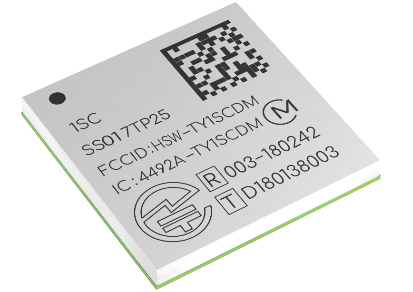
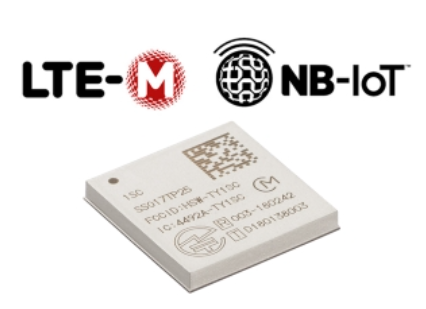
  Murata today introduced a new iSIM-compatible LPWA module, the Type 1SC, pre-integrated with out-of-the-box connectivity from 1NCE, one of the world’s fastest-growing IoT companies. The collaboration delivers simplified, scalable global connectivity, making it easier to launch and manage low-power IoT devices. Optimized for low-power, low-data applications, the solution comes bundled with 50 MB of data and optional top-ups, enabling rapid, cost-effective deployment for applications such as asset tracking, fleet management, and healthcare monitoring. Supporting both LTE-M and NB-IoT, the module offers broad compatibility across networks in 173 countries.  By embedding 1NCE’s cloud-based connectivity directly into the module, Murata eliminates the need for separate SIM provisioning, streamlining the design and manufacturing process for compact, energy-efficient devices. The result is a faster, more reliable path to market. Additionally, with over 30 million devices managed across 23,000+ customers, its platform simplifies lifetime IoT connectivity – bringing seamless integration, global reach, and built-in scalability to the next generation of connected products.  “Murata’s Type 1SC module represents our commitment to driving innovation in the IoT space,” said Hiro Hyogo, Senior Manager, Corporate Technology and Innovation at Murata Americas. “By having connectivity pre-installed on our modules, we’re reducing the complexities and costs associated with global IoT deployments while ensuring strong security and performance.”  "IoT will be dominated by software players, which is why Murata chose and trusted in 1NCE," said Fabian Kochem, Head of Global Product Strategy at 1NCE. “The supply chain of IoT is bloated, but our two companies save our customers time and money.”
Key word:
Release time:2025-08-13 15:33 reading:622 Continue reading>>
Simcom:E7025 R3 High-Performance, Cost-Effective NB-IoT <span style='color:red'>Connect</span>ivity
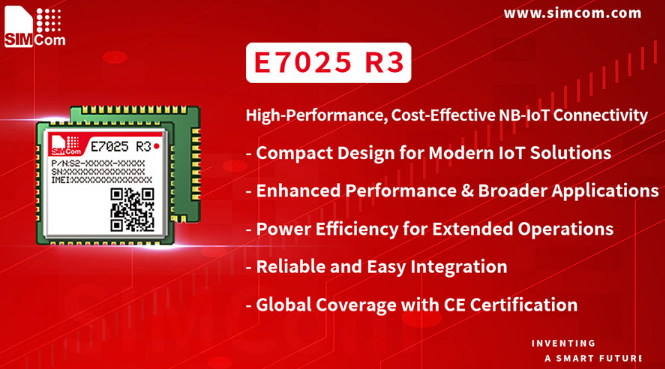
  Narrowband IoT (NB-IoT), also known as Low-Power Wide-Area Network (LPWAN), is transforming how IoT devices connect by enabling low-power, wide-area communication with extended battery life and reliable network performance. SIMCom's E7025 R3 exemplifies this innovation, offering a compact, versatile, and high-performing solution tailored for diverse IoT applications.  Compact Design for Modern IoT Solutions  Measuring just 15.7mm × 17.6mm × 2.1mm, the E7025 R3 is perfectly tailored for space-constrained devices such as smart meters, remote control systems, asset tracking, and remote monitoring applications. Its compact size supports sleek, efficient product designs while reducing manufacturing costs, making it an ideal choice for IoT communication needs. This small yet powerful module is a cornerstone for creating innovative, cost-effective IoT solutions across industries.  Enhanced Performance and Broader Applications  As the third generation of the E7025 series, the E7025 R3 takes optimization to the next level, offering improvements in both cost efficiency and power consumption. Now with an optional low-power Bluetooth feature, it caters to a wider range of application scenarios. Compliant with 3GPP R13 and R14 standards, this NB-IoT module provides robust communication capabilities, including significantly enhanced signal gain and extensive coverage compared to GSM. This ensures reliable connectivity even in challenging environments like basements or other signal-restricted locations. Designed for static or low-mobility use cases that require low-latency, real-time data transmission, the E7025 R3 excels in applications such as gas meters, smoke detectors, and gas alarms, demonstrating its immense potential in these specialized markets.  Power Efficiency for Extended Operations  Equipped with Power Save Mode (PSM) and Extended Discontinuous Reception (eDRX), the E7025 R3 achieves up to 10 years of battery life, minimizing the need for frequent maintenance. This makes it an exceptional choice for remote and low-maintenance applications, including environmental monitoring, smart agriculture, and remote asset tracking.  The E7025 R3 excels in connectivity, supporting frequency bands B1/B3/B5/B8/B20/B28 for deeper network penetration and enhanced indoor coverage. This ensures reliable operation in environments like underground parking, shielded utility meters, or urban smart city deployments. Its compatibility with protocols such as IPv4, IPv6, MQTT, CoAP, LwM2M, and FOTA allows seamless integration into diverse IoT applications.  Reliable and Easy Integration  The E7025 R3 uses an LCC+LGA package that enhances reliability and simplifies assembly. Combined with SIMCom’s reference designs, evaluation boards, and technical support, the module accelerates time-to-market for IoT innovations.  Global Coverage with CE Certification  Designed for global markets, the E7025 R3 has CE certification with its robust performance, cost-efficiency, and reliability are particularly valued. The E7025 R3’s ability to balance affordability with advanced capabilities has made it a standout choice to scale their IoT deployments.  With its advanced capabilities, compact size, and exceptional performance, the SIMCom E7025 R3 is a versatile solution poised to lead the way in IoT innovation. Whether for smart meters, remote control systems, asset tracking, and remote monitoring applications. E7025 R3 empowers to create more connected world.  Unlock the future of IoT with SIMCom’s E7025 R3—where innovation meets reliability.
Key word:
Release time:2024-12-25 11:39 reading:901 Continue reading>>
SIM8230: Advanced and Flexible 5G <span style='color:red'>Connect</span>ivity for Demanding IoT Applications
  The 5G RedCap specification, introduced in version R17 of the 3GPP standard, addresses the growing need for efficient connectivity in IoT devices that do not require the full performance of 5G. Also known as "Reduced Capability," this technology offers a more cost-effective and energy-efficient alternative to 4G, LTE-M, and NB-IoT.  RedCap provides an optimal balance between speed and energy efficiency, making it ideal for applications that demand constant connectivity without requiring maximum 5G capacity.  The SIM8230 module from SIMCom fits perfectly into this context, offering multi-band compatibility, intensive data transmission, and easy integration into IoT devices. Its efficient design meets the needs for economical connectivity, providing a viable solution for a wide range of IoT applications.  The SIM8230 is a multi-band 5G NR/LTE-FDD/LTE-TDD module that supports 5G SA according to version R17 (3GPP), providing advanced connectivity capabilities. It stands out for its compatibility with a wide range of protocols, facilitating integration into various platforms.  Compact and Easy to Integrate  Equipped with interfaces like PCIe, USB 2.0, and GPIO, the SIM8230 offers developers great flexibility to customize their projects. Its LGA format optimizes design and installation, allowing for a more durable assembly and improving heat dissipation, saving space and simplifying installation.  Rapid 5G Implementation with Minimal Reprogramming  The compatibility of the SIM8230’s AT commands with the SIM7600/8200/8260 series reduces costs and accelerates time to market. This is especially advantageous for companies that need to implement 5G solutions quickly without requiring extensive reprogramming.  Additionally, the SIM8230 is based on the Qualcomm X35 platform, which introduces the world's first 5G NR-Light modem-RF system, designed to enhance connectivity at the intelligent edge. This optimized architecture combines energy efficiency and lower complexity design, allowing compact devices to make the most of 5G connectivity. Thanks to its energy- saving features and improved performance, the X35 not only facilitates a smooth migration from LTE CAT-4+ devices but also enables a new wave of use cases for IoT devices, facilitating the rollout of 5G solutions with minimal reprogramming.  Technical Specifications of the SIM8230  - The SIM8230 is available in different regional versions to adapt to connectivity needs in various markets: The SIM8230C, SIM8230E, SIM8230G, SIM8230JP, SIM8230NA, and SIM8230SA models are presented in an LGA+LCC format with dimensions of 30.0x30.0x2.5 mm, optimized for compact devices. For M2 formats, the SIM8230C-M2, SIM8230E-M2, SIM8230G-M2, and SIM8230JP-M2 models have dimensions of 42.0x31.4x3.4 mm. Additionally, the SIM8230C-PCIE, SIM8230E-PCIE, SIM8230G-PCIE, and SIM8230JP-PCIE models are available in PCIe format with dimensions of 50.8x31.0x3.6 mm.  - Supported Frequencies: 5G NR (Sub6G), LTE-FDD, LTE-TDD.  - GNSS: Compatibility with global navigation systems, ideal for geolocation applications (GPS/GLONASS/BeiDou).  - Temperature Range: Operates between -40℃ and +85℃, ensuring reliability in extreme weather conditions.  - Electrical Characteristics: Operates with a voltage of 3.3 to 4.4 V, providing wide compatibility.  - Data Transfer Performance: Sub-6G SA with speeds of up to 220 Mbps download and 100 Mbps upload; LTE with up to 200 Mbps download and 75 Mbps upload, providing solid performance on LTE networks.  - Software Functions: Support for protocols such as TCP/IP, IPV4, IPV6, Multi-PDP, FTPS, HTTPS, MQTTS, and DNS, as well as USB/FOTA functionality for remote firmware updates.  - Interfaces and Connectivity: Includes interfaces such as USB, UART, PCM, GPIO, I2C, and PCIe. Supports SIM cards of 1.8V/2.95V, expanding its compatibility.  - Certifications: The SIM8230 is currently in the process of obtaining international certifications such as CE (RED), FCC, GCF, PTCRB and MNO TA.  Versatile and Robust Applications  The SIM8230 stands out as a key module in CPE and MiFi applications, offering efficient 5G connectivity and FWA access that meet the needs of both industrial and residential sectors. Its optimized design and low energy consumption make it ideal for remote environments, providing high-speed internet access in MiFi devices and converting 5G signals into WiFi in CPE installations.  Moreover, its versatility makes it a preferred option for emerging sectors such as telemedicine, smart cities, and connected automotive, opening new possibilities for innovative IoT solutions. Its high efficiency, security, and flexibility make it an adaptable solution for future demands, ensuring fast and reliable connections in an increasingly interconnected world.
Key word:
Release time:2024-12-19 10:34 reading:892 Continue reading>>
E7025 R3: High-Performance, Cost-Effective NB-IoT <span style='color:red'>Connect</span>ivity
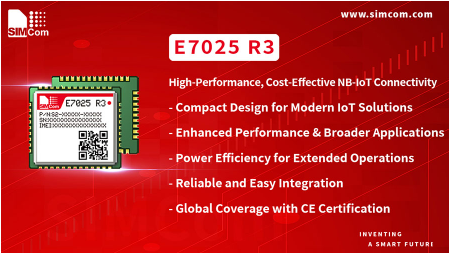
  Narrowband IoT (NB-IoT), also known as Low-Power Wide-Area Network (LPWAN), is transforming how IoT devices connect by enabling low-power, wide-area communication with extended battery life and reliable network performance. SIMCom's E7025 R3 exemplifies this innovation, offering a compact, versatile, and high-performing solution tailored for diverse IoT applications.  Compact Design for Modern IoT Solutions  Measuring just 15.7mm × 17.6mm × 2.1mm, the E7025 R3 is perfectly tailored for space-constrained devices such as smart meters, remote control systems, asset tracking, and remote monitoring applications. Its compact size supports sleek, efficient product designs while reducing manufacturing costs, making it an ideal choice for IoT communication needs. This small yet powerful module is a cornerstone for creating innovative, cost-effective IoT solutions across industries.  Enhanced Performance and Broader Applications  As the third generation of the E7025 series, the E7025 R3 takes optimization to the next level, offering improvements in both cost efficiency and power consumption. Now with an optional low-power Bluetooth feature, it caters to a wider range of application scenarios. Compliant with 3GPP R13 and R14 standards, this NB-IoT module provides robust communication capabilities, including significantly enhanced signal gain and extensive coverage compared to GSM. This ensures reliable connectivity even in challenging environments like basements or other signal-restricted locations. Designed for static or low-mobility use cases that require low-latency, real-time data transmission, the E7025 R3 excels in applications such as gas meters, smoke detectors, and gas alarms, demonstrating its immense potential in these specialized markets.  Power Efficiency for Extended Operations  Equipped with Power Save Mode (PSM) and Extended Discontinuous Reception (eDRX), the E7025 R3 achieves up to 10 years of battery life, minimizing the need for frequent maintenance. This makes it an exceptional choice for remote and low-maintenance applications, including environmental monitoring, smart agriculture, and remote asset tracking.  The E7025 R3 excels in connectivity, supporting frequency bands B1/B3/B5/B8/B20/B28 for deeper network penetration and enhanced indoor coverage. This ensures reliable operation in environments like underground parking, shielded utility meters, or urban smart city deployments. Its compatibility with protocols such as IPv4, IPv6, MQTT, CoAP, LwM2M, and FOTA allows seamless integration into diverse IoT applications.  Reliable and Easy Integration  The E7025 R3 uses an LCC+LGA package that enhances reliability and simplifies assembly. Combined with SIMCom’s reference designs, evaluation boards, and technical support, the module accelerates time-to-market for IoT innovations.  Global Coverage with CE Certification  Designed for global markets, the E7025 R3 has CE certification with its robust performance, cost-efficiency, and reliability are particularly valued. The E7025 R3’s ability to balance affordability with advanced capabilities has made it a standout choice to scale their IoT deployments.  With its advanced capabilities, compact size, and exceptional performance, the SIMCom E7025 R3 is a versatile solution poised to lead the way in IoT innovation. Whether for smart meters, remote control systems, asset tracking, and remote monitoring applications. E7025 R3 empowers to create more connected world.  Unlock the future of IoT with SIMCom’s E7025 R3—where innovation meets reliability.
Key word:
Release time:2024-12-18 11:00 reading:6910 Continue reading>>
Murata’s Type 1SC-NTN module achieves Skylo U.S. certification for cellular and non-terrestrial network connectivity
Top 10 global mini wire connectors manufacturers
  Connectors are important electronic components for current flow or data signal transmission between electronic systems. An electronic system is a layered interconnection network. Connectors act as a node to connect electronic equipment independently or together with cables, so that each independent unit forms a complete system. In this article, we have summarized the top 10 global mini wire connector manufacturers for you to take a reference.  一、TE Connectivity  Company profile  TE Connectivity provides solutions that power electric vehicles, aircraft, digital factories, and smart homes. Innovation that enables life-saving medical care, sustainable communities, efficient utility networks, and the global communications infrastructure. For more than 75 years, it has partnered with customers to produce highly engineered connectivity and sensing products that make a connected world possible.  Main business and products  TE Connectivity manufactures different types of connectors including PCB connector and wire connectors. Across its portfolio of different types of electrical connectors including electrical wiring connectors types and cable connectors types, it offers robust solutions for improving connectivity in critical technology systems.  二、Molex  Company profile  As a leading provider of interconnect solutions, Molex has more than 80 years of experience delivering connectivity at scale. Its commitment to the highest-quality products, unmatched engineering expertise and truly collaborative customer relationships spans industries, from automotive to telecommunications, mobile devices, data center, industrial, medtech and more.  Main business and products  Molex equips forward-thinking engineers with an expansive array of high-performance automotive printed circuit board (PCB) and wire connectors like its innovative MX150 and DuraClik product families—all precision-designed to deliver rugged and reliable performance in the harshest conditions, while seamlessly supporting the latest industry standards and applications including sensors, cameras, LiDAR and more.  三、Glenair  Company profile  Founded in 1956, Glenair manufactures high-reliability connectors and cables for mission-critical land, sea, air, and space applications. Located in Glendale, California, its connectors, backshells and interconnect cable assemblies are all made either in America or in its facilities in Mansfield, England, Bologna, Italy, or Salem, Germany.  Main business and products  Glenair began operations in 1956 producing electrical connector backshells and accessories. Building on that foundation, it now offers dozens of full-spectrum connector product lines designed to meet every electrical and optical interconnect requirement, including a broad range of military qualified and signature connector designs.  四、Samtec  Company profile  Founded in 1976, Samtec is the service leader in the electronic interconnect industry and a global manufacturer of Connectors, Cables, Optics and RF Systems. Samtec offers the largest variety of high-speed board-to-board and backplane interconnects in the industry with full engineering support, online tools and an unmatched service attitude.  Main business and products  From standard cataloged products to unique high-performance design, Samtec’s Product Solution Blocks are designed to support any interconnectivity need, regardless of application, performance requirements or environment.  五、Würth Elektronik  Company profile  Wurth Elektronik is one of the world’s leading manufacturers of electronic and electromechanical components, ensures global availability of its products. WE offers a wide range of products, making it the perfect choice for anyone looking to add value to their electronic projects. It has 14 manufacturing facilities worldwide, which guarantee rapid delivery of components.  Main business and products  Würth Elektronik’s product range includes EMC components, power inductors, transformers, RF components, visitors, capacitors, resistors, quartz crystals, oscillators, power modules, Wireless Power Transfer, LEDs sensors, connectors, power supply elements, switches, push-buttons, connection technology, fuse holders and solutions for wireless data transmission.  六、I-PEX Inc  Company profile  I-PEX Inc. was incorporated in 1963 and is headquartered in Kyoto, Japan. It is a leader in the field of high-frequency and high-speed transmission connectors. It uses its precision manufacturing process to go from product design to tool build to mass production.  Also read: High-frequency PCB – What makes it high-frequency conducting circuit  Main business and products  Leading in the field of high-frequency and high-speed transmissions, I-PEX provides excellent signal integrity solutions with the development of a wide variety of ultra-precision connectors.  Connectors & Electronics Components Business  Automotive Electronics & Associated Components Business  Semiconductor Mfg. Equipment and Other Business  七、Nicomatic  Company profile  Nicomatic is a renowned player in the micro-connectors sector. With its headquarters based in France and multiple production sites worldwide, this family-run international group has spent more than 45 years developing and manufacturing innovative interconnect solutions for the aerospace, defence, medical and production industries.  Main business and products  NICOMATIC Group specializes in the design and manufacture of innovative connector and switching solutions for harsh environment.  High performance micro-connectors  Sealed Modular Connectors  Connectors for flexible circuits & PCB  FFC Cables & Jumpers  Metal domes & componentsA  八、Omnetics Connector  Company profile  Over 30 years of experience. Omnetics is a worldwide designer and manufacturer of Micro and Nano miniature interconnect products, featuring COTS, Standards and Custom connectors for industries such as Military, Aerospace, Defense, Medical and other technology oriented OEMs.  Main business and products  Omnetics focuses on Micro-miniature and Nano-miniature highly reliable electronic connectors and interconnection systems.  Micro and Nano Strip Connectors  Micro and Nano Circular Connectors  the world-class Nano Bi-Lobe® (a QPL rectangular connector family)  the new Squeeze-Latching Nano Connector  Polarized Nano Connectors  九、Advanced Interconnections  Company profile  Since 1982, Advanced Interconnections has been recognized as a leading designer and manufacturer of innovative, technologically advanced interconnect solutions. Its designs are used in electronic applications around the world including telecommunications, military, automotive development, high-end computer servers, medical equipment, and more.  Main business and products  Advanced Interconnections combines 35 plus years of innovative design engineering experience with an extensive Tool Box of in-house technologies and components to create customized solutions for high reliability electronic applications. It is dedicated to manufacturing wide variety of connectors, sockets, adapters, terminals, and application-specific interconnect designs.  十、AirBorn  Company profile  Founded in 1958, AirBorn is headquartered in Georgetown Texas, whose core business is engineering & manufacturing specialized connectors & electronic components for Original Equipment Manufacturers (OEMs) world wide.  Main business and products  AirBorn offers total electronics solutions ranging from connectors, cable assemblies, military-grade flexible circuits to high level assemblies and box builds. Its products can be used in industries including Military/Defense, Commercial Air, Medical, Industrial, and Space Exploration.
Release time:2024-02-21 14:17 reading:1999 Continue reading>>
Murata Expands Matter-Compliant IoT <span style='color:red'>Connect</span>ivity Portfolio
  Murata today introduced the Type 2FR connectivity module. The solution is driven by NXP® Semiconductor's RW612 Wireless MCU with integrated Tri-radio and measures just 12mm x 11mm. Its class-leading integration, efficiency, and tri-radio capabilities represent a breakthrough in IoT connectivity. Target applications include smart home devices, smart appliances, enterprise and industrial automation, and smart city and smart energy solutions.  The Type 2FR supports various communication protocols, including dual-band WiFi 6, Bluetooth® Low Energy (LE) 5.3, 802.15.4, and ethernet. This versatility ensures seamless connectivity and operational efficiency. Additionally, Type 2FR is primed for Matter, enabling compatibility with Matter over WiFi, Matter over Thread, and Matter over Ethernet, simplifying device interoperability and management.  With its built-in 260 MHz Arm® Cortex®-M33 core, 1.2 MB of RAM, 16 MB of flash memory, and fortified by NXP EdgeLock® security technology, the Type 2FR establishes a secure environment for a broad spectrum of IoT applications. The module offers the flexibility to operate in co-processor mode. The RW612 is supported by the NXP MCUXpresso ecosystem of software and tools to accelerate development and reduce time-to-market. The solution also boasts full regulatory certification and provides numerous external antenna options, ensuring compliance and reliability.  Mehul Udani, Vice President, Corporate Technology and Innovation, Murata Americas stated, "Murata's commitment to innovation and collaboration is evidenced in this miniaturized, high-performance, highly integrated module. By leveraging our proprietary technology and NXP's latest Tri-radio Wireless MCU, we have delivered a robust solution that is approximately 50 percent smaller compared to discrete implementation. Further, the WiFi and ethernet capability allows the IoT device to function as a border router to enable other new applications."  Larry Olivas, Vice President and General Manager for Wireless Connectivity Solutions, NXP Semiconductors added, "Murata possesses a strong mass market portfolio of wireless module solutions based on NXP’s ICs. This latest offering demonstrates an advanced solution that enables a complete system in a module, thus reducing design time and risk for IoT developers.”  This announcement represents an expansion of Murata’s new class of IoT offerings announced in March. The Type 2EL is a small and high-performance module based on NXP’s IW612 combo chipset and supports IEEE 802.11a/b/g/n/ac/ax + Bluetooth 5.3 BR/EDR/LE + 802.15.4. The Type 2DL is based on NXP’s IW611 combo chipset and supports IEEE 802.11a/b/g/n/ac/ax + Bluetooth 5.3 BR/EDR/LE.  Murata will showcase the Matter-enabled tri-radio module solution portfolio at CES 2024 January 9-12 in Las Vegas (West Hall, Booth 6300). Samples will be available at the same time. More information can be requested from the Murata team here.
Key word:
Release time:2024-01-12 15:47 reading:1900 Continue reading>>
PCB transmission line : types, purpose and connection
  In the dynamic world of electronics, where speed, efficiency, and signal integrity reign supreme, the intricate pathways etched onto printed circuit boards (PCBs) play a pivotal role in ensuring seamless communication between components. Among these pathways, PCB transmission line standS as the unsung heroes, enabling the reliable transfer of signals critical for the functionality of modern electronic devices.  Understanding and implementing PCB transmission line theory are essential in high-speed and high-frequency PCB designs to ensure signal integrity, reduce electromagnetic interference, and maintain the overall performance of electronic devices.  What is PCB transmission line?  A PCB transmission line refers to a structure or pathway on a printed circuit board (PCB) designed to transmit electrical signals from one point to another with minimal distortion, attenuation, or interference. These transmission lines are crucial for maintaining signal integrity, especially in high-frequency applications commonly found in modern electronics.  The behavior of signals traveling along PCB transmission lines is influenced by factors such as line geometry, dielectric materials, trace width, trace thickness, and the surrounding environment. Common types of PCB transmission lines include microstrips (a single signal trace over a ground plane) and striplines (two ground planes with a signal trace sandwiched between them).  Signals on transmission lines can experience effects such as reflection, impedance mismatches, and signal degradation if not properly designed. Engineers use specific calculations and design rules to match impedance, control signal skew, minimize crosstalk, and ensure reliable signal transmission along these pathways.  What is the purpose of transmission lines?Signal Integrity: They maintain the quality of electrical signals as they travel from one point to another, especially in high-frequency applications. By managing impedance, reducing reflections, and minimizing signal distortion, transmission lines help ensure that signals reach their destination accurately.  Reducing Signal Degradation: In high-frequency systems, signals can degrade due to factors like impedance mismatch, noise, and attenuation. PCB Transmission lines are designed to minimize these issues, allowing signals to propagate with minimal distortion and loss.  Controlling Impedance: They provide a controlled impedance path for signals, matching the impedance of the source and load components. This matching prevents signal reflections and ensures efficient power transfer.  Minimizing Crosstalk: Transmission lines with proper spacing and design help reduce electromagnetic interference between adjacent signal traces, thereby preventing crosstalk that can disrupt signal quality.  Supporting High-Speed Data Transfer: In applications like telecommunications, data centers, and high-speed computing, PCB transmission lines facilitate the reliable transfer of large amounts of data by maintaining signal integrity and reducing transmission errors.  Maintaining System Stability: PCB Transmission lines contribute to system stability by preventing signal distortions that could otherwise cause malfunctions or errors in electronic devices.  What are the types of transmission lines?  The types of transmission lines  There are several types of PCB transmission lines commonly used in electronics and telecommunications, each suited for specific applications. Some of the main types include:  Coaxial Cable: Consists of a central conductor surrounded by an insulating layer, a conductive shield, and an outer insulating layer. Coaxial cables are commonly used for television signals, networking (Ethernet), and high-frequency transmission due to their ability to minimize interference.  Microstrip Line: A type of transmission line consisting of a conductor trace on one side of a dielectric substrate, with a ground plane on the other side. It’s widely used in PCB designs for its simplicity and suitability for high-frequency applications.  Stripline: Similar to microstrip, but with the signal trace sandwiched between two layers of dielectric material, usually on a PCB. Striplines offer better shielding and are often used in RF and microwave circuits.  Twin-Lead Line: Consists of two parallel conductors separated by a dielectric material. It’s used in simpler applications like antenna feed lines or low-frequency circuits.  Waveguides: Hollow metallic tubes or structures that guide electromagnetic waves. They are prevalent in microwave transmission and high-frequency applications, especially in radar systems and satellite communications.  Twisted Pair Cable: Comprises two insulated conductors twisted together. It’s commonly used in telecommunication and networking for its ability to reduce electromagnetic interference.  What is the difference between circuit and transmission line?Circuits and transmission lines are both integral parts of electronic systems but differ in their fundamental characteristics and functions:  Circuit:  - Topology of Components: Circuits refer to the interconnected arrangement of electronic components (such as resistors, capacitors, transistors, etc.) that perform specific functions, such as amplification, filtering, or signal processing.  - Signal Processing: Circuits manipulate electrical signals by processing, amplifying, or modifying them based on the arrangement and operation of the components.  - Low-Frequency Operations: Circuits are primarily used for low-frequency operations and are designed based on the principles of electrical circuit theory.  - Localized Operation: The behavior of components within a circuit is often studied and analyzed independently of the connections between components. The interconnections between components are typically assumed to have negligible effects at lower frequencies.  Transmission Line:  - Signal Propagation: PCB Transmission lines are pathways designed specifically for the efficient transmission of electrical signals from one point to another.  - Signal Integrity: They focus on maintaining signal integrity, especially in high-frequency applications, by controlling impedance, minimizing reflections, and managing signal distortion.  - High-Frequency Operations: PCB Transmission lines are crucial for high-frequency operations where the characteristics of the transmission path, such as impedance matching and signal propagation delay, significantly affect signal quality.  - Consideration of Distributed Effects: PCB Transmission lines are analyzed considering distributed effects along the length of the line. At higher frequencies, effects like signal propagation time, impedance changes, and reflections become significant and need to be managed for proper signal transmission.In essence, circuits deal with the arrangement and operation of electronic components to perform specific functions, while transmission lines are dedicated pathways designed for the efficient transmission of electrical signals, especially in high-frequency scenarios, where the distributed nature of the transmission becomes critical to maintaining signal quality.  How are transmission lines connected?  PCB Transmission lines can be connected in various ways, depending on the specific requirements of the system and the type of transmission lines being used. Here are some common methods of connecting transmission lines:  Direct Connection:  When two transmission lines need to be connected with minimal loss or interference, they can be directly joined by soldering, welding, or using connectors specifically designed for the transmission line type (like coaxial cable connectors or microstrip connectors).  Connectors and Adapters:  Various connectors and adapters are available for different types of transmission lines. Examples include BNC, SMA, N-type connectors for coaxial cables, and specialized connectors for microstrip or stripline configurations. These connectors ensure a secure and impedance-matched connection between transmission lines.  Baluns and Transformers:  Baluns (balanced to unbalanced transformers) and transformers are used to match impedance and convert between different transmission line types or impedance levels. They enable the connection between lines with different characteristics.  Transition Structures:  In cases where different types of PCB transmission lines need to be connected, transition structures are employed. For instance, transitioning from a coaxial cable to a microstrip line might involve a carefully designed structure to maintain signal integrity during the transition.  Impedance Matching Techniques:  Techniques such as stubs, tapered lines, or impedance matching networks can be used to ensure impedance continuity and minimize reflections when connecting transmission lines.  Via PCB Traces:  On a printed circuit board (PCB), transmission lines can be connected through carefully designed traces that maintain the characteristic impedance and minimize signal distortion.  Why do transmission lines need high-voltage?  PCB Transmission lines often operate at high voltages for several reasons related to power transmission efficiency, minimizing losses, and optimizing the power grid’s performance:  • Reduced Current and Power Losses: According to Ohm’s law (V = I * R), for a given power, increasing voltage reduces the current flowing through the transmission lines. Lower current results in lower resistive (I^2 * R) losses, where “R” represents the resistance of the transmission line. By transmitting power at high voltage, utilities can reduce power losses during transmission.  • Efficient Power Transfer: Higher voltages enable more efficient power transfer over long distances. The use of high-voltage transmission lines allows for the transmission of larger amounts of power without significant losses. This is crucial for delivering electricity from power plants, often located far from population centers, to where it’s needed.  • Voltage Regulation and Stability: High-voltage transmission helps in maintaining voltage levels within acceptable limits across the power grid. It facilitates better voltage regulation, reduces voltage drops, and ensures a more stable supply of electricity to consumers.  • Economic Considerations: Transmitting electricity at high voltage is more cost-effective for utilities. Although high-voltage transmission lines require higher initial investment and specialized equipment, the reduced losses during transmission translate into long-term cost savings.  • Grid Reliability: High-voltage transmission lines support the stability and reliability of the electrical grid. They enable utilities to efficiently manage and balance the supply and demand of electricity across the grid, especially during peak usage periods.  • Renewable Energy Integration: Transmission lines with higher voltages are crucial for integrating renewable energy sources (like wind or solar farms) located in remote areas into the grid. These sources often require long-distance transmission to reach areas with high electricity demand.  While high-voltage transmission lines offer several advantages, their design and operation require careful consideration of safety measures, insulation, equipment, and regulatory compliance to ensure efficient and reliable power transmission while minimizing risks to personnel and the environment.
Key word:
Release time:2023-12-27 14:51 reading:2136 Continue reading>>
AMEYA360:TE <span style='color:red'>Connect</span>ivity / Entrelec Metal EMC Cable Glands
  TE Connectivity's (TE) / Entrelec Metal EMC Cable Glands offer excellent cable strain relief and high ingress protection against dirt, water, and dust. These cable glands are reliable in harsh environments due to their high ingress protection ratings and feature EMC protection and vibration-proof construction, achieved by the fitted contact springs that enlarge contacts with the cable shield for long-lasting contact quality and connection. EMC cable glands have many mounting options for design flexibility and offer various product functions to fit many applications. TE / Entrelec Metal EMC Cable Glands include plastic and metal variations ideal for standard and specialized applications.  FEATURES  High ingress protection ratings  EMC protection and vibration proof  Hygienic construction for low contamination areas  3 types of thread specs: metric, PG, and NPT  Various product functions to fit many applications  Various material and color options  APPLICATIONS  Standard Plastic and Brass Glands  Electrical cabinets  Plastic and metal boxes  LV/MV/HV panels  Machine tools  Motors  HVAC  Compressors  Brass EMC Glands for Vibration Environments  Elevators  HVAC  Compressors  Motors  Railways  Hygienic Glands for Environments with Potential Contamination  Food and pharmaceuticals  Manufacturing and packaging  Clean room technology  Biotechnology  Chemical industries
Key word:
Release time:2023-06-15 14:04 reading:2230 Continue reading>>

Turn to

/ 4

  • Week of hot material
  • Material in short supply seckilling
model brand Quote
MC33074DR2G onsemi
BD71847AMWV-E2 ROHM Semiconductor
TL431ACLPR Texas Instruments
CDZVT2R20B ROHM Semiconductor
RB751G-40T2R ROHM Semiconductor
model brand To snap up
BU33JA2MNVX-CTL ROHM Semiconductor
STM32F429IGT6 STMicroelectronics
ESR03EZPJ151 ROHM Semiconductor
BP3621 ROHM Semiconductor
IPZ40N04S5L4R8ATMA1 Infineon Technologies
TPS63050YFFR Texas Instruments
Hot labels
ROHM
IC
Averlogic
Intel
Samsung
IoT
AI
Sensor
Chip

About us

Qr code of ameya360 official account

Identify TWO-DIMENSIONAL code, you can pay attention to

AMEYA360 mall (www.ameya360.com) was launched in 2011. Now there are more than 3,500 high-quality suppliers, including 6 million product model data, and more than 1 million component stocks for purchase. Products cover MCU+ memory + power chip +IGBT+MOS tube + op amp + RF Bluetooth + sensor + resistor capacitance inductor + connector and other fields. main business of platform covers spot sales of electronic components, BOM distribution and product supporting materials, providing one-stop purchasing and sales services for our customers.

Please enter the verification code in the image below:

verification code