STMicroelectronics to Invest EUR 5 Billion in New SiC Wafer Fab
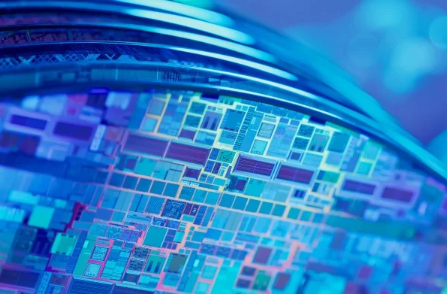
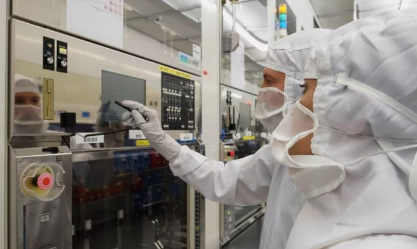
  STMicroelectronics, following its EUR 7.5 billion wafer fab project with GlobalFoundries in Crolles, France. is set to invest EUR 5 billion in building a new SiC super semiconductor wafer fab in Catania, Sicily, Italy. The fab in Italy will specialize in producing SiC chips, a pivotal technology for electric vehicles with substantial growth potential, according to French media L’Usine Nouvelle on November 26th,  STMicroelectronics competitively plans to transition to 8-inch wafers starting from 2024. The company will integrate Soitec’s SmartSiC technology to enhance efficiency and reduce carbon emissions. Simultaneously, STMicroelectronics aims to increase capacity, achieve internal manufacturing, and collaborate with Chinese firm Sanan Optoelectronics to raise SiC chip-related revenue from the expected USD 1.2 billion in 2023 to USD 5 billion by 2030.  On June 7th earlier this year, STMicroelectronics and Sanan Optoelectronics announced a joint venture to establish a new 8-inch SiC device fab in Chongqing, China, with an anticipated total investment of USD 3.2 billion.  To ensure the successful implementation of this extensive investment plan, Sanan Optoelectronics said to utilize its self-developed SiC substrate process to construct and operate a new 8-inch SiC substrate fab independently.  TrendForce: over 90% SiC market share by major global players  According to TrendForce, the SiC industry is currently dominated by 6-inch substrates, holding up to 80% market share, while 8-inch substrates only account for 1%. Transitioning to larger 8-inch substrates is a key strategy for further reducing SiC device costs.  8-inch SiC substrates offer significant cost advantages than 6-inch substrates. The industry’s major players in China, including SEMISiC, Jingsheng Mechanical & Electrical Co., Ltd. (JSG), Summit Crystal, Synlight Semiconductor, KY Semiconductor, and IV-SemiteC, are advancing the development of 8-inch SiC substrates. This shift from the approximately 45% of total production costs associated with substrates is expected to facilitate the broader adoption of SiC devices and create a positive cycle for major companies.  Not only Chinese companies but also international semiconductor giants like Infineon Technologies and Onsemi are actively vying for a share of the market. Infineon has already prepared the first batch of 8-inch wafer samples in its fab and plans to convert them into electronic samples soon, with mass production applications scheduled before 2030. International device companies like Onsemi and ROHM have also outlined development plans for 8-inch SiC wafers.  Currently, major companies hold over 90% of the market share, intensifying competition. A slowdown in progress could provide opportunities for followers. According to TrendForce, the market share of the top 5 SiC power semiconductor players in 2022 was dominated by STMicroelectronics (36.5%), Infineon (17.9%), Wolfspeed (16.3%), Onsemi (11.6%), and ROHM (8.1%), leaving the remaining companies with only 9.6%.
Release time:2023-11-30 10:53 reading:3078 Continue reading>>
Foxconn Faces Chinese Tax Investigation, May Shift More iPhone Orders to Rivals
  Chinese media reported on the 22nd that China’s regulatory authorities are conducting investigations into Foxconn’s factories in Guangdong, Jiangsu, Henan, and Hubei. This comes at a time when Apple’s iPhone 15 series is in full production and seeing high shipment volumes. The investigation may potentially impact the production capacity of the iPhone 15. Market rumors suggest that Apple is considering gradually shifting orders to competitors, which could benefit companies like Luxshare Precision and Pegatron.  According to Chinese Taiwan’s Commercial Times, in response to the recent tax inspection, Foxconn emphasized on the 22nd that it would actively cooperate with relevant agencies in their operations. Major suppliers for iPhone 15 lenses, Largan Precision and Genius Electronic Optical, declined to comment on the situation with individual clients but emphasized that their current shipments are not affected.  Influenced by strong competition from Chinese smartphones, including Huawei, and concerns about overheating issues, the appeal of the iPhone 15 has waned, and the highly anticipated iPhone 15 Pro Max’s popularity has declined. In the Asian market, waiting times for the sought-after titanium alloy casing iPhone have been substantially reduced. Shipping times have decreased to approximately two weeks, while in-store pickup can be as fast as three days. Signs of cooling demand are also appearing in Europe and the United States.  Tech industry insiders note that even though demand for the iPhone 15 has decreased, Apple is still considering expanding its supply chain to be prepared for unforeseen circumstances.  In addition, samples of iPhone 16 components and designs are in the sampling stage, with plans to finalize them by January of next year. The recent tax inspection controversy involving Foxconn, combined with the fact that its competitor, Luxshare, has obtained the assembly NPI (New Product Introduction) for the 2024 iPhone 16 Pro Max, further strengthens Luxshare’s presence in the iPhone business. Its share of manufacturing is expected to increase significantly next year.  Furthermore, Luxshare has already become the primary assembly factory for Apple Watch and AirPods, and in 2020, it acquired two iPhone production lines from Wistron. Luxshare is also a major producer for Vision Pro, representing Apple’s accelerated localization efforts and a move away from its dependency on Foxconn.
Key word:
Release time:2023-10-23 14:23 reading:2095 Continue reading>>
Panasonic Invests in Ubiden, an EV Charging Service Startup, through Panasonic Kurashi Visionary Fund
  Panasonic Corporation (Head office: Minato-ku, Tokyo; President & CEO: Masahiro Shinada; hereinafter referred to as Panasonic) today announced that it has decided to invest in Ubiden, Inc. (Head office: Minato-ku, Tokyo; Representative: Norio Yamaguchi; hereinafter referred to as Ubiden), a company that provides charging services for electric vehicles, through a corporate venture capital fund, commonly known as the Panasonic Kurashi Visionary Fund, jointly managed by Panasonic and SBI Investment Co., Ltd.  The number of standard chargers* installed in Japan is expected to increase to 77,000 by 2035, about three times the total installed in 2021. However, the lack of EV charging facilities is still cited as one of the reasons for the slower adoption of EVs in Japan than in other countries.  Ubiden operates an electric vehicle charging service called WeCharge, which allows customers to use a smartphone app to pay for electricity used at dedicated EV charging outlets based on the amount of electricity used, rather than the time spent charging. It also provides a user-friendly UX (user experience) that enables easy payment between EV users and charger owners, giving the company an advantage in charging service operation at residential complexes, commercial facilities and other locations where multiple EV owners use the service.  Panasonic provides ELSEEV electric vehicle (EV and PHEV) charging equipment and outdoor EV charging outlets, which are already in use by Ubiden. Through this investment, Panasonic, in conjunction with Ubiden's outstanding software (for system control, platform operation, and other purposes), will explore the potential for installation of EV charging facilities to be expanded to condominiums and other residential complexes, which has up to now been difficult to achieve for both physical and operational reasons. The company aims to develop an optimal charging infrastructure that will support the uptake of EVs in Japan.  With a mission to contribute to the wellbeing of people, society and the planet, Panasonic aims to be the best partner of people's life with human centric technology and innovation. The company will continue to strengthen its open innovation initiatives based on strong partnerships by investing in promising startups both in Japan and overseas that are competitive in areas that are closely related to people's lives, such as energy, food infrastructure, spatial infrastructure, and lifestyle.
Key word:
Release time:2023-04-27 11:48 reading:3542 Continue reading>>
SEMI: Global IC Industry Projected to Invest Over $500B in New Fabs by 2024
  The projected growth in global factory count includes a record high 33 new semiconductor manufacturing facilities starting construction this year and 28 more in 2023.  The worldwide semiconductor industry is projected to invest more than $500 billion in 84 volume chipmaking facilities starting construction from 2021 to 2023, with segments including automotive and high-performance computing fueling the spending increases, according to SEMI’s latest quarterly World Fab Forecast report.  The projected growth in global factory count includes a record high 33 new semiconductor manufacturing facilities starting construction this year and 28 more in 2023.  “The latest SEMI World Fab Forecast update reflects the increasing strategic importance of semiconductors to countries and a wide array of industries worldwide,” said Ajit Manocha, SEMI president and CEO. “The report underscores the significant impact of government incentives in expanding production capacity and strengthening supply chains. With the bullish long-term outlook for the industry, rising investments in semiconductor manufacturing are critical to laying the groundwork for secular growth driven by a diverse range of emerging applications.”  New Semiconductor Facilities Starting Construction by Region  The SEMI World Fab Forecast reports data from SEMI’s seven regions:  In the Americas, the U.S. Chips and Science Act has vaulted the region into the lead worldwide in new capital spending as the government investment spawns new chipmaking facilities and supporting supplier ecosystems. From 2021 through next year, the Americas is forecast to start construction on 18 new facilities.  China is expected to outnumber all other regions in new chip manufacturing facilities, with 20 supporting mature technologies planned.  Propelled by the European Chips Act, Europe/Mideast investment in new semiconductor facilities is expected to reach a historic high for the region, with 17 new fabs starting construction between 2021 and 2023.  Taiwan is expected to start construction on 14 new facilities, while Japan and Southeast Asia are each projected to begin building six new facilities over the forecast period. South Korea is forecast to start construction on three large facilities.
Key word:
Release time:2022-12-29 15:00 reading:2105 Continue reading>>
Keysight 5G Survey Reveals Securing Market Leadership is Key Driver for 5G Technology Investment
Keysight Technologies today released the results of the Keysight 2018 State of 5G survey, which reveals that companies primarily invest in 5G technology to secure market leadership, meet customer demand, and take advantage of flexible and scalable networks.The Keysight 2018 State of 5G Survey shows more than half (54 percent) of companies surveyed are already adopting 5G technologies with 46 percent citing securing market leadership early in the 5G lifecycle as the primary driver for their investments. And, more than two thirds of respondents said they are actively seeking 5G test solutions to accelerate the development or rollout out of 5G technology.“To meet customer demand and establish market leadership, equipment manufacturers and service providers need early access to 5G test tools and capabilities,” said Kailash Narayanan, vice president and general manager of Wireless Devices and Operators at Keysight Technologies. “Keysight’s close collaborations with industry consortia and market leaders, deep technical experts, and end-to-end 5G test solutions are empowering the mobile industry to accelerate 5G product design development and commercialization.”Most respondents (63 percent) of the Keysight survey expect higher reliability and lower latency to create the biggest impact from 5G technology. These aspects are important to address new business opportunities. Respondents indicated that the top three benefits of implementing 5G technology are faster networks, greater IoT enablement, and connected car proliferation.By leveraging new and existing technologies including wider bandwidths in millimeter-wave frequencies, massive MIMO and virtualized networks, 5G will deliver a multitude of benefits to meet customer demand across a wide range of vertical industries.“The fact that many respondents are looking for test solutions means that those inventing and deploying the technology want to ensure their implementations perform as expected while securing a market leadership position,” stated Roger Nichols, 5G program manager at Keysight Technologies. “Many of these technologies, or combinations of technologies, are new to the radio communications world, which is why the industry is looking for tools to help them analyze, design, measure, and validate designs that rely on these technologies.”
Key word:
Release time:2018-11-28 00:00 reading:1155 Continue reading>>
Huawei plans to <span style='color:red'>invest</span> $140 million in AI talent education
Aiming to work with partners to build an affordable, effective, reliable and inclusive Artificial Intelligence (AI) ecosystem, Chinese tech giant Huawei on Friday released its "AI Developer Enablement Programme" under which it plans to invest $140 million in AI talent education.The programme will help Huawei collaborate with developers, partners, universities and research institutions to build a better development ecosystem that can support AI resources, platforms, courses and joint solutions."Huawei's AI Developer Enablement Programme offers a platform for technical communication, talent training, and innovation to developers, tutors, and Huawei partners," Zheng Yelai, Vice President of Huawei and President of Huawei Cloud BU, said on the last day of Huawei Connect 2018, a global event for the ICT industry.For developers, the programme covers 20-hour free introductory training, three-week beginner AI training camp, AI developer contests, innovation incubation camp for top talent to help transform R&D success into commercial applications.The company will support its partners by building joint solutions based on Huawei's AI computing platform and development platform to promote AI application in multiple industries, Zheng said."It will also help in setting up an AI promotion alliance to build a joint innovation lab, providing 1,000 sets of free development environments, including development modules and boards," he said.The company said it would provide its first 20 partners with expert resources, support joint solutions and extra support for AI product launches and technical implementation.Huawei said it was planning to invest over $140 million under its talent development plan.For the purpose, the company would be cooperating with universities and scientific research institutes to develop AI courses, publish text books and support scientific research and talent training.It would also help universities and research institutes build AI colleges and institutes and assist in building AI labs.The company would help in supporting the participation of universities into Huawei cloud open community and building a platform for communications between universities, research institutes and Huawei AI experts.At present, Huawei has started developing AI talent at eight universities in China, including Institute for Interdisciplinary Information Sciences of Tsinghua University, the University of Science and Technology of China, Zhejiang University, Shanghai Jiao Tong University, Nanjing University, Southeast University, Xidian University, and the Institute of Acoustics of the Chinese Academy of Sciences.Huawei's university partners and business partners including Visystem, Gosuncn, iLumintel, WINNER Technology, Riseye, Malong Technologies, SenseTime, Seemmo, Yitu Tech, YISA, Exocr Technologies, Cloud Walk, and Intellifusion were present at Huawei Connect here to witness the launch of Huawei's AI Developer Enablement Programme.
Key word:
Release time:2018-10-15 00:00 reading:1264 Continue reading>>
Takeaways and tech trends as Korea leads in fab <span style='color:red'>invest</span>ment
Korea is on track to top all other regions in fab investment, spending $63 billion between 2017 and 2020, with powerhouses Samsung Electronics Co. and SK Hynix leading the way, according to latest World Fab Forecast Report by SEMI. Samsung Electronics increased fab investments $770 million to $12 billion this year, and SK Hynix upped its spending a significant $2.8 billion to $7.25 billion in 2018.Korea’s investment companies anticipate continued growth for both companies in the second half of 2018.Under this halo of extraordinary investment, nearly 380 SEMI Korea members and industry analysts gathered for 2018 SEMI Korea Members Day on September 22 to share insights on semiconductor market trends and new technologies that could help members bolster their competitiveness. Following are key takeaways from the event.Korea semiconductor market to grow 16% in 2018That’s according to IDC Korea VP Kim Soo-kyung, who noted that data center, memory and Internet of Things (IoT) are becoming key growth drivers for the semiconductor industry. He encouraged semiconductor companies to closely track development of automotive technology and the industry semiconductor market, both key growth areas.SEMI Korea president H.D. Cho opens SEMI Korea Members Day 2018Continuing fab investment will lead to oversupply, but display will shineMarket entry by Chinese companies will also spur the oversupply, said Jeong Won-Seok, an analyst at HI Investment Corp. He noted that the oversupply will force Korea into stiffer competition with other regions. However, with OLED used for a wide variety of devices and the display industry seeing rapid growth, the sector will remain ripe for growth among Korean companies.Interconnecting various applications is a big semiconductor industry trendThe need for these interconnections will stand out in the mobility and high-performance computing (HPC) markets, said Kim Jin-Young, director at Amkor Technology Korea, who addressed trends in packaging technology. He also emphasized interconnection cost efficiency as key to maximizing competitiveness.Smart Manufacturing is driving mass customizationAs semiconductor industry growth continues, production methods are shifting from ‘mass production’ to ‘mass customization,’ increasing the importance of Smart Manufacturing in driving greater production efficiency, noted BISTel VP Jeon Kyeong-Sik. Building a Smart Manufacturing platform to support large-scale production of specialized database and artificial intelligence (AI) chips will boost production efficiency, reduce costs and improve risk management. Virtual simulation will be a key enabling technology.SEMI analyst Clark Tseng presenting at SEMI Korea Members Day 2018Surge in data volume and technology advances to drive long-term semiconductor industry growthThese key industry drivers will continue to power fab investment growth, with spending focused on 3D NAND, DRAM, and foundry, said Clark Tseng, a SEMI analyst. China alone will see eye-watering growth with the region’s investments in domestic companies surging 46% from 2018 to 2019 and fab investment by Chinese domestic companies outpacing spending by foreign companies in China, Tseng predicted.SEMI membership rises with industry growthCulminating the event, SEMI Korea president H.D. Cho said, “With the growth of the semiconductor market, the number of SEMI members is gradually increasing, and we will help member companies grow with various activities such as Korea Members Day.”
Key word:
Release time:2018-09-29 00:00 reading:1151 Continue reading>>
New fabs <span style='color:red'>invest</span> over $220B,2019 to mark all-time spending high
Global fab equipment spending will increase 14 percent this year to US$62.8 billion and is expected to rise 7.5 percent, to US$67.5 billion, in 2019, marking the fourth consecutive year of spending growth and the highest investment year for fab equipment in the history of the industry, according to the latest World Fab Forecast Report published today by SEMI. Investments in new fab construction are also nearing a record with a fourth consecutive year of growth predicted and capital outlays next year approaching US$17 billion.Investments for fab technology and product upgrades, as well as for additional capacity, will grow as the emergence of numerous new fabs significantly increases equipment demand, the forecast shows. The World Fab Forecast Report currently tracks 78 new fabs and lines that have or will start construction between 2017 to 2020 (with various probabilities) and will eventually require more US$220 billion in fab equipment (Figure 1). Construction spending for these fabs and lines is expected to reach US$53 billion during this period.Figure 1: Shows the investment potential of new fabs and lines starting construction between 2017 and 2020.Korea is projected to lead other regions in fab equipment investments with US$63 billion, US$1 billion more than second-place China. Taiwan is expected to claim the third spot at US$40 billon, followed by Japan at US$22 billion and the Americas at US$15 billion. Europe and Southeast Asia will share sixth place, with investments totaling US$8 billion each. Fully 60 percent of these fabs will serve the Memory sector (the lion’s share will be 3D NAND), and a third will go to Foundry.Of the 78 fab construction projects starting construction between 2017 and 2020, 59 began construction in the first two years (2017 and 2018), while 19 are expected to begin in the last two years (2019 and 2020) of the tracking period.Equipping a new fab typically takes one to one and a half years, though some fabs take two years and others longer, depending on various factors as such the company, fab size, product type and region. Approximately half of the projected US$220 billion will be spent from 2017 and 2020, with less than 10 percent invested in 2017 and 2018, nearly 40 percent in 2019 and 2020, and the rest after 2020.While the US$220 billion estimate is based on current insights of known and announced fab plans, total spending could exceed this level as many companies continue to announce plans for new fabs. Since the last quarterly publication of the report published last quarter, 18 new records – all new fabs – have been added to the forecast. Up-to-date and detailed analysis, with a bottoms-up approach, is available by subscribing to SEMI’s World Fab Forecast Report.Since its June 1 publication, more than 340 updates have been made to the World Fab Forecast. The report now includes more than 1,200 records of current and future front-end semiconductor facilities from high-volume production to research and development. The report covers data and predictions through 2019, including milestones, detailed investments by quarter, product types, technology nodes and capacities down to fab and project level.
Key word:
Release time:2018-09-18 00:00 reading:1107 Continue reading>>
 imec’s research hub raises €117million to <span style='color:red'>invest</span> in start-up innovations
Micron to Invest $3 Billion in Virginia Fab Expansion
Key word:
Release time:2018-08-31 00:00 reading:1424 Continue reading>>

Turn to

/ 4

  • Week of hot material
  • Material in short supply seckilling
model brand Quote
MC33074DR2G onsemi
RB751G-40T2R ROHM Semiconductor
BD71847AMWV-E2 ROHM Semiconductor
CDZVT2R20B ROHM Semiconductor
TL431ACLPR Texas Instruments
model brand To snap up
TPS63050YFFR Texas Instruments
BP3621 ROHM Semiconductor
STM32F429IGT6 STMicroelectronics
ESR03EZPJ151 ROHM Semiconductor
BU33JA2MNVX-CTL ROHM Semiconductor
IPZ40N04S5L4R8ATMA1 Infineon Technologies
Hot labels
ROHM
IC
Averlogic
Intel
Samsung
IoT
AI
Sensor
Chip

About us

Qr code of ameya360 official account

Identify TWO-DIMENSIONAL code, you can pay attention to

AMEYA360 mall (www.ameya360.com) was launched in 2011. Now there are more than 3,500 high-quality suppliers, including 6 million product model data, and more than 1 million component stocks for purchase. Products cover MCU+ memory + power chip +IGBT+MOS tube + op amp + RF Bluetooth + sensor + resistor capacitance inductor + connector and other fields. main business of platform covers spot sales of electronic components, BOM distribution and product supporting materials, providing one-stop purchasing and sales services for our customers.

Please enter the verification code in the image below:

verification code